

Getting around Ho Chi Minh City in 2026 is easier than it looks: use Grab for door-to-door trips, the metro for the main downtown corridor, city buses for low-cost longer hops, and the Saigon Waterbus for a 15,000 VND ride along the river. In the dense District 1 core, walking is often fastest.
Saigon’s traffic has a reputation, but you rarely need to drive yourself. Between ride apps, the new metro and a surprisingly good river bus, you can reach almost anywhere for very little. Here is how locals actually move around, and when to use what.

Grab: the default for most trips
Grab is the app everyone uses. You can book a car or, for less and often faster, a GrabBike — a motorbike ride where you sit behind the driver. Fares are metered in the app, so there is no haggling, and a short city hop costs very little.
Local tip: In heavy traffic a GrabBike will beat a car every time, and it’s a fraction of the price. Have your hotel’s name saved in Vietnamese to drop the pin accurately.
The metro
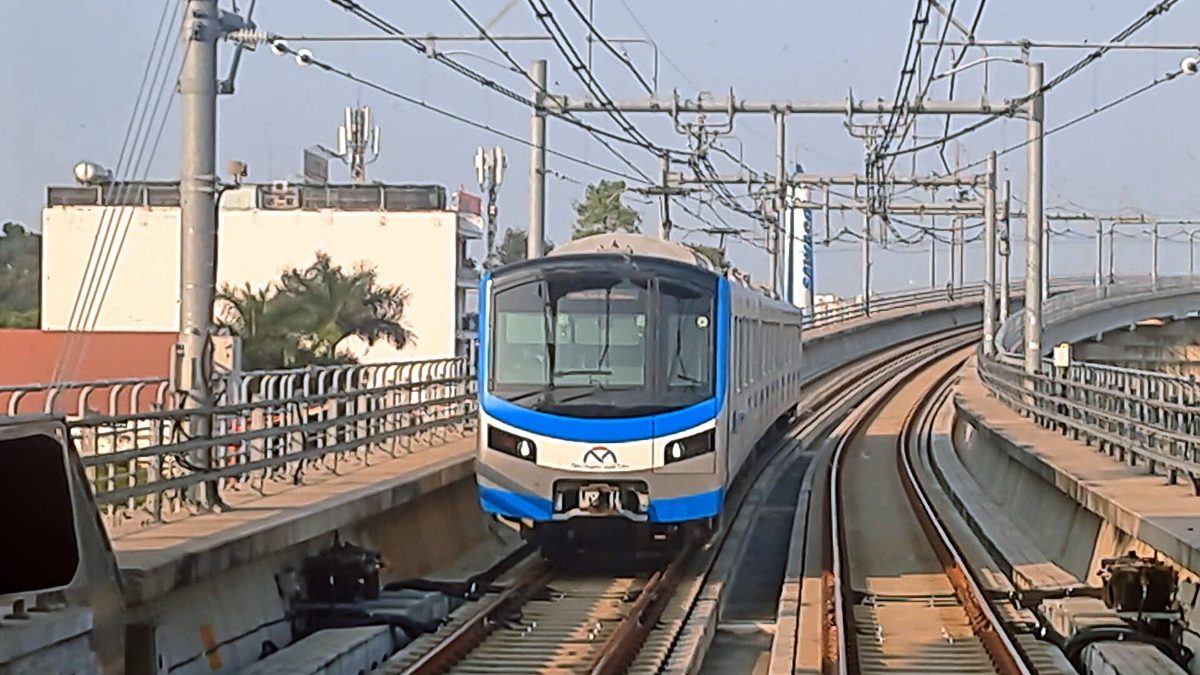
Ho Chi Minh City’s metro now runs through the central corridor, connecting the downtown area out toward the eastern districts. It is clean, air-conditioned and inexpensive — the easy choice for trips along its line, especially in midday heat. For stations, fares and how to buy tickets, see our full Ho Chi Minh City metro guide.
City buses
Public buses cover the city for a few thousand dong a ride. They are the least expensive option and fine for longer, unhurried trips, though routes and signage are mostly in Vietnamese. Most visitors use Grab and the metro instead, and keep buses for the occasional long haul.
The Saigon Waterbus
Here is the one most visitors miss. The Saigon Waterbus is a public river bus from Bach Dang Wharf in District 1, and a single trip is just 15,000 VND (about $0.60 USD). It is slower than the road for getting somewhere specific, but it doubles as the most affordable river cruise in the city.
Local tip: Treat the water bus as sightseeing that happens to be transport. Ride it to Thanh Da for a green, riverside afternoon, then Grab back when you’re done.
When to just walk
District 1’s core — Nguyen Hue, Dong Khoi, Ben Thanh, Bui Vien — is compact and flat. For anything within a kilometre, walking beats waiting for a ride, and it is how you stumble on the small food stalls that make the city.
Getting Around Ho Chi Minh City at Night

After dark, Grab still runs and the metro operates until late evening, but the city’s best after-dark corners — the food alleys, the night markets — are awkward to reach and easy to miss on your own. That is exactly why many travellers hand the navigating to a local for one night (more below).
Frequently Asked Questions
What is the least expensive way to get around Ho Chi Minh City?
City buses and the Saigon Waterbus, both a few thousand dong. Grab is slightly more but far more convenient.
Is Grab safe in Saigon?
Yes, it is the standard, and fares are fixed in the app. For GrabBike, always wear the helmet provided.
Does Ho Chi Minh City have a metro?
Yes. The metro runs through the central corridor and is a clean, inexpensive way to travel along its line.
Can I use the water bus to get around?
You can, though it follows the river rather than the roads. Most people ride it for the views as much as the transport — see our Saigon Waterbus guide.
Do I need to rent a motorbike?
Not unless you’re an experienced rider. Between Grab, the metro and walking, you can reach everything without driving in Saigon traffic.
Knowing how to get around is one thing; knowing where the city comes alive is another. If you would rather skip the map and ride straight to the best of it, our all-women driver team does exactly that — the daytime flavours on the Saigon food tour ($59 USD) and the after-dark city on the Saigon By Night tour ($39 USD). You sit behind a local driver, and you can book now and pay cash after.
Last updated: July 9, 2026.