
The short answer: Pack light, breathable clothes (cotton and linen), one modest outfit that covers shoulders and knees for temples, closed shoes and long trousers if you will ride a motorbike, a low-cost rain layer for the May-November wet season, high-SPF sunscreen, a reusable water bottle (tap water is not drinkable anywhere in Vietnam), and a universal adapter (220V, sockets Type A/C/F). Sort your passport, e-visa and an eSIM before you leave. Everything else you can buy here in an hour.
We are a Saigon and Da Nang tour team, and most of us are on a motorbike in this heat, sun and sudden rain almost every day. So this is not a gear-shop checklist copied from a cold country. It is the honest version: what genuinely earns space in your bag for Vietnam, what you can leave at home, and the two or three things foreign visitors get wrong every single week. General advice only; always check the forecast for your exact regions and dates.

Sort this before you touch a suitcase
Before clothes, get your documents and phone in order, because these are the things you cannot buy on arrival at a corner shop. Carry your passport (valid at least six months) plus a printed copy of your approved e-visa, apply through the official government portal at evisa.gov.vn and nowhere else, and buy travel insurance that explicitly covers motorbike riding if that is on your plan (most standard policies quietly exclude it). Bring a printout of any prescription so a Vietnamese pharmacist can match the medicine.
For your phone, an eSIM is the easiest option: plans start around $4 USD and a comfortable 10GB is roughly $20 USD, activated before you land so you have data the moment you switch on. Set up three apps in advance: Grab (rides and food, your everyday taxi), Google Maps with the offline map for your cities downloaded, and Google Translate with the Vietnamese pack downloaded for menus and pharmacies. Do the downloads on home wifi, not on arrival.
One health line every visitor needs: tap water is not safe to drink anywhere in Vietnam, including for brushing teeth in some areas. Bottled water is low-cost everywhere, but a refillable bottle (ideally one with a built-in filter) saves money and plastic, and hotels and cafes will refill it happily.
How much clothing to actually pack
Pack for about a week no matter how long your trip is, because laundry is low-cost, fast and everywhere. A pickup-and-delivery wash in Saigon runs roughly 25,000-40,000 VND per kilo (about $1-1.50 USD) with next-day return, far less than hotel laundry. So overpacking is the number-one regret we hear.
For a two-week trip in the warm south and centre, this is genuinely enough:
| Item | How many (2 weeks) | Note |
|---|---|---|
| Breathable tops | 3-4 | Loose cotton/linen; you will sweat through synthetics |
| Bottoms | 2-3 | Shorts plus one pair of light long trousers |
| Underwear | 5-7 | Quick-dry is worth it in the humidity |
| Socks | 2-3 pairs | You will live in sandals most days |
| Modest layer | 1 set | Covers shoulders and knees for temples |
| One dressier outfit | 1 | For nicer dinners or rooftop bars |
| Swimwear | 1-2 | Beaches, pools, waterfalls |
| Light jacket / fleece | 0-1 | Only for the north in winter (see below) |
Temples and pagodas expect covered shoulders and knees, and some will turn away anyone in vests or short shorts. The trick locals use is a sarong or large thin scarf: it weighs nothing, works as instant temple cover, doubles as a beach towel, a sun shield on the motorbike, and a blanket against the brutal air-conditioning on long buses and trains. It is the single most useful item most visitors do not think to bring.
One planning tip that saves luggage: Hoi An is Vietnam’s tailoring town, where a custom shirt, dress or suit can be made well and cheaply in a day or two. Many travellers deliberately pack lighter and have a couple of pieces made there, which pairs nicely with a slow evening in town such as our Hoi An coconut forest tour nearby.
Your one-page checklist (screenshot this)
Here is the whole kit in one place, grouped so you can pack straight down the list.
Documents and money:
- Passport (6+ months validity) and a printed copy
- Printed approved e-visa (from evisa.gov.vn)
- Travel insurance details (motorbike cover if riding)
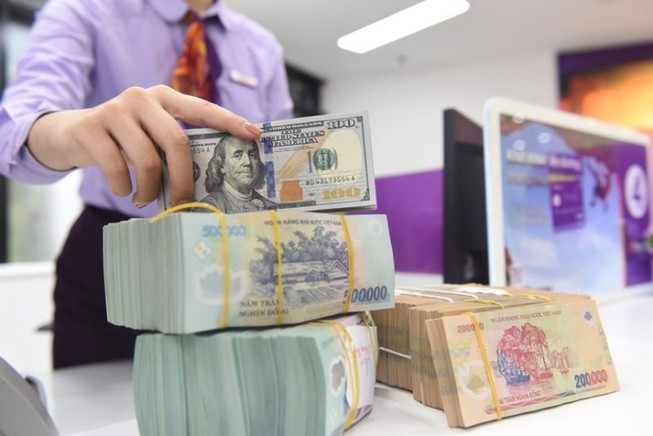
- A bank card for Grab plus some cash in small notes; withdraw larger amounts from ATMs here rather than exchanging a lot at home
- Printed copies of any prescriptions
Tech:
- Phone with eSIM installed and Grab, offline Maps and offline Translate ready
- Universal adapter (220V, Type A/C/F) and a power bank
- Charging cables; a luggage tracker (AirTag) if you have connecting flights
Clothing and feet:
- Light layers per the table above, plus the sarong/scarf
- Comfortable walking shoes and sandals; closed shoes if riding
- Sun hat and sunglasses
Health and weather:
- High-SPF sunscreen, insect repellent, hand sanitiser
- Reusable water bottle (filter bottle ideal)
- Rehydration salts and any personal medicine
- A low-cost rain layer in wet season; a small dry bag for boats and downpours
Bag choice: a soft backpack or a small wheeled case both work; choose a backpack if your route includes Sapa, Ha Giang or homestays with steps and rough lanes, and a wheeled case if you are mostly in cities and resorts. Packing cubes keep a humid bag organised.
Packing to ride a motorbike (read this before you rent)
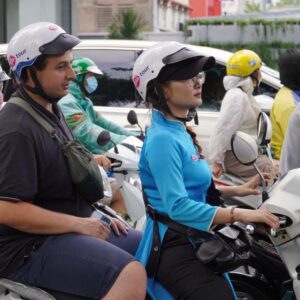
If you plan to ride yourself, pack closed shoes and long trousers for skin protection, and know that a helmet is legally required for every rider and passenger. Add light gloves if you have space; they save your palms in a low-speed slip and cut sunburn on long days.
The part that trips people up is not gear, it is paperwork. To ride legally you need a licence Vietnam actually recognises: an International Driving Permit issued under the 1968 Vienna Convention, carried together with your home licence, with the motorcycle (“A”) category stamped on it. The catch is that the US, Canada, Australia, New Zealand and several other countries issue IDPs under the older 1949 Geneva Convention, which Vietnam does not officially accept. Enforcement tightened noticeably after the 2024 traffic-law overhaul, checkpoints are more common, and an invalid licence can void your insurance after a crash. Sort this at home; you cannot fix it here. Our full breakdown lives in getting around Da Nang.
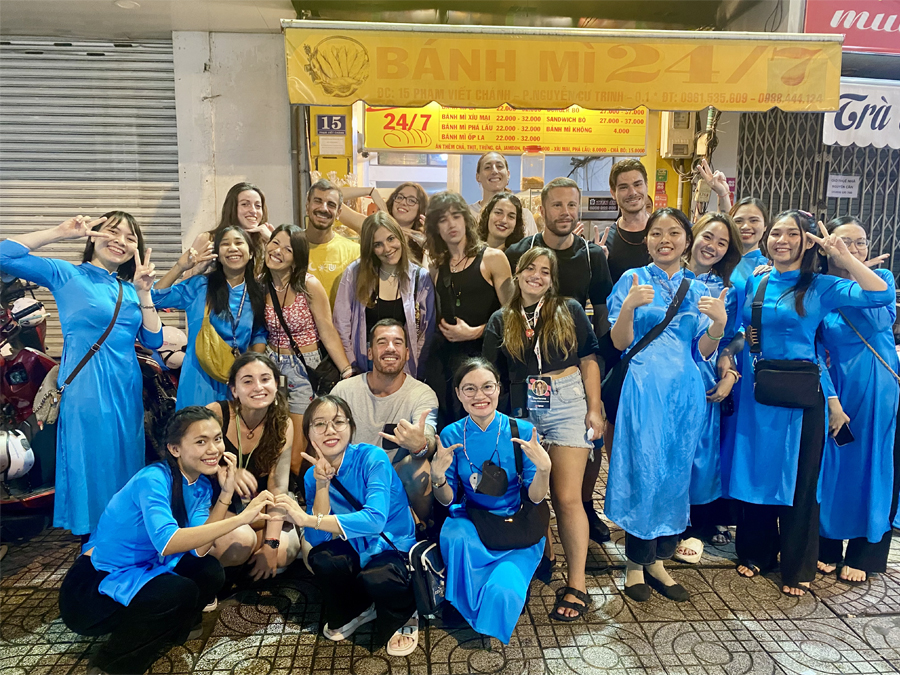
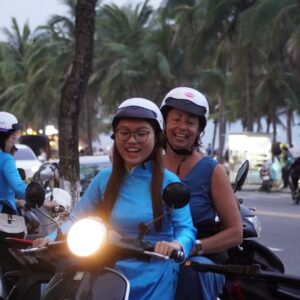
If all of that sounds like a headache, that is exactly the gap our tours fill. On a guided ride you just show up: we provide the bike, a proper helmet and a poncho, and you sit behind an experienced local rider. Our Saigon by night motorbike tour is the easy way to feel the city on two wheels without a licence, a rental deposit or a single item of riding gear in your suitcase.
What to add for your season and region
What you pack on top of the basics depends almost entirely on when and where you go, because Vietnam is really three climates at once.
| Where | When | Add to the basics |
|---|---|---|
| South (HCMC, Mekong) | Dry, Dec-Apr | Just strong sun protection; it stays warm all year |
| South (HCMC, Mekong) | Wet, May-Nov | Low-cost poncho, quick-dry shoes, small dry bag |
| Centre (Da Nang, Hoi An, Hue) | Wettest Sep-Nov | Poncho and dry bag; flooding is common, keep plans flexible |
| North (Hanoi, Sapa, Ha Giang) | Winter, Dec-Feb | Light down jacket, fleece, and thermals for Sapa/Ha Giang |
Two practical notes. In the wet season you do not need expensive rain gear: disposable ponchos are sold on almost every street corner for about 20,000 VND (under $1 USD), and a filter/quick-dry setup beats trying to stay bone dry. And for rural highlands like Ha Giang or remote northern trekking, ask a travel clinic about malaria tablets and routine vaccinations, ideally around eight weeks before you fly, since some are a course rather than a single jab. For timing the trip itself, see the best time to visit Vietnam.
If your dates land near Tet (Lunar New Year, late Jan or Feb), pack a little smarter: many small shops, laundries and family restaurants close for several days, so carry a few days’ buffer of essentials and any medicine you rely on.
What to leave at home, and what to just buy here
Leave behind heavy jackets (unless you are doing the northern winter), a bulky first-aid kit, big bottles of toiletries, and a second week’s worth of clothes. Vietnam is not a remote outpost; it is full of shops. If you forget something, you can buy it fast and low-cost at chains you will pass constantly: WinMart and WinMart+, Co.opmart, GO! (Big C), Lotte Mart for household and clothing, Circle K and GS25 for late-night basics, and Pharmacity or Long Chau pharmacies for medicine, sunscreen and repellent.
When is a heavy pack simply not worth it? If you are staying in the south and centre, skipping motorbike self-drive, and travelling any time except Tet, you can honestly do the whole trip out of a carry-on. Do not over-buy specialist “travel” gear you will use once. And skip drone plans unless you have checked the current rules, because casual drone flying is restricted. The people who overpack for Vietnam almost never regret leaving things out; they regret the extra kilos they carried past a hundred shops that sold the same thing for a dollar.
Prices and rules checked in August 2026 and may change.
FAQ: Packing for Vietnam
What should I wear in Vietnam to respect the culture?
Everyday dress is relaxed, but temples and pagodas require covered shoulders and knees, so carry one modest outfit or a light scarf/sarong. Neat, modest clothing is also appreciated in rural areas and at family homestays.
Is it safe to drink tap water in Vietnam?
No. Tap water is not safe to drink anywhere in Vietnam. Use bottled or filtered water, which is low-cost and everywhere, and bring a reusable bottle, ideally one with a built-in filter, to refill at hotels and cafes.
Do I need an eSIM or a SIM card for Vietnam?
An eSIM is the easiest choice if your phone supports one: plans start around $4 USD and activate before you land. A physical tourist SIM bought at the airport or a phone shop is a fine alternative and often similar in price.
What power adapter and voltage does Vietnam use?
Vietnam runs on 220V, 50Hz, with sockets that take Type A, C and F plugs. A universal adapter covers all of them, and a power bank is useful on long sightseeing or riding days.
Do I need a rain jacket or a poncho in Vietnam?
In the May-November wet season, yes, but keep it simple. Disposable ponchos are sold on almost every street corner for about 20,000 VND (under $1 USD), so a compact packable layer plus quick-dry shoes is plenty.
What do I need to legally ride a motorbike in Vietnam?
You need an International Driving Permit issued under the 1968 Vienna Convention, carried with your home licence and stamped for motorcycles (“A”), plus a helmet, which is legally required. IDPs issued under the 1949 Geneva Convention (common in the US, Canada and Australia) are not officially accepted. On a guided tour, none of this applies to you.
How many clothes should I pack for a two-week Vietnam trip?
Around 3-4 breathable tops, 2-3 bottoms, 5-7 sets of underwear, one dressier outfit and one modest temple layer. Laundry is low-cost and fast (roughly 25,000-40,000 VND per kilo), so pack for about a week and wash as you go.
Do I need vaccinations or malaria tablets for Vietnam?
For most city and coastal trips, no malaria tablets are needed, but they are advised for some rural highland areas such as Ha Giang. See a travel clinic about routine vaccinations ideally around eight weeks before you travel, since some require a course.
Can I buy toiletries and medicine easily in Vietnam?
Yes, very easily. Pack only personal prescription medicine and travel light. Chains like WinMart, Co.opmart, GO!, Lotte Mart, Circle K and Pharmacity or Long Chau pharmacies stock toiletries, sunscreen, repellent and common medicines cheaply.
Not sure what to pack for your route? Message us on WhatsApp +84 901 006 844