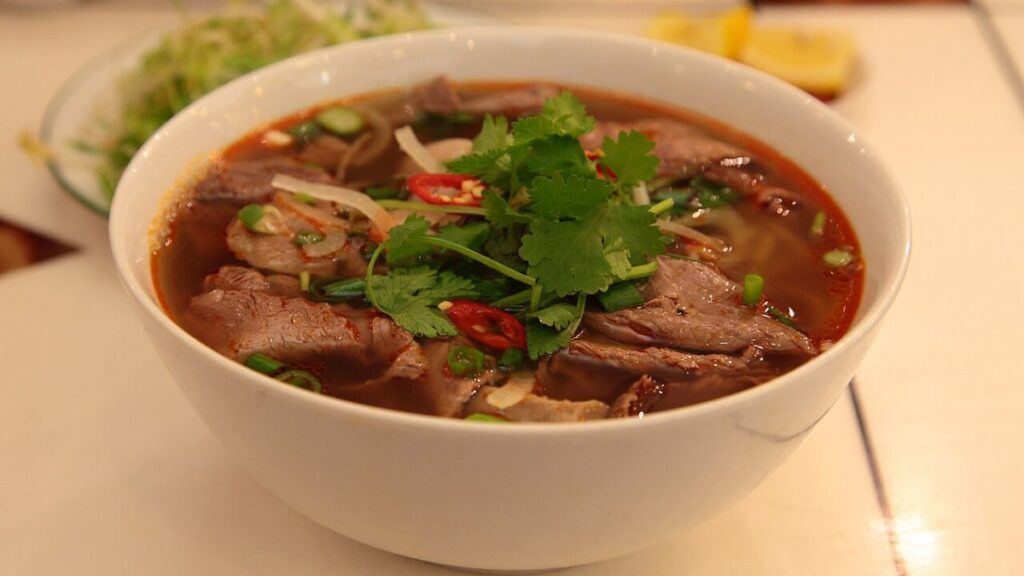
Short answer: bun bo Hue is Vietnam’s lemongrass-and-shrimp-paste beef noodle soup, spicier and louder than pho, with fat round noodles. In Saigon a bowl runs 30,000–95,000 VND (~$1.15–3.65 USD). Eat it for breakfast, order the plain beef bowl first, and skip the blood cubes if you are unsure.
What Is Bun Bo Hue, Exactly?
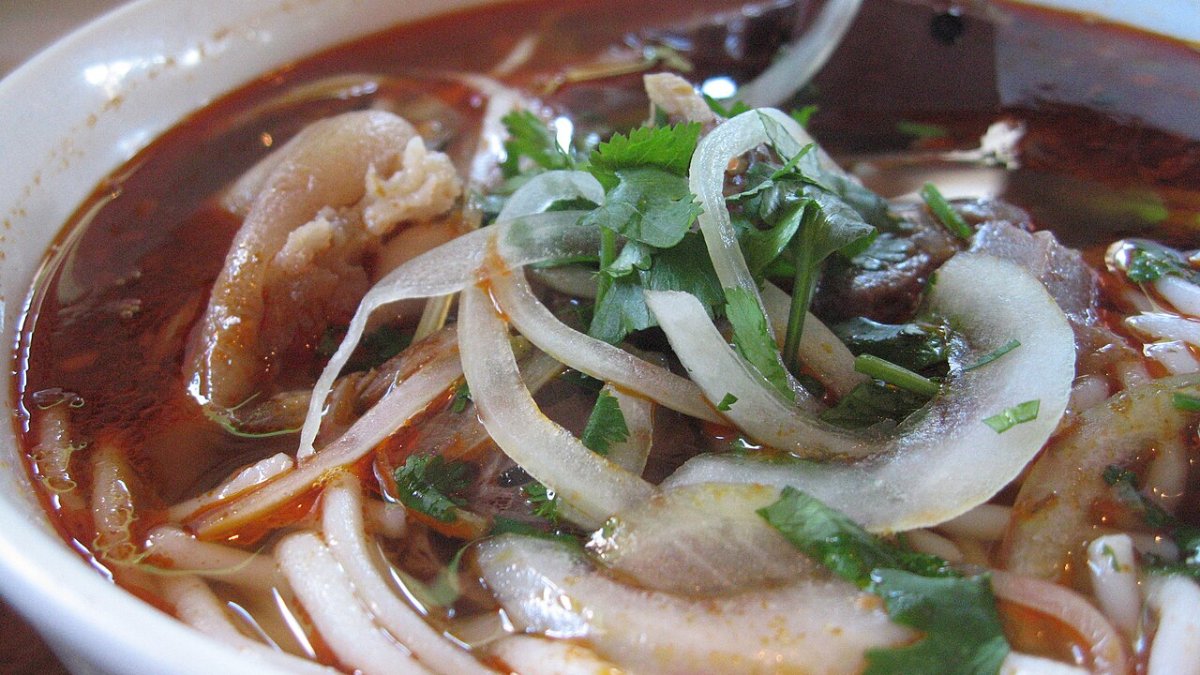
Bun bo Hue is a beef noodle soup from the old imperial city of Hue, in central Vietnam. The broth is simmered with beef bones, lemongrass and a spoonful of fermented shrimp paste, then finished with chili oil that floats on top in orange pools.
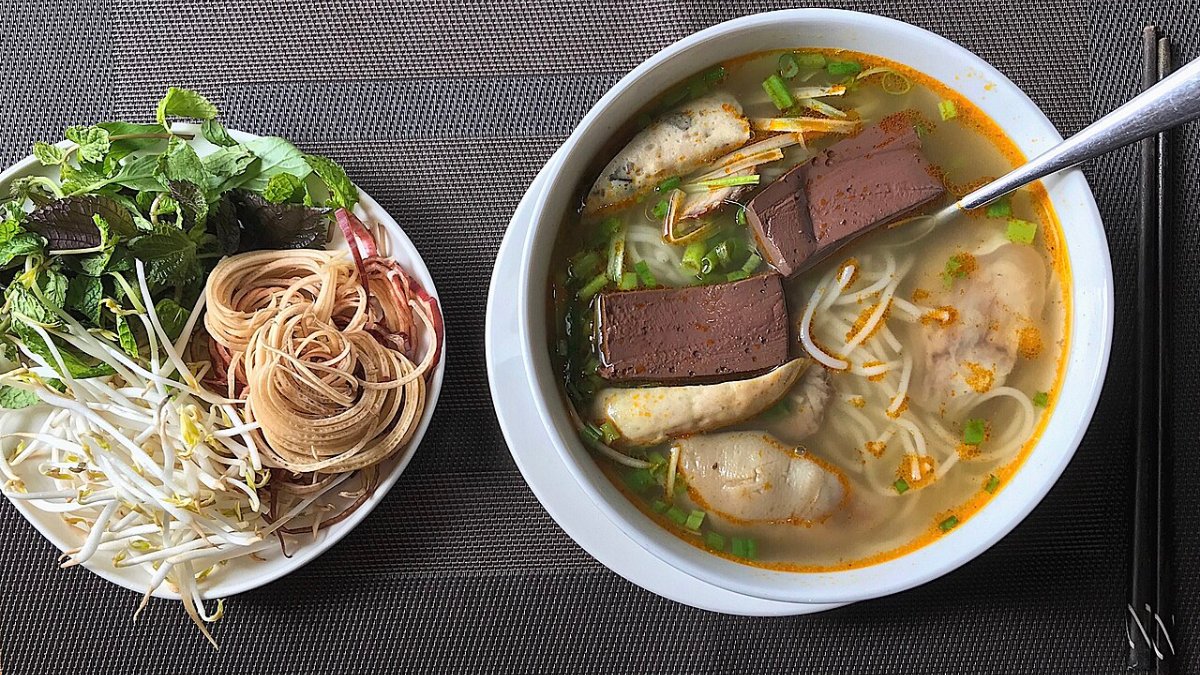
The noodles are the giveaway. Instead of the flat rice ribbons you get in pho, bun bo Hue uses thick round rice noodles that are closer to spaghetti in the hand. A full bowl usually carries sliced beef shank, a wedge of pork knuckle, a slice of steamed pork-and-crab loaf, and often a cube or two of congealed pork blood.
You eat it with a plate of raw greens on the side — shredded banana blossom, herbs, bean sprouts, lime — which you tear and push under the surface yourself.
How Is Bun Bo Hue Different From Pho?
Travellers usually meet pho first, so the comparison is the fastest way in. Pho is gentle: clear broth, star anise, ginger, a soup you could drink before a long day. Bun bo Hue is the opposite temperament.
| Pho | Bun bo Hue | |
|---|---|---|
| Noodle | Flat rice ribbon | Thick round rice noodle |
| Broth base | Beef bone, star anise, ginger, charred onion | Beef bone, lemongrass, fermented shrimp paste |
| Heat | Mild; chili added by you | Chili oil built into the bowl |
| Typical toppings | Sliced beef, brisket, meatballs | Beef shank, pork knuckle, pork-and-crab loaf, blood cubes |
| Greens plate | Basil, sprouts, lime | Banana blossom, herbs, sprouts, lime |
If pho tastes clean to you, bun bo Hue will taste deep and slightly funky. That funk is the shrimp paste, and it is the point.
What Does a Bowl of Bun Bo Hue Cost in Saigon?
Prices sit in a narrow band, and the cheap end is often the better bowl. Here is the range you will actually meet in 2026.
| Where | Price per bowl | What you get |
|---|---|---|
| Alley stall or MICHELIN-listed street kitchen | 30,000–45,000 VND (~$1.15–1.75 USD) | Standard bowl, plastic stools, cash only |
| Neighbourhood shop with a shopfront | 50,000–65,000 VND (~$1.90–2.50 USD) | Bigger bowl, fan, menu in Vietnamese |
| Air-conditioned or tourist-facing restaurant | 65,000–95,000 VND (~$2.50–3.65 USD) | English menu, card accepted, larger portion |
Add 10,000–20,000 VND (~$0.40–0.75 USD) if you ask for extra pork knuckle or an extra portion of noodles. For how this fits a full day of eating, see our breakdown of what food costs per day in Ho Chi Minh City.
Where Do Locals Eat Bun Bo Hue in Saigon?
Saigon is not the home of this dish, but it has a hundred years of Hue families cooking it here. These four are the ones our riders send guests to, in the districts guests actually stay in.
| Shop | Address | Price | Notes |
|---|---|---|---|
| Bun Bo Hue 14B | 14B Street 46, District 4 | 30,000–65,000 VND (~$1.15–2.50 USD) | MICHELIN Bib Gourmand. Two tables, mostly takeaway. Open 06:30–20:30 |
| Bun Bo Hue Co Nhu | 274/29 Vo Van Tan, District 3 | ~40,000 VND (~$1.55 USD) | Down an alley, family-run for close to 30 years, known for the floating fat |
| Bun Bo Hue Chu Ha | 300 Vo Van Tan, District 3 | ~60,000 VND (~$2.30 USD) | Long hours, roughly 6 AM–10 PM, easiest for a late bowl |
| Bun Bo Hue Dong Ba | 207B Nguyen Van Thu, District 1 | 65,000–85,000 VND (~$2.50–3.25 USD) | Most central option if you are staying in District 1 |
Give your driver the street number and the street name. Ward labels move around on map apps, house numbers do not. The MICHELIN Guide’s own write-up on the Bib Gourmand bowl at 14B is a useful read before you go.
What Should You Order on Your First Bowl?
Ask for the plain beef bowl. In Vietnamese that is bun bo, and it gets you the broth, the noodles and sliced beef without the parts that divide people.
The mixed bowl — thap cam — adds pork knuckle and blood cubes. The knuckle is soft and worth trying. The blood cubes are mild, faintly metallic and completely safe when cooked; leave them on the side of the bowl if you would rather not.
One habit worth copying: squeeze the lime before you taste, not after. The acid lifts the shrimp paste and makes the whole bowl read brighter.
How Spicy Is Bun Bo Hue, Really?
Medium by Vietnamese standards, warm by most other standards. The chili oil sits on the surface, so you control a lot of it with your spoon angle.
If you want it milder, say khong cay and the cook will ladle from below the oil layer. If you want more, there is a jar of chili paste on every table, and nobody minds you using it.
When Is the Best Time of Day to Eat It?
Breakfast, between 6 AM and 9 AM. That is when the pot is freshest and when the queue tells you which shop is worth it.
Many shops sell out by early afternoon and simply close. A few keep going until evening. That is why the late openers in the table above matter if you land after dark, or if you are out on a night tour around Ho Thi Ky flower and food market.
Is It Safe to Eat, and What About Allergies?
The broth is boiling when it hits your bowl, which does most of the safety work for you. Our full guidance is in is street food safe in Vietnam, and it applies here: busy shop, hot bowl, high turnover.
Two warnings that matter for this dish specifically. The broth contains fermented shrimp paste, so it is not shellfish-free and it is not vegetarian, even without visible meat. Peanuts are usually absent from the bowl itself, but garnishes vary — see our peanut allergy guide before you order.
Can You Try Bun Bo Hue on a KissTour Food Tour?
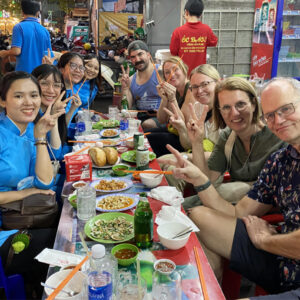
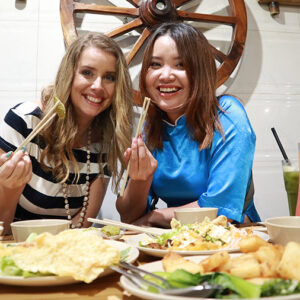
Yes, and you eat it sitting down with someone who can order for you. Our Kiss Food Tour is $59 USD for about four hours, covers 10+ dishes across five districts, and includes all the food and drinks. Your rider chooses the bowls by what is freshest that evening, so the exact noodle soup rotates.
Every rider is a woman, the same team that guests meet on our food tours in Ho Chi Minh City. You book now and pay later — nothing is charged when you reserve. If you would rather eat after dark, the Saigon By Night tour is $39 USD for 3.5 hours.
Not sure which one fits? Message us and we will tell you honestly, including when the answer is “just walk to 14B yourself”.
If you are heading to central Vietnam afterwards, the dish’s home city is on the route in our Hue, Da Nang and Hoi An itinerary. And for a different Saigon breakfast entirely, there is always broken rice.
Bun Bo Hue in Saigon: Quick Answers
Is bun bo Hue better in Hue than in Saigon?
It is different, not better. Hue bowls tend to be saltier and more shrimp-paste forward; Saigon bowls are slightly sweeter and often larger. Plenty of Hue families cook in Saigon, so the gap is smaller than people expect.
How much should I pay for a bowl in 2026?
30,000–95,000 VND (~$1.15–3.65 USD) depending on the shop. Anything above 100,000 VND is a restaurant charging for air conditioning, not for a better broth.
Can I eat bun bo Hue if I do not eat pork?
Ask for the plain beef bowl without knuckle and without blood cubes. The broth itself is usually built on beef bones, but many shops add pork bones, so a strict no-pork diet is hard to guarantee here.
Is bun bo Hue vegetarian-friendly?
No. The shrimp paste in the broth rules it out even when the toppings look meat-free. Vietnamese vegetarian shops do make a version with mushroom broth, and that is what to look for instead.
What does “thap cam” mean on the menu?
Mixed. You get the full set of toppings — beef, pork knuckle, the pork-and-crab loaf and blood cubes — usually for 5,000–15,000 VND (~$0.20–0.60 USD) more than the plain bowl.
Do these shops take cards?
The street kitchens do not. Bring small notes: 50,000 and 100,000 VND bills are ideal, and many shops now accept VietQR bank transfers if you have a Vietnamese app.