
Is street food safe in Vietnam? Yes, for most travellers, if you eat the way locals do: choose the stall with a queue and fast turnover, eat food cooked to order and served hot, drink sealed bottled or boiled water, and go easy on raw shellfish in your first days. The busiest stall on the street is usually the safest, not the riskiest. Fewer than 1% of guests on food tours report any stomach trouble, and most of that comes from unfamiliar rich food and heat rather than contamination.
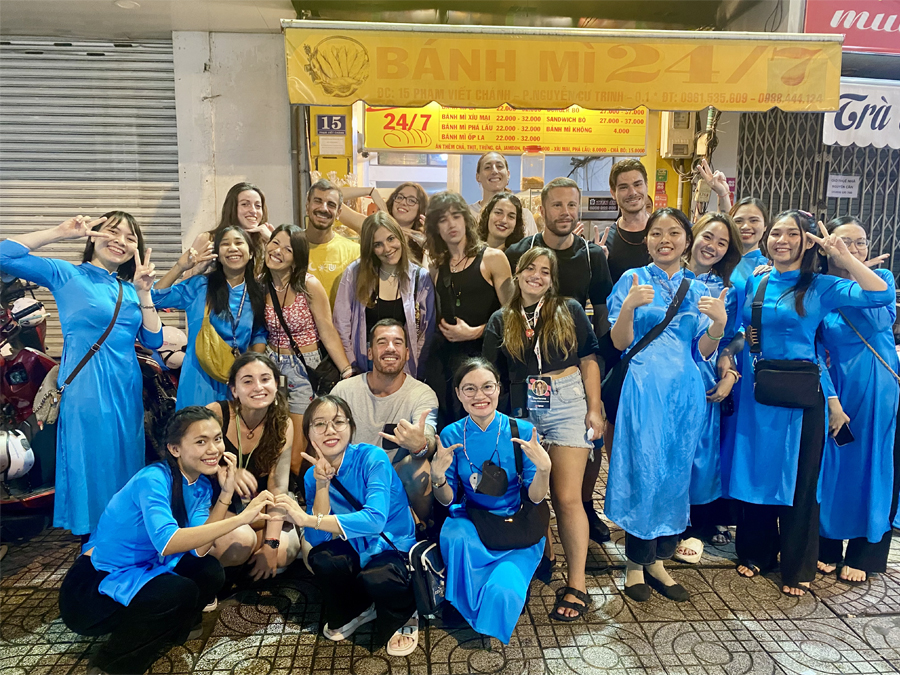
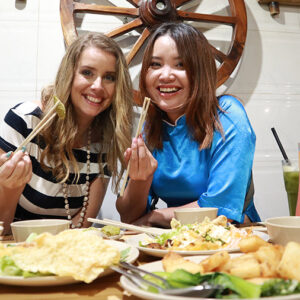
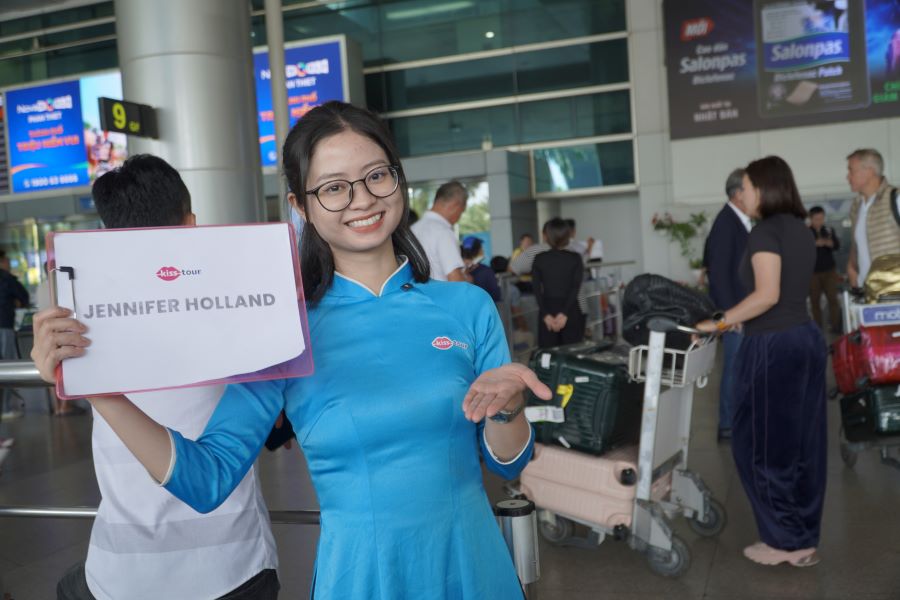
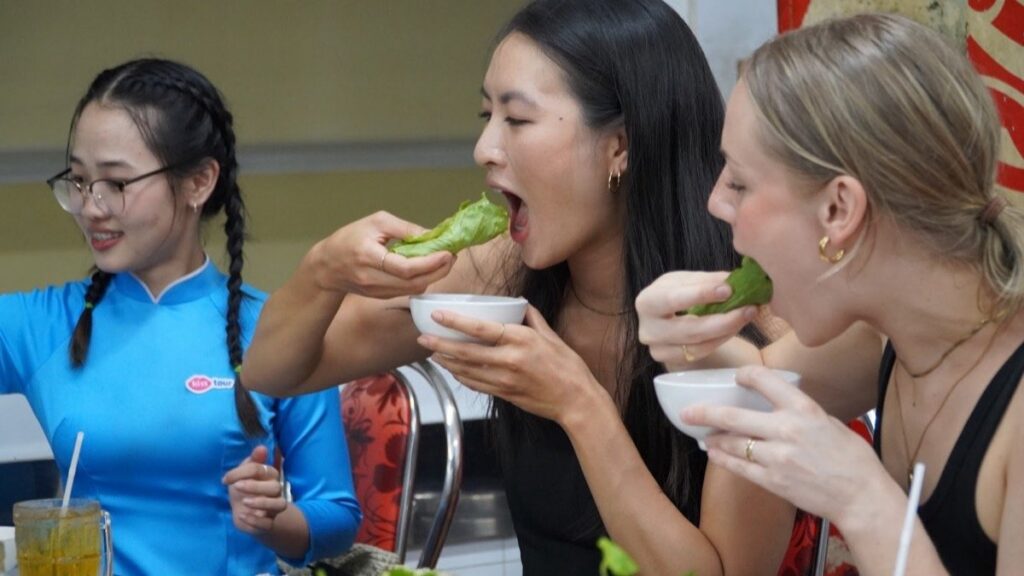
Travellers are told two contradictory things: that Vietnamese street food is the highlight of the trip, and that it will put them in bed for two days. The truth sits close to the first. Our women guides eat at these carts every day in their ao dai, and this is how they actually decide what to eat, what to skip, and what to do on the rare bad night. This is general travel guidance, not medical advice; if you have a health condition, allergy, or you are pregnant, check with a professional. Figures and clinical thresholds checked in August 2026 and may change.
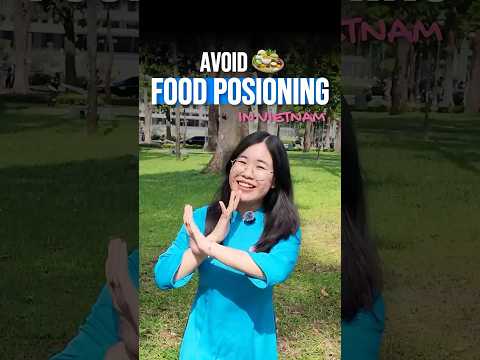
The one rule that matters more than all the others
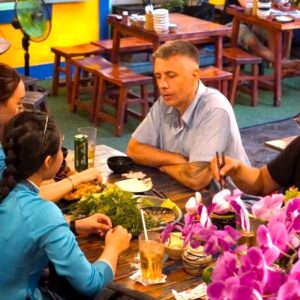
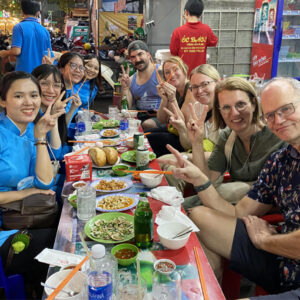
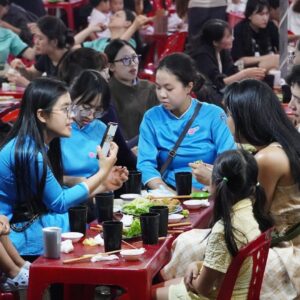
Follow the crowd. A stall with a constant queue of locals is the single strongest safety signal there is, because high turnover means ingredients are bought fresh that morning, nothing sits out warming for hours, and the wok never goes cold. Popularity is quality control the whole neighbourhood pays for daily.
This flips the instinct most first-timers arrive with. The quiet, tidy-looking stall with no customers is the gamble; the loud one with plastic stools on the pavement and a grandmother who has cooked one dish for twenty years is the safe bet.
What locals actually check (and tourists miss): whether the cook uses tongs or a separate spoon for raw meat and handles cash with the other hand; whether the broth is visibly boiling, not just warm; whether the herb basket looks bright and fresh rather than wilted; and whether other diners are locals on a lunch break, not only other tourists. A queue of office workers at 12pm is the green light.
| Green light | Order with confidence | Red flag |
|---|---|---|
| A queue of locals, food constantly cooking | Cooked to order and handed to you steaming | Empty stall; cooked food sitting out uncovered |
| One or two dishes done well | Fast turnover, high volume | A giant menu of everything under the sun |
| Tongs or a dedicated spoon for raw meat | Clean prep surface, ingredients on ice | Bare hands moving between raw meat, cash, and your plate |
| Broth at a rolling boil | Bright, crisp herb basket | Buffet trays warming under a lamp or sun |
The rule we actually use: look at who is eating there. Plenty of locals and few foreigners is the signal you want – if a place looks small but is packed with Vietnamese diners, it is almost always clean and good. An empty spot with a big English menu and glossy photos is the one to walk past.
Water, ice, and tra da: what to trust and what to skip
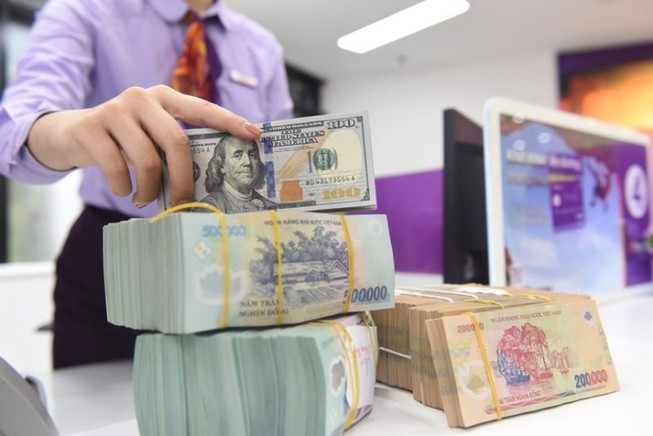
Do not drink the tap water anywhere in Vietnam, but do not let ice or iced tea scare you either. Stick to sealed bottled water for drinking and brushing your teeth, and you have removed the most common single cause of traveller stomach trouble in one low-cost step. A 500ml bottle of a trusted brand (Aquafina, Lavie, Dasani) costs roughly 5,000-12,000 VND, about $0.20-$0.45 USD, and it is sold on every corner.
Ice is where the old advice is simply wrong. The cylindrical tube ice with a hole through the middle, the kind that turns up in nearly every cafe and juice, is made in filtered-water factories and is safe. What warrants a second thought is irregular crushed or bagged ice from an unknown roadside source. In practice, at a busy cafe or restaurant, the ice is fine.
The nicest local trick is tra da, the free or near-free iced green tea on every table. It is brewed with boiled water and then cooled, so it is a safe everyday drink and the thing locals sip all day. Ordering it keeps you hydrated in the heat, which matters more than most travellers realise.
What to eat first, and the handful of things to be genuinely careful with
Start with hot, cooked-to-order dishes and ease into raw items once your stomach has settled. Boiling broth kills bacteria and cooks the protein through, which is exactly why noodle soups are both the safest introduction and the best food in the country.
- Pho and other noodle soups – the broth arrives at a boil; the gold-standard first meal.
- Banh mi – assembled fresh; pick a cart with a queue, and see the pate note below.
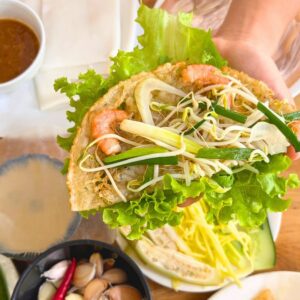
- Grilled skewers, nem nuong, banh xeo – cooked hot over charcoal or a griddle right in front of you.
- Com tam (broken rice) and clay-pot dishes – cooked through, served hot, hard to get wrong at a busy spot.
Now the honest edge cases. These are not “never,” they are “not on day one, and only from a busy place you trust”:
- Raw shellfish and blood cockles (so huyet) – the single most common culprit; delicious, but give your gut a few days first.
- Banh mi pate – unrefrigerated pate that has sat out is a classic edge case; at a high-turnover cart it is fine.
- Undercooked eggs and raw bean sprouts – easy to ask to have cooked; sprouts can be left out of a pho if you prefer.
- Uncovered buffet food baking in the sun – the opposite of cooked-to-order; skip it.
Raw herbs and salads, the plate of mint, basil, and coriander served with almost everything, worry people more than they should. Most travellers eat them without a hitch. If you are being cautious in your first days, stick to cooked and peeled items and add the greens once you have found your feet. Fruit you peel yourself is always safe; pre-cut fruit is fine from a busy cart, less so from one where it has been sweating in the sun.
The Vietnamese phrases our guides use at the stall
A few words in Vietnamese do more for your stomach than any supplement, because they let you steer the order. These are the exact phrases our guides use every day. Vietnamese is tonal, so you will not nail the tones, but stallholders are used to travellers and will understand you.
| You want to say | Vietnamese | Rough sound |
|---|---|---|
| Not spicy | Khong cay | “kohng kai” |
| A little spicy only | It cay thoi | “eet kai toy” |
| No MSG, please | Khong bot ngot | “kohng bot ngot” |
| Which is your most popular dish? | Mon nao ban chay nhat? | “mon now ban chai nyat” |
| No ice | Khong da | “kohng da” |
| Where is a pharmacy? | Nha thuoc o dau? | “nya twok oh dow” |
| Thank you | Cam on | “gam un” |
Asking for the most popular dish is a quiet superpower: it steers you to the item with the fastest turnover, which is also the freshest and safest thing on the cart.
What to do if you do get sick (the calm playbook)
If you get travellers’ diarrhoea, the priority is fluids first, not medicine first: rehydrate, rest, and only reach for pills to get through a bus ride. Most cases are mild and pass in one to three days on their own. The main bugs behind it in Vietnam are E. coli (ETEC), Salmonella, Shigella, and Campylobacter, and your body clears the common ones without help.
- Rehydrate with ORS (oral rehydration salts). This is the one that actually matters. Buy sachets at any pharmacy (nha thuoc) for a few thousand VND, mix with bottled water, and sip steadily. Plain water alone does not replace the salts you are losing.
- Use loperamide (Imodium) for symptom control only – to get through a flight or a long drive. Do not take it if you have a fever or blood in your stool, as it can keep the infection in.
- Keep eating light when you can – plain rice, chao (rice porridge), bananas, dry toast. Skip alcohol, dairy, and heavy oil for a day.
- Consider a backup antibiotic only if it is not settling. Travel clinics commonly prescribe azithromycin (a single 1g dose, or 500mg daily for up to three days) to carry as a just-in-case for symptoms that persist beyond about 24 hours. Get it prescribed before you travel and use it as directed, not at the first cramp.
See a doctor – do not tough it out – if any of these appear:
- Fever above 101F / 38.3C
- Blood or mucus in your stool
- Diarrhoea lasting longer than 24-48 hours, or persistent vomiting where you cannot keep fluids down
- Severe abdominal pain, or signs of dehydration (dizziness, very little urine, feeling faint)
- Any illness in a young child, an older traveller, or someone pregnant – go earlier, not later
All three big cities have international-standard care: FV Hospital and Family Medical Practice in Ho Chi Minh City, Family Medical Practice in Hanoi and Da Nang, plus well-stocked pharmacies on most blocks. You are never far from help, which is exactly why there is no need to panic.
Who should be extra careful, and when street food is not worth it
Street food is not for absolutely everyone on day one, and pretending otherwise is how people get burned. Be honest about your own situation:
- Sensitive stomachs and first 48 hours: ease in. Hot noodle soups and cooked rice dishes only, raw shellfish and salads later. Your gut adjusts faster than you expect.
- Kids: street food is generally fine for children if you stick to cooked-to-order dishes, skip the chilli (khong cay), and keep hand sanitiser handy. Noodle soups and grilled skewers are easy wins.
- Pregnancy, a compromised immune system, or a serious food allergy: this is the real “skip it or be very selective” group. Uncontrolled ingredients and language barriers make risk hard to manage. Choose sit-down places you can quiz, or skip the raw-and-street end entirely.
- The genuinely anxious: if worry is going to ruin the meal, do not force the busiest curb-side stall on night one. Start somewhere with a menu and a chair, or go once with a guide, then branch out.
Two-minute pre-trip prep and the vaccination question
A little preparation before you fly does more than obsessing over stalls once you arrive. Pack a small kit and have one health conversation, and you are set.
- Pack: a few ORS sachets, a small pack of loperamide, hand sanitiser or wet wipes, and any backup antibiotic your clinic prescribes. Hand hygiene is the tip every guide agrees on – clean your hands before finger foods like banh mi, since many stalls have no soap.
- Consider probiotics for a week or two before and during the trip; the evidence is mixed but they are harmless.
- Vaccinations: Hepatitis A and typhoid are the food-and-water-related jabs travellers are commonly advised to get before Vietnam. Book a travel health consultation about 4-6 weeks before departure – do not leave it to the airport.
One reassurance to keep in your back pocket: a high-turnover Vietnamese street stall is often fresher than the food courts many travellers happily eat at back home. The volume is the safety.
The lowest-stress way to get over the nerves
The fastest way to eat street food with confidence is to go once with someone who eats there daily, then order solo for the rest of your trip. After one evening watching how a guide picks a stall, reads the crowd, and orders in Vietnamese, the mystery is gone and the whole city opens up.
That is exactly what our Saigon Food Tour ($59 USD, 10+ dishes across five districts) is built for – our women guides take you to the exact stalls they eat at themselves, so you leave knowing what a good one looks like. In Da Nang, the Da Nang Food Tour ($49 USD) does the same, and if you would rather explore after dark, the Saigon by Night tour ($39 USD) weaves food into the ride. Want the sights between bites? The Saigon City Tour ($45 USD) pairs local landmarks with snack stops.
FAQ: Street Food Safety in Vietnam
Is it safe to eat street food in Vietnam?
Yes, for most travellers, if you choose busy stalls with fast turnover, eat food cooked to order and served hot, and drink sealed bottled or boiled water. The busiest stall is usually the safest because high turnover means fresher ingredients.
Can you drink the tap water in Vietnam?
No. Tap water is not safe to drink anywhere in Vietnam. Use sealed bottled water (Aquafina, Lavie, Dasani) for drinking and brushing your teeth. A 500ml bottle costs roughly 5,000-12,000 VND, about $0.20-$0.45 USD.
Is the ice safe in Vietnam?
Yes, the common cylindrical tube ice with a hole through the middle is factory-made from filtered water and is safe. Be more cautious only with irregular crushed or bagged ice from an unknown roadside source. At a busy cafe or restaurant, the ice is fine.
What should I do if I get food poisoning in Vietnam?
Rehydrate first with oral rehydration salts (ORS) mixed in bottled water, rest, and eat light. Use loperamide (Imodium) only for symptom control, and not if you have a fever or blood in your stool. Most cases clear in one to three days.
When should I see a doctor for food poisoning in Vietnam?
See a doctor if you have a fever above 101F / 38.3C, blood in your stool, persistent vomiting, severe abdominal pain, diarrhoea lasting more than 24-48 hours, or signs of dehydration. Seek care earlier for children, older travellers, and anyone pregnant. All major cities have international hospitals.
Do I need vaccinations before eating street food in Vietnam?
Hepatitis A and typhoid are the food-and-water-related vaccinations travellers are commonly advised to get before Vietnam. Book a travel health consultation about 4-6 weeks before departure to arrange them.
What medicine should I bring for an upset stomach?
Pack ORS sachets, loperamide (Imodium), and hand sanitiser or wet wipes. Many travellers also carry a backup antibiotic such as azithromycin prescribed by a travel clinic, to use only if symptoms persist beyond about 24 hours.
Is banh mi safe to eat in Vietnam?
Yes, banh mi from a busy cart with high turnover is safe and is assembled fresh. The one edge case is pate that has sat out unrefrigerated, which is a non-issue at a high-turnover vendor. Clean your hands before eating it, as stalls often have no soap.
Is Vietnamese street food safe for kids and sensitive stomachs?
Generally yes, if you stick to hot, cooked-to-order dishes like noodle soups and grilled skewers, skip the chilli (say “khong cay”), and ease into raw herbs and shellfish. Sensitive stomachs should give it 48 hours before trying raw items.
Eat street food with our guides – message us on WhatsApp – +84 901 006 844