
Quick answer: Ben Thanh Market is worth an hour or two for coffee, spices, souvenirs and a snack – not for the lowest prices in Saigon. Entry is free (there is no admission fee). The covered day market runs about 06:00-18:00 daily; after 18:00 the surrounding streets become a night market until around midnight. Bargain hard inside the hall (open at ~40% of the asking price, settle around 50-60%) but never haggle food-stall prices. The easiest way to arrive in 2026 is Metro Line 1: Ben Thanh Station sits directly beneath the market.
Most Saigon guides still describe Ben Thanh the way it worked in 2023 – before the metro opened underneath it. This is the 2026 update, written by a team that walks foreign guests through this market most weeks: how to get there on the new Line 1, which gate to enter for what you actually want, what a fair price looks like in real dong, and the honest truth about when Ben Thanh is not the place to shop. Figures were checked in August 2026 and may change; conversions use 1 USD = 26,000 VND.
How to get to Ben Thanh Market in 2026
The simplest way is now Metro Line 1: Ben Thanh Station sits directly beneath the market square, so you can ride in and walk up into it. Trains run roughly 06:00-22:00 at 5-7 minute intervals, and a single ride costs about 7,000-20,000 VND (about 0.27-0.77 USD), lower-cost if you pay cashless. Follow the station signs toward the market exit; the exit on the Phan Chu Trinh (west) side brings you out beside the souvenir gate.
If you would rather come overground, the market sits on the big roundabout at the foot of Le Loi in District 1, a 10-15 minute walk from most Bui Vien / backpacker-area hotels. Many public buses stop at the adjacent Ben Thanh terminal, including routes 03, 04, 19, 20, 39, 53, 93, 96 and 152. A short Grab or taxi from central District 1 is low-cost, but in daytime traffic the metro is usually faster and you skip the drop-off scrum.
New to the city? Our first time in Saigon guide covers metro tickets, Grab and getting oriented before you go.
What is sold at each gate
Each of the four main gates opens onto a different specialty, so entering at the right one saves you wading through the crowd. Here is the layout, plus what to skip at each.
| Gate | Street | Landmark | Best for | Good to know |
|---|---|---|---|---|
| South (main) | Le Loi | The clock tower | Clothing, fabric, ao dai, T-shirts, bags | The busiest, most touristy entrance – prices open highest here |
| East | Phan Boi Chau | – | Coffee, tea, dried fruit, cashews, spices, fish sauce | The best zone for edible gifts to take home |
| North | Le Thanh Ton | – | Wet market: fresh produce, seafood, meat, flowers | For photos and atmosphere more than shopping |
| West | Phan Chu Trinh | Metro exit nearby | Souvenirs, lacquerware, handicrafts, chopsticks, magnets | Where the metro drops you; start here if you arrive by train |
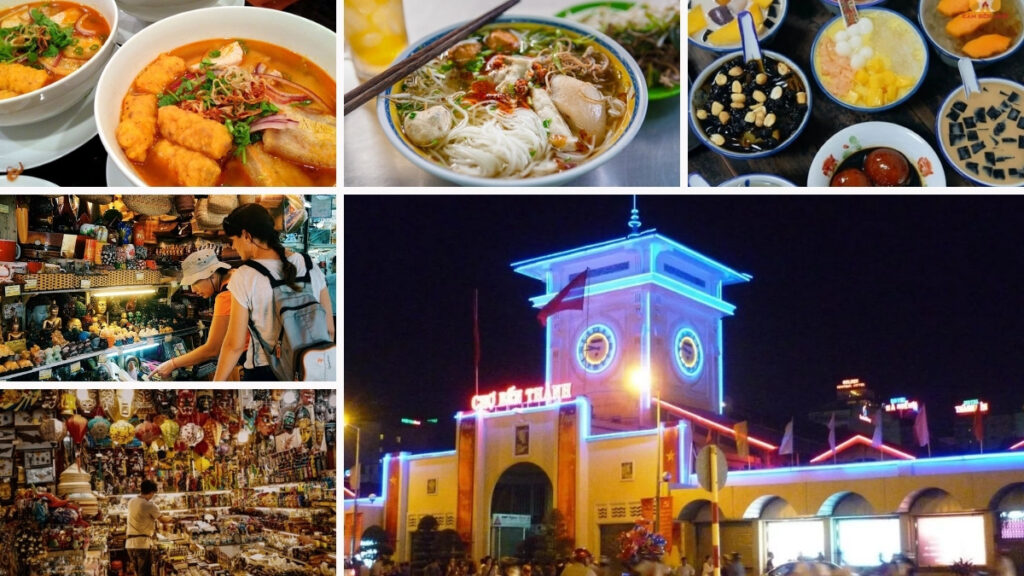
Down the centre of the hall you will also find food stalls – noodle soups, rice plates, smoothies and che (sweet soups) – wedged between the dry-goods aisles.
Opening hours and the best time to go
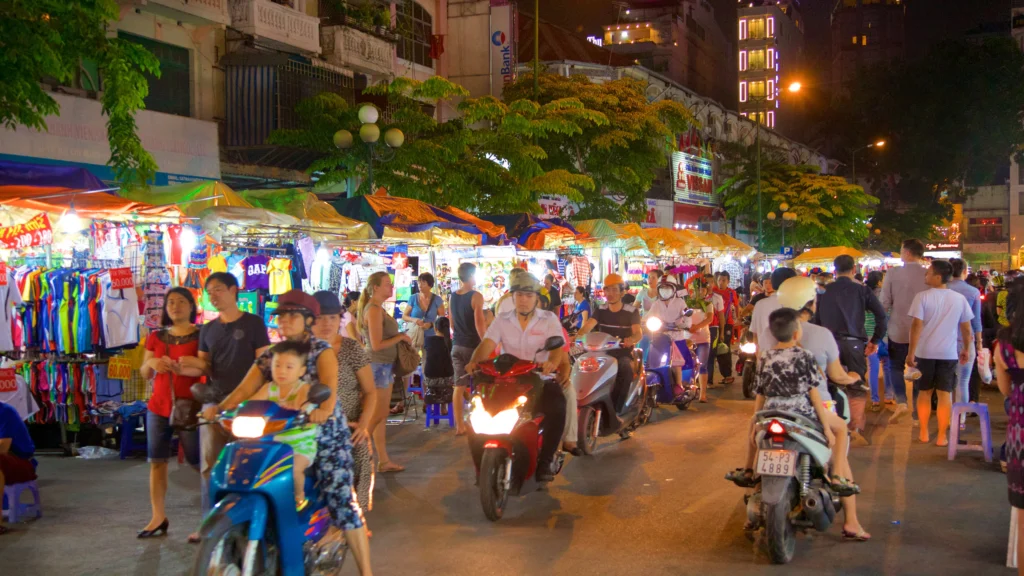
The covered market is open daily from about 06:00 to 18:00; after it shuts, the streets around it (Le Loi, Le Thanh Ton, Phan Boi Chau, Phan Chu Trinh) fill with the night market until roughly midnight. The single best window is early morning.
| When | What it is like | Go if you want |
|---|---|---|
| 06:00-09:00 | Cool, calm, freshest goods, “morning price” | Best prices and easy browsing |
| 11:00-15:00 | Hot, packed, aisles shoulder-to-shoulder | To avoid this window if you can |
| 16:00-18:00 | Quieter again as the day market winds down | Last-minute buys, some end-of-day deals |
| 18:00-24:00 | Night market on the surrounding streets: food, beer, souvenirs | Atmosphere and street-food dinner |
Many vendors give a discounted “morning price” to their first customer of the day for good luck, so arriving right at opening is genuinely worth it – cooler air, fresher food and keener sellers.
What is actually worth buying (and what to skip)
The best buys are light, local and hard to fake: Vietnamese coffee, dried spices and nuts, lacquerware and simple textiles. The worst buys are anything that trades on a brand name or claims to be old or precious.
| Worth buying | Skip / be careful |
|---|---|
| Vietnamese coffee – trusted brands include Trung Nguyen, Mr Viet and Me Trang | “Brand-name” bags, watches, sunglasses and electronics (fakes) |
| Dried spices, black pepper, cashews, tea, dried fruit | Loose gemstones and jade – impossible to verify here |
| Lacquerware, chopsticks, ceramics, handicrafts | “Antiques” – almost always modern reproductions |
| Silk scarves, linen shirts, ao dai, embroidered goods | Made-to-measure tailoring on a deadline – Hoi An does it better and lower-cost |
What we tell guests to buy, and skip: Buy the things that are genuinely local and travel well – Vietnamese coffee, loose tea, dried fruit, a few enamel or bamboo kitchen bits. Walk past the ‘brand’ clothes, sunglasses and watches; they are copies, and you will bargain hard for something that falls apart on the flight home.
For the wider picture on gifts and a sense of fair prices before you haggle, see what to buy in Vietnam.
What a fair price looks like
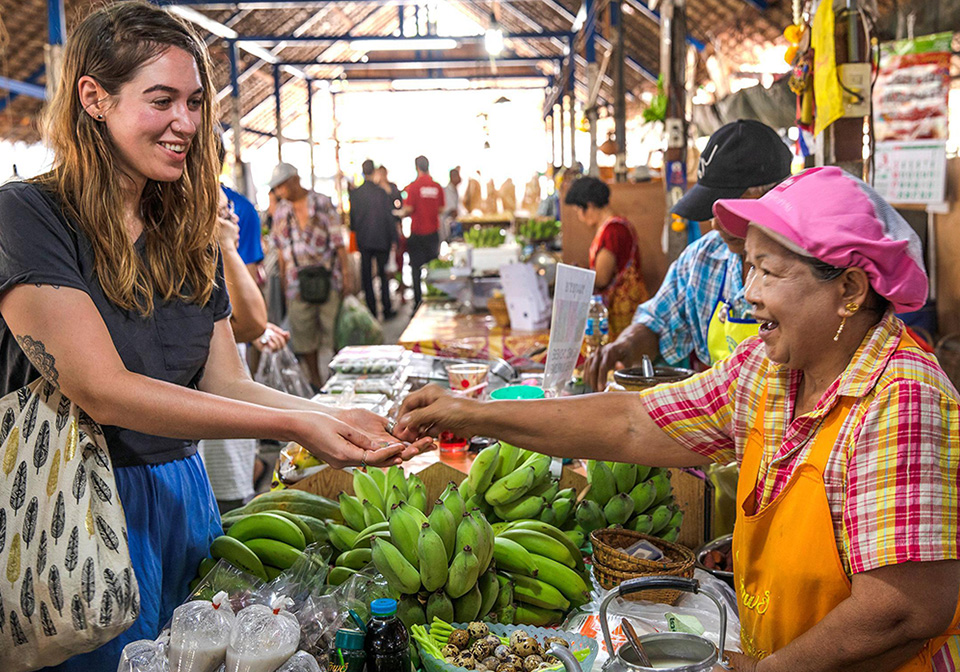
As a rule, the first number a vendor quotes inside the hall is roughly two to three times what they will accept – so anchor yourself before you start. Food stalls are the exception: those prices are effectively fixed and already fair, so pay what is asked. Here is what locals and regular guests actually pay.
| Item | Fair price (VND) | Approx. USD | Haggle? |
|---|---|---|---|
| Fruit smoothie (sinh to) | ~30,000 | ~1.15 | No – fixed |
| Broken rice (com tam) | 40,000-50,000 | ~1.50-1.90 | No – fixed |
| A full meal, per person | 50,000-150,000 | ~2.00-5.80 | No – fixed |
| Coffee gift set | ~100,000 after bargaining | ~3.85 | Yes |
| Souvenir T-shirt, fridge magnet, chopstick set | Aim for ~half the opening quote | – | Yes |
Bring cash in small VND notes. Cards are only sometimes accepted and often carry a surcharge, and there is no reliable free ATM inside – draw cash before you arrive.
How to bargain without the stress
Open at about 40% of the first price, name one figure you are genuinely happy to pay, stay smiling, and be ready to walk – the counter-offer usually follows you out. Settle somewhere around 50-60% of the original ask.
A few things that work in practice:
- Decide your walk-away number before you show interest, then don’t drift far above it.
- Buy several items from one stall – a bundle gets a far better rate than haggling piece by piece.
- Go early: first-customer-of-the-day pricing is real.
- Don’t handle goods you have no intention of buying – it invites hard-sell pressure and makes walking away awkward.
- Keep it good-natured. This is expected sport here, not a fight, and a smile gets you a better price than a scowl.
Want the full technique for the whole country? See our guide to bargaining in Vietnam.
Staying safe and avoiding the common traps
Ben Thanh is safe in the sense that violent crime is rare, but the crowded interior aisles are a known pickpocket spot, so treat your bag and phone accordingly. Keep your bag zipped and worn in front of you, and don’t wave an expensive phone or camera around in the crush.
Three honest cautions worth naming:
- The “entrance fee” myth. Entry to Ben Thanh is free. Some pages mention a 15,000 VND charge – that is parking or the public toilet, not general admission. Nobody should be charging you to walk in.
- Aggressive touting. If a vendor grabs your arm or blocks the aisle, that alone is a reason to keep walking – the relaxed stalls give better prices anyway.
- The first quote is theatre. Sky-high opening numbers aren’t a scam, just the game – which is exactly why the fair-price table above matters.
Is Ben Thanh a tourist trap? Who should skip it
Ben Thanh is worth visiting as an experience and for a handful of specific buys, but it is not where to go if your main goal is the lowest price – locals shop the neighbourhood markets for the same goods for less. Be honest with yourself about what you want:
- Go if you want coffee and spices to take home, a fast one-stop souvenir sweep, a photogenic slice of old Saigon, or a snack while sightseeing.
- Skip it (or keep it short) if you are hunting genuine bargains, hate crowds and hard-sell, or want the city’s best street food. For eating, the stalls a few streets out and the night market are better value than the daytime food court.
If you would rather see where Saigonese actually eat, a guided Saigon food tour (59 USD, 10+ dishes across several districts on the back of a bike) takes you to the neighbourhoods and dishes most visitors never find on their own – and your ao dai-clad rider can translate, order and haggle for you along the way. Prefer landmarks by day? The Saigon city tour (45 USD) can fold a Ben Thanh stop into a wider loop of the centre.
FAQ: Ben Thanh Market
What are Ben Thanh Market’s opening hours?
The covered day market is open daily from about 06:00 to 18:00. After 18:00 the streets around the market become a night market that runs until roughly midnight, with food stalls, bars and souvenir stands.
How do you get to Ben Thanh Market by metro?
Take HCMC Metro Line 1 to Ben Thanh Station, which sits directly beneath the market square. Trains run roughly 06:00-22:00 every 5-7 minutes, and a single ride costs about 7,000-20,000 VND (0.27-0.77 USD). Follow signs to the market exit; the Phan Chu Trinh (west) side comes out by the souvenir gate.
Is there an entrance fee for Ben Thanh Market?
No. Entry is free at all four gates during opening hours. Any 15,000 VND charge you see refers to parking or the public toilets, not admission – nobody should charge you to enter.
How much should you bargain at Ben Thanh Market?
Inside the hall, open at about 40% of the first price and expect to settle around 50-60% of the original quote. Walking away usually triggers a lower callback offer. Food-stall prices are fixed, so do not haggle over food.
What should you buy at Ben Thanh Market?
Light, local goods travel best: Vietnamese coffee (Trung Nguyen, Mr Viet, Me Trang), dried spices and cashews, lacquerware, chopsticks, and silk or linen. Avoid “brand-name” bags and electronics, loose gemstones, and anything sold as an antique.
What is the best time to visit Ben Thanh Market?
Early morning, 06:00-09:00, for cooler air, fresher food, thinner crowds and the discounted “morning price” many vendors give their first customer of the day. Midday (11:00-15:00) is the hottest and most crowded.
Can you pay by card at Ben Thanh Market?
Bring cash in small VND notes. Most stalls are cash-only; where cards are accepted they often carry a surcharge, and there is no reliable free ATM inside, so withdraw money before you go.
Is Ben Thanh Market safe, and are there pickpockets?
Violent crime is rare, but the crowded interior aisles are a known pickpocket spot. Keep your bag zipped and worn in front, don’t flash expensive phones or cameras, and avoid handling goods you don’t plan to buy.
Is the Ben Thanh night market worth visiting?
Yes, for atmosphere, street food and casual souvenir shopping. It fills the surrounding streets after the day market closes at 18:00 and runs late; it is livelier and often better value for eating than the daytime food court inside the hall.
Ask us about shopping and eating in Saigon on WhatsApp – +84 901 006 844