
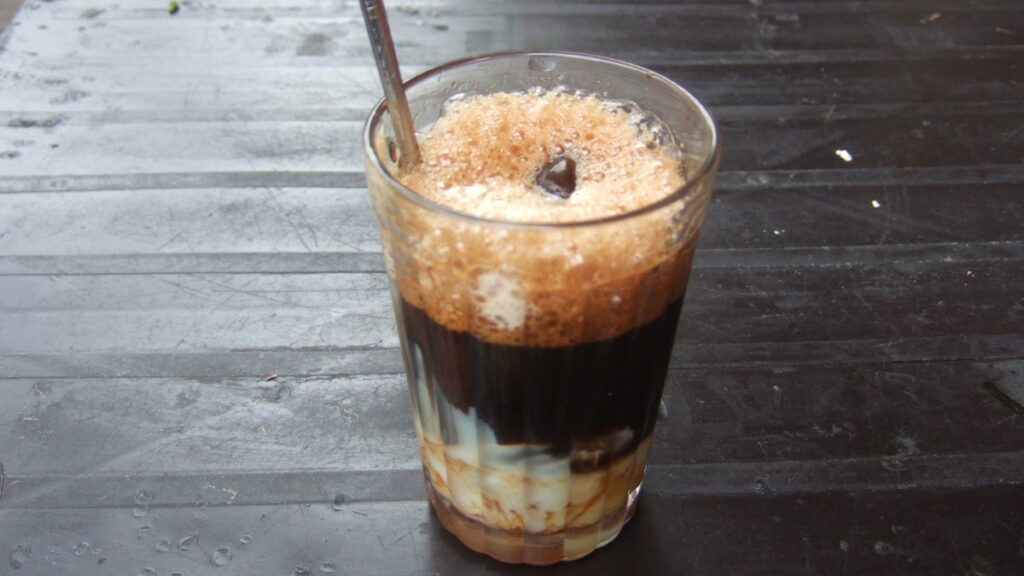
Order this, in this order: start with ca phe sua da (iced coffee with condensed milk) to set your baseline, then try bac xiu (milkier, gentler), then one specialty cup – egg, coconut or salt coffee. Expect 20,000-30,000 VND (~$0.75-1.15 USD) at a pavement stall and 45,000-80,000 VND (~$1.75-3.10 USD) at a sit-down cafe. Prices checked August 2026 and may change; conversions use 1 USD ≈ 26,000 VND.
Saigon does not have a coffee scene so much as a coffee system: a plastic stool at 7am, a heritage cloth-filter shop at noon, a design cafe with a view at 4pm. The tourist mistake is treating them as competitors and asking “which is best”. They are three different things. This guide tells you what to drink, exactly what it should cost this month, and which named cafe to walk into for each – then the part no one else prints: when the expensive cup is worth it and when you are just paying rent on a chair.

What is Vietnamese coffee, and why is it this strong?
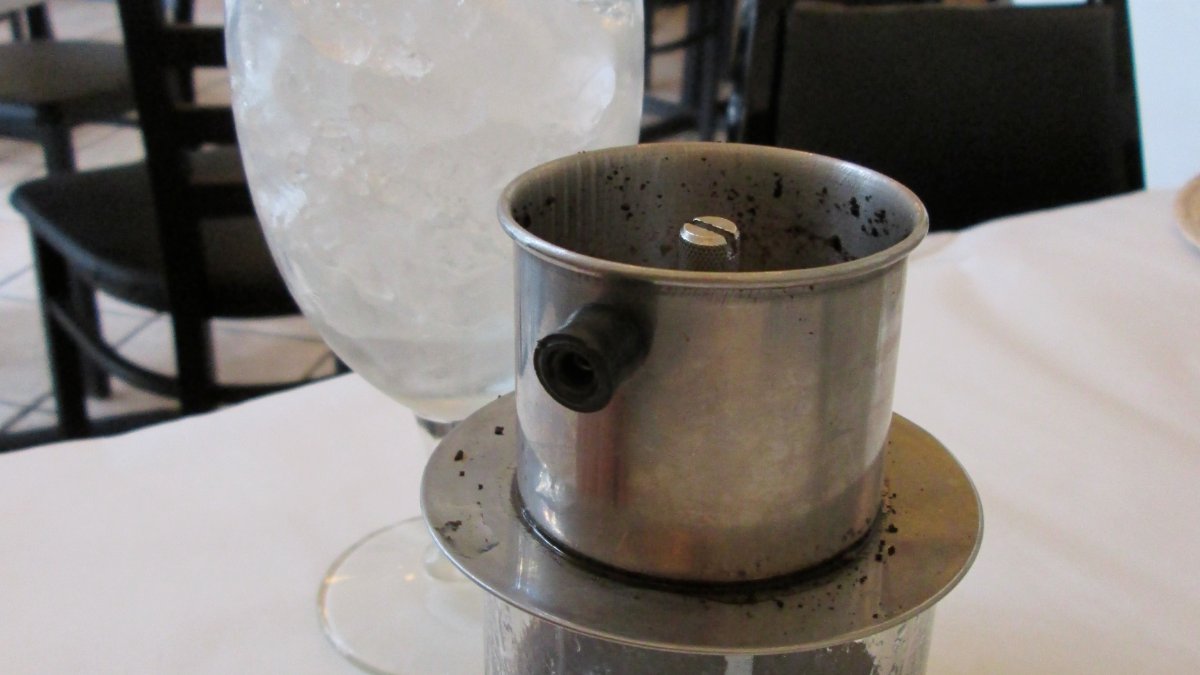
Vietnamese coffee is dark-roasted robusta from the Central Highlands, brewed slowly through a small metal drip filter called a phin – which is why it lands more bitter, earthier and far more caffeinated than the arabica most visitors know.
Two numbers make it concrete. A single phin takes roughly 4-5 minutes to drip a cup, so the slowness is the design, not a delay. And one cup carries roughly 180-220 mg of caffeine – noticeably above a typical arabica cup. That is the whole reason condensed milk and ice became standard here: they tame a very bold, low-acid brew rather than hide a weak one.
Robusta vs arabica, in one line: robusta is bitter, chocolatey and punchy with about double the caffeine; arabica (what specialty cafes pour) is lighter, fruitier and more acidic. Saigon’s soul is robusta; its new-wave cafes are where arabica lives.
What should you order? The drinks, ranked by where to start
Order ca phe sua da first – it is the national default and the cup every stall is judged on. Work outward from there. Below is every order worth knowing, with what it actually is and this month’s price.
| Drink (Vietnamese) | What it is | Where it’s from | Price VND / USD |
|---|---|---|---|
| Ca phe sua da | Iced phin coffee over condensed milk – the benchmark | Nationwide staple | 20,000-35,000 street / 45,000-65,000 cafe (~$0.75-2.50) |
| Ca phe den (da/nong) | Black phin coffee, no milk, iced or hot | Nationwide | 15,000-30,000 (~$0.60-1.15) |
| Bac xiu | More milk, less coffee – the gentle Saigon order | Saigon (Chinese-Vietnamese roots) | 25,000-40,000 (~$0.95-1.55) |
| Ca phe trung (egg) | Whipped egg-yolk-and-milk foam over coffee; tastes like tiramisu | Hanoi, 1946 | 40,000-65,000 (~$1.55-2.50) |
| Ca phe dua (coconut) | Coffee blended with coconut cream and ice, near-slushie | Southern Vietnam / Saigon | 45,000-75,000 (~$1.75-2.90) |
| Ca phe muoi (salt) | Coffee with lightly salted cream on top | Hue, around 2010 | 45,000-75,000 (~$1.75-2.90) |
Two origin notes worth knowing, because they surprise people. Egg coffee is not from Saigon – it was invented in 1946 at Giang Cafe in Hanoi, when a wartime milk shortage pushed a bartender to whip egg yolk in place of scarce condensed milk. Salt coffee is not from Saigon either – it started in Hue around 2010. The genuinely southern invention on this list is coconut coffee, so if you want the drink Saigon can actually claim, order that.
Our everyday order, and where: Ca phe sua da – iced coffee with condensed milk – taken mid-morning once the breakfast rush clears. For the real thing, Cheo Leo in District 3 has been dripping coffee over charcoal for around eighty years and its ca phe sua da is a Saigon institution. Skip the air-conditioned chains; an old nel-drip spot or a plastic stool on the pavement makes it better, for less, and you get the city with it.
Where to drink it: named cafes, districts and hours
Match the cafe to the cup. Here are real, verifiable Saigon spots mapped to what each does best – with district and opening hours so you do not turn up to a closed door.
| Cafe | District | Go for | Signature price | Hours |
|---|---|---|---|---|
| Cheo Leo (109/36 Nguyen Thien Thuat) | D3 | Ca phe vot (cloth-filter), Saigon’s oldest cafe, since 1938 | ~25,000 VND (~$0.95) | Early mornings best (from ~6am) |
| Little Hanoi Egg Coffee (212 Le Lai / 119 Yersin) | D1 | Egg coffee, nostalgic old-Hanoi room | ~40,000 VND (~$1.55) | 8am-10pm daily |
| The Workshop (27 Ngo Duc Ke, 2nd floor) | D1 | Specialty arabica – pour-over, cold brew, espresso | ~70,000-90,000 VND (~$2.70-3.45) | 8am-8:30pm daily |
| Cong Ca Phe (multiple branches) | D1 & D3 | Coconut coffee, retro war-era styling | ~55,000-65,000 VND (~$2.10-2.50) | ~7am-11pm |
| The Cafe Apartment (42 Nguyen Hue) | D1 | The view and the photo – a whole block of cafes | Varies by cafe, often 55,000+ VND (~$2.10+) | Most ~8am-10pm |
| Any busy pavement stall | Everywhere | The real ritual, lowest price, locals only | 15,000-25,000 VND (~$0.60-0.95) | Peaks 7-9am |
Opening hours drift and small shops close on a whim – check the day’s hours on Google Maps before a special trip, especially for Cheo Leo, which keeps its own rhythm.
Which district for which coffee?
Saigon’s coffee splits cleanly by district, so let geography choose for you.
- District 1 – variety and view. The tourist core, and genuinely good: egg coffee at Little Hanoi, specialty arabica at The Workshop, the Instagram block at The Cafe Apartment, and a stall on nearly every corner. Choose D1 if you have one afternoon and want range.
- District 3 – heritage and phin. Quieter, older, more local. This is where cloth-filter Cheo Leo has poured since 1938. Choose D3 if you want the slow, traditional ritual over the photo.
- District 2 / Thao Dien – the new wave. Across the river, the expat-and-creative zone: airy specialty roasters, flat whites, laptops, cards accepted everywhere. Choose it if you want third-wave arabica over robusta-and-condensed-milk tradition.
When the expensive cup is NOT worth it
Here is what no ranking guide will tell you: you are usually paying for the seat, not the coffee. The robusta in a 20,000-VND street cup is often the same bean as a 70,000-VND cafe cup. The 3x price is air-conditioning, a designed room, a rooftop or a river view.
So spend deliberately:
- Skip the pricey cafe when you just want a caffeine hit and a taste of the real thing – the pavement stall wins on both, and on atmosphere.
- Pay up when the setting is the point: you want to sit for two hours, work, escape the heat, or get the view. That is a fair trade, not a rip-off.
- Be wary of cafes with no locals, only tourists, and a menu photographed more than it is drunk – that is a signal you are paying tourist premium for average coffee.
Do both at least once. The gap between them is the point of Saigon coffee, not a trap.
How to order like a local (and how to pay)
Say the drink, then say hot or iced. Two words unlock most of the menu: da = ice, nong = hot.
- Ca phe sua da – iced milk coffee (kah-feh soo-uh dah)
- Ca phe sua nong – hot milk coffee
- Ca phe den da – iced black, no milk
- Bac xiu – milkier and gentler, if the black is too strong
- Cam on – thank you
Cash or card? Pavement stalls and old shops are cash only – carry small notes (10,000-50,000 VND). Specialty cafes, chains and anywhere in Thao Dien take cards and, more often, a VietQR scan; you will often be shown a QR code rather than a card machine. When in doubt at a street stall, assume cash.
The easiest way to taste the range: with the food
Coffee in Saigon is woven through the street-food day, not separate from it – which is why the fastest way to taste your way across the styles is alongside the eating.
Our Saigon Food Tour ($59 USD, 10+ dishes across 5 districts) runs on the back of a motorbike through the exact neighbourhoods where the best stalls sit, and your rider points you to the coffee spots locals actually use – not the ones with the biggest signs. Prefer the cooler evening version? See the Saigon by Night tour. New to the city, plan the rest of your trip with first time in Saigon, and if salt coffee is your target, go deeper with our salt coffee guide.
FAQ: Saigon coffee
What is the most popular coffee in Saigon?
Ca phe sua da – iced phin coffee over condensed milk. It is the everyday default across the city and the drink to order first. Expect to pay 20,000-35,000 VND (~$0.75-1.35 USD) at a stall.
How much does a coffee cost in Ho Chi Minh City?
A ca phe sua da is 15,000-35,000 VND (~$0.60-1.35 USD) at a pavement stall and 45,000-65,000 VND (~$1.75-2.50 USD) at a sit-down cafe. Specialty arabica cups run 70,000-90,000 VND (~$2.70-3.45 USD). Figures checked August 2026 at 1 USD ≈ 26,000 VND.
What is ca phe sua da?
Ca phe sua da is strong dark-roast coffee dripped through a metal phin filter onto sweetened condensed milk, then poured over ice. “Sua” means milk and “da” means ice. It is Saigon’s signature drink.
What is bac xiu?
Bac xiu is a Saigon order that flips the ratio of ca phe sua da: much more condensed milk and less coffee, so it is milder and sweeter. Order it if regular Vietnamese coffee is too strong for you.
Where can I try egg coffee in Saigon?
Little Hanoi Egg Coffee in District 1 (212 Le Lai and 119 Yersin, open 8am-10pm) is the reliable pick, at around 40,000 VND (~$1.55 USD) a cup. Egg coffee was invented in Hanoi in 1946 during a milk shortage, but Saigon cafes serve it well.
Why is Vietnamese coffee so strong?
It is dark-roasted robusta – which carries roughly double the caffeine of arabica, about 180-220 mg per cup – brewed slowly through a phin filter. That intensity is exactly why condensed milk and ice are standard: to balance a bold, low-acid brew.
Is street coffee in Saigon safe to drink?
Yes, at busy stalls with high turnover. The ice is almost always factory-made tube ice with a hole through the middle, which is safe. Choose a stall crowded with locals, and stick to bottled water otherwise.
What is the difference between Hanoi and Saigon coffee?
Hanoi leans stronger and more traditional – hot black phin coffee and egg coffee are the icons. Saigon leans sweeter, colder and more inventive: ca phe sua da, bac xiu and coconut coffee, almost always iced against the heat.
Is coconut coffee originally from Saigon?
Coconut coffee (ca phe dua) is a genuine southern Vietnamese invention rather than a tourist gimmick, which makes it the most authentically “Saigon” specialty on the menu. Cong Ca Phe is an easy, consistent place to try it.
Ask a KissTour rider where to drink coffee in Saigon on WhatsApp · +84 901 006 844