Short answer: che in Saigon is the whole family of Vietnamese sweet soups — beans, jelly, coconut milk and crushed ice in a glass. A street cup costs 10,000–25,000 VND, a loaded one 30,000–40,000 VND. Order che ba mau first, eat it after 7 PM, and look for a plastic stool.
What Is Che, Exactly?
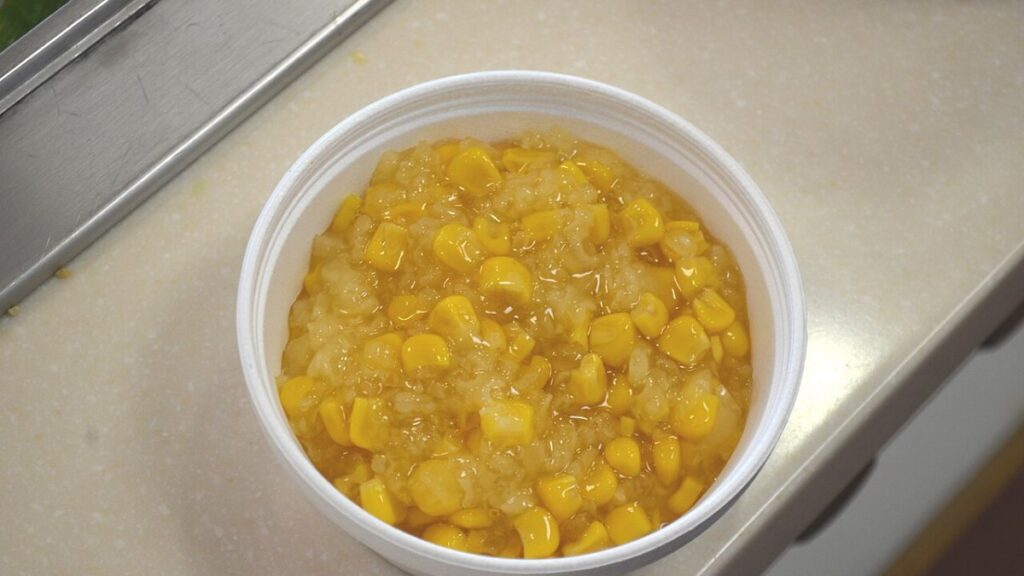
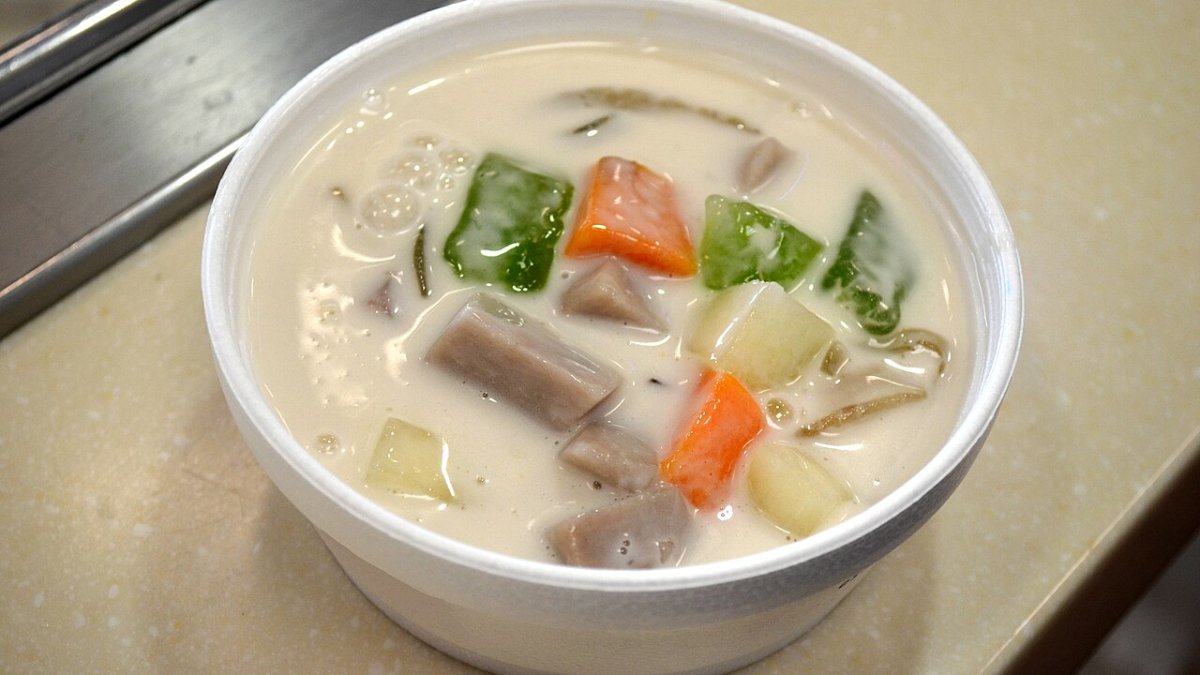
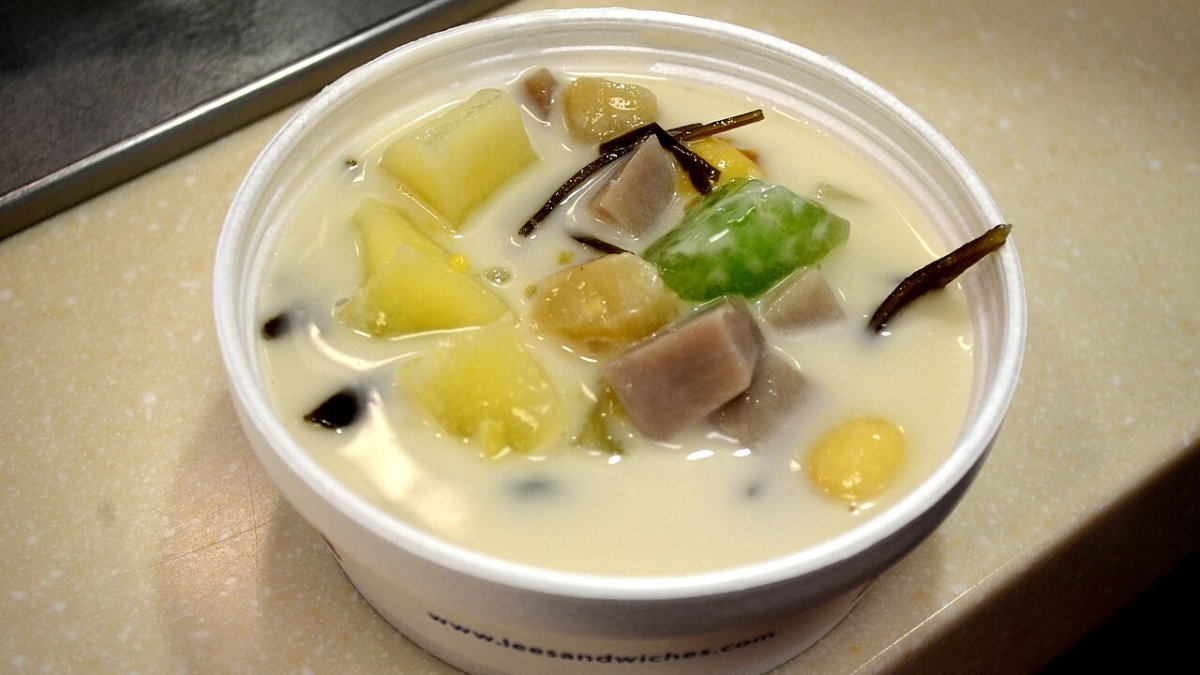
Che is the umbrella word for Vietnamese sweet soups and puddings — anything sweet served in a bowl or glass, hot or cold. The fillings run from beans and lotus seeds to taro, sticky rice, jelly, tapioca pearls, coconut milk and fruit.
That is why the word confuses visitors. Che in Saigon is not one dessert, it is a category the size of “pie” — and a good stall will have twenty versions of it chalked on a board, in Vietnamese, with no photos. The unifying idea is texture: almost every che has something chewy, something soft, something crunchy on top, and coconut milk holding it together. Sugar is the least interesting part.
The Vietnamese entry for chè lists dozens of regional versions; what you meet in the south is generally colder, sweeter and heavier on coconut milk than what you would get in Hue or Hanoi.
How Much Does Che in Saigon Cost in 2026?
A standard cup of che in Saigon runs 10,000 to 25,000 VND — around 40 cents to a dollar. Mixed bowls with several fillings and extra toppings reach 30,000 to 40,000 VND, and the famous Chinese-Vietnamese shops in District 5 go to 50,000 VND.
| Where you buy it | Price per cup (2026) | What you get |
|---|---|---|
| Street cart or market stall | 10,000–25,000 VND | One or two fillings, ice, coconut milk, plastic cup |
| Neighbourhood che shop | 20,000–35,000 VND | A menu board, a stool, glass bowls |
| Loaded or mixed bowl | 30,000–40,000 VND | Several fillings plus toppings in one glass |
| Cho Lon dessert houses (District 5) | 25,000–50,000 VND | Chinese-Vietnamese classics, hot and cold, 30+ options |
| Cafe or dessert chain | 45,000–70,000 VND | Air conditioning, mostly |
At roughly 26,000 VND to $1 USD, two people can eat dessert for the price of a bottle of water at the airport. If you want the wider picture on daily spending, we costed out how much food costs a day in Ho Chi Minh City.
Which Types Should You Order First?
Start with che ba mau. It is the three-colour glass: red bean at the bottom, yellow mung bean in the middle, green pandan jelly on top, then crushed ice and coconut milk poured over. No safer introduction to che in Saigon exists.
| What to order | What arrives | Hot or cold |
|---|---|---|
| Che ba mau | Red bean, mung bean, pandan jelly, ice, coconut milk | Cold |
| Che chuoi | Ripe banana in coconut milk with tapioca pearls, crushed peanuts on top | Warm |
| Che dau xanh | Smooth mung bean, gently sweet — the plainest one | Either |
| Che thai | Jackfruit, longan and jelly in sweetened cream, the loud one | Cold |
| Tau hu nuoc duong | Silken tofu in ginger syrup, sold from a shoulder pole in the afternoon | Warm |
| Che khuc bach | Almond-milk cubes with lychee and toasted almonds | Cold |
One warning worth reading before you order: peanuts turn up as a topping on a lot of these, and so does sesame. We wrote a whole guide on whether Vietnamese food has peanuts for anyone travelling with an allergy — with che it is a real question, not a theoretical one.
Where Do Locals Eat Che in Saigon?
The dessert map runs through Districts 1, 3, 5 and 10, and the densest cluster is Cho Lon in District 5, where the Chinese-Vietnamese shops sell thirty-something varieties from the same counter.
Che Ha Ky at 138 Chau Van Liem in District 5 is the reference point: family-run, decades old, around 38 kinds hot and cold. Prices run 25,000 to 50,000 VND, and it holds 4.1 out of 5 from more than 1,300 reviews on Foody. Listings disagree about when it opens, so treat the evening as the safe bet rather than turning up at lunchtime.
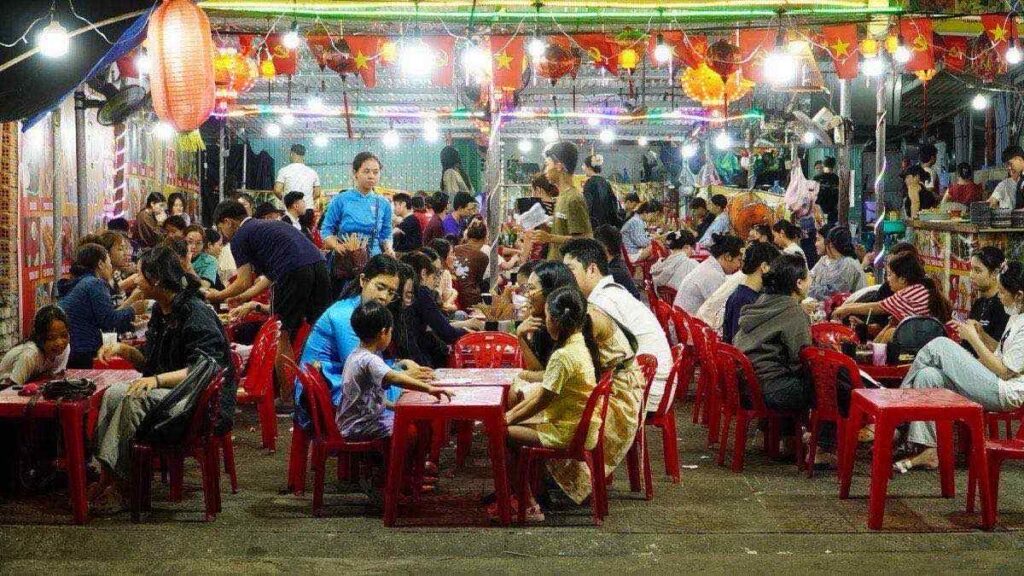
Outside Cho Lon, the reliable move is a market after dark. The flower market at Ho Thi Ky street food market has dessert carts running until late. Most of the city’s other night markets keep at least one che seller at the end of the food aisle. That placement is not an accident — che is what you have after everything else, on the same stool, for the price of a coffee.
When Is the Best Time to Eat Che in Saigon?
After 7 PM. Che in Saigon is an evening habit — the carts appear when the heat drops, and the cold versions make sense at the end of a heavy meal rather than instead of one.
Afternoon has its own version: the tau hu seller with the shoulder pole, silken tofu in ginger syrup, working residential streets from about 2 PM rather than tourist ones. The MICHELIN Guide’s own list of Vietnamese desserts puts it in the same company as the che you queue for at night. Mornings are for coffee, not che. And in the rainy months the warm bowls quietly take over the menu board, which is the closest thing Vietnamese dessert has to a season.
Is Che in Saigon Safe to Eat from a Street Cart?
Generally yes, with one specific thing to watch: the ice. The cylindrical ice with a hole through the middle is factory-made and fine; roughly crushed ice from an unmarked bag in a bucket is the one to skip if your stomach is cautious.
Beyond that, apply the rule that works everywhere here — busy stall, high turnover, coconut milk that has not been sitting warm all afternoon. Our full answer is in is street food safe in Vietnam, written after a lot of guests asked the same question on the back of a bike.
Can You Try Che on a Food Tour?
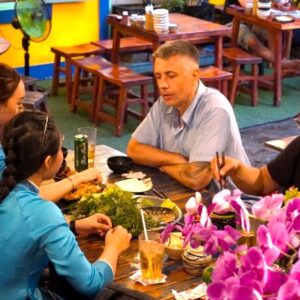
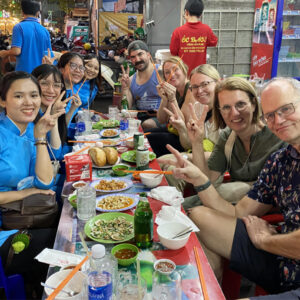
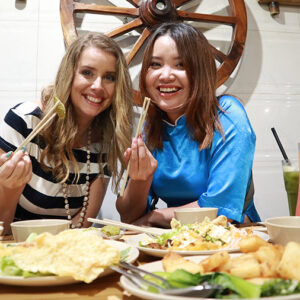
Yes — sweet local desserts are part of the 10+ dishes on our evening food tour, and they land at the end of the route on purpose, when nobody wants another bowl of noodles.
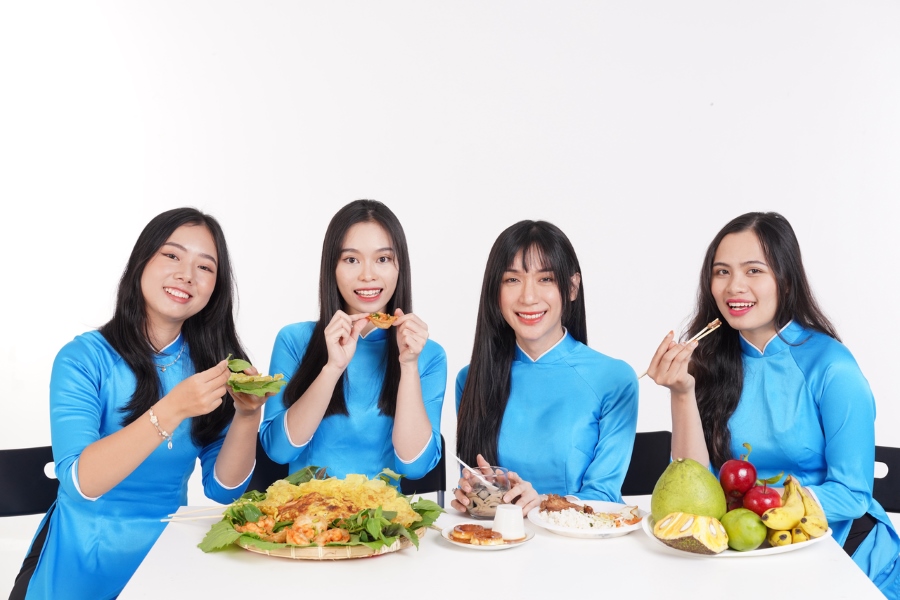
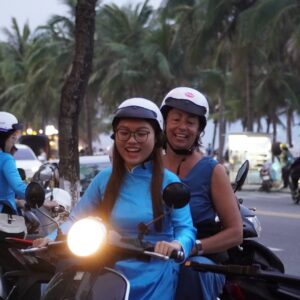
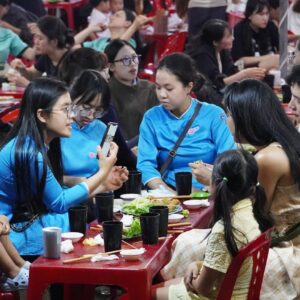
The Kiss Food Tour is $59 USD for about four hours, crossing five districts with all food and drinks included, and it runs at night because that is when the stalls we like open. If you would rather see the city and stop for dessert along the way, Kiss Saigon By Night is $39 USD for 3.5 hours. Both are ridden by women — 100% women drivers, áo dài on the scooter in front of you — and you book now and pay cash after the tour.
Not sure which food route suits you? We compared all of them in our guide to the best food tours in Ho Chi Minh City. There is also a full walk-through of what to expect on a Saigon food tour if you want the detail first.
FAQ: Che in Saigon
How much does a bowl of che in Saigon cost?
10,000 to 25,000 VND at a street cart, 30,000 to 40,000 VND for a loaded mixed bowl, and up to 50,000 VND at the older dessert houses in District 5. In dollars, che in Saigon costs roughly 40 cents to $2 USD.
What is che ba mau?
The three-colour dessert: red bean, mung bean paste and pandan jelly layered in a glass with crushed ice and coconut milk. It is the most recognisable che in Saigon and the one to order first.
Is che served hot or cold?
Both. Che in Saigon leans cold and coconut-heavy; warm versions like che chuoi and tofu in ginger syrup show up in the afternoon and in the rainy season.
Is che vegetarian or vegan?
Most versions are — beans, jelly, fruit and coconut milk, with no dairy. Check for condensed milk in cafe-style bowls and for gelatin in some jellies if you are strict.
Where is the best che in Saigon for a first-timer?
A busy market stall in District 1 or 3 for the everyday version, or Cho Lon in District 5 for the deep menu. Go where there are stools occupied by people who did not walk there with a map.
Do I need to speak Vietnamese to order?
No. Pointing works, and “che ba mau” is understood everywhere. If the board is dense, ask for “ba mau” and hold up fingers for how many cups.
Come eat dessert with us. The Kiss Food Tour — $59 USD, about four hours, 10+ dishes across five districts with food and drinks included — is TripAdvisor’s #1-rated food tour in Saigon, and it ends sweet. Tell us your allergies and we will plan around them.