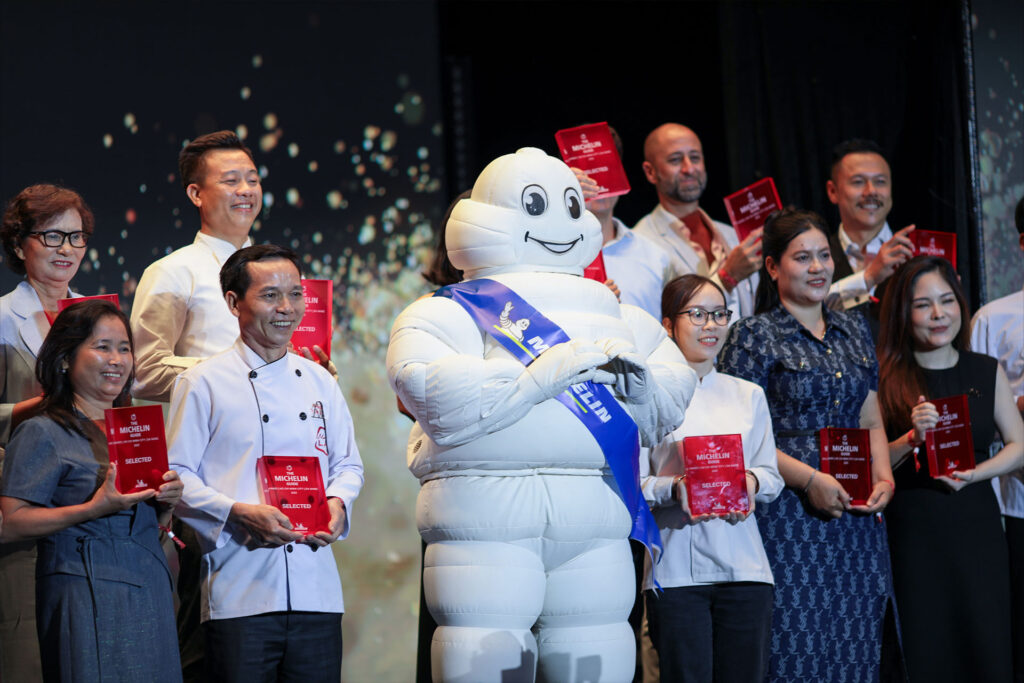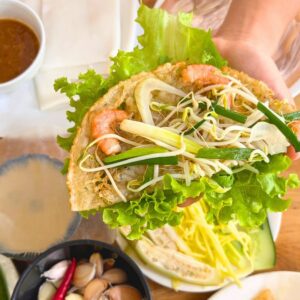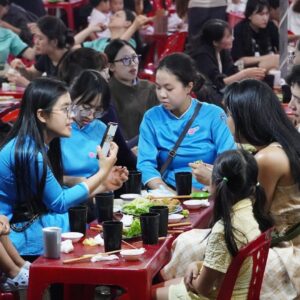

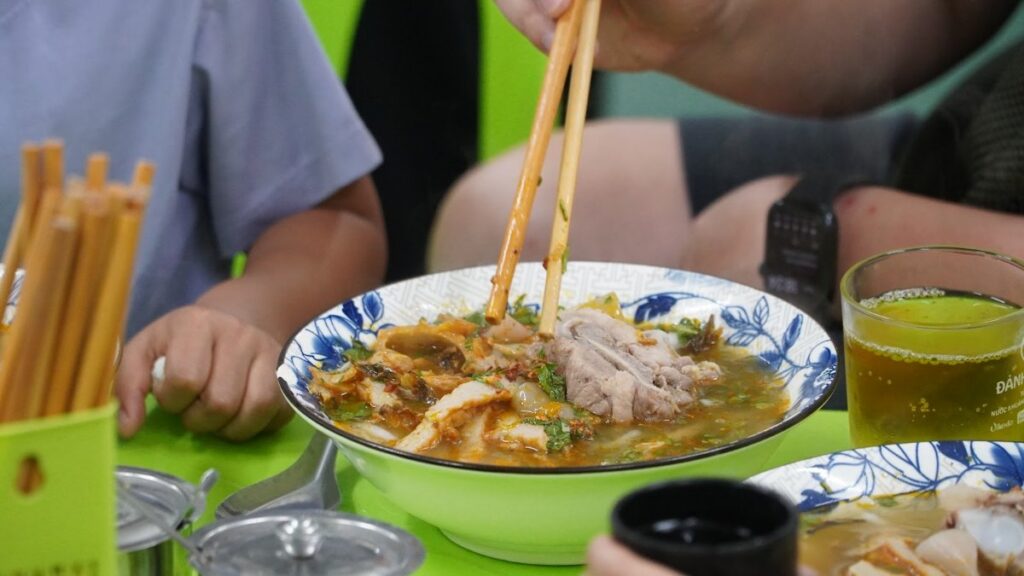
Short answer: Mi quang is Da Nang’s defining noodle dish and a nationally protected one – in 2024 the Ministry of Culture added mi quang to Vietnam’s list of national intangible cultural heritage. It is wide turmeric-yellow rice noodles dressed in just a shallow pool of intense broth (not a soup), topped with pork and shrimp, peanuts, herbs and a snapped sesame rice cracker. Expect to pay 30,000-50,000 VND (about $1.15-1.92 USD) at a good specialist shop, eaten for breakfast or lunch. The most reliable first bowls: Mi Quang 1A (1A Hai Phong St) and Mi Quang Co Sau near the Dragon Bridge – both in the Michelin Guide.
Most visitors arrive in Da Nang planning to eat pho and leave obsessed with a dish they had never heard of. Mi quang is not a softer, central-Vietnamese pho – it is a different idea about what a noodle bowl should be, built by rice farmers in Quang Nam province who wanted something rich, portable and eaten fast between tasks. This guide gives you the two things every other page only half-answers: what the dish actually is (and why it matters), and exactly where to eat it, with addresses, hours and current prices. Figures checked in August 2026 and may change; conversions use 1 USD = 26,000 VND.
Where to eat mi quang in Da Nang
The best mi quang comes from shops that make almost nothing else – one broth, perfected over decades, served until it runs out. Below are six trusted spots, from two Michelin-listed kitchens to a local everyday stall and the shops serving the unusual regional variants. Prices are per bowl.
| Shop | Address & hours | Price / bowl | Why go |
|---|---|---|---|
| Mi Quang 1A | 1A Hai Phong St, Hai Chau. Approx. 6:00-21:00 daily | 30,000-50,000 VND ($1.15-1.92) | The classic first bowl. Michelin Guide-listed, central, tourist-easy, still low-cost. Order the Tom Thit (shrimp & pork). |
| Mi Quang Co Sau | Near the Dragon Bridge, on the Han River bank, Hai Chau. Morning to early afternoon | 30,000-90,000 VND ($1.15-3.46) | Also in the Michelin Guide. Broader topping choice (chicken, fish, shrimp); the higher tiers are the loaded special bowls. |
| Mi Quang Ba Mua | 95A Nguyen Tri Phuong, Thanh Khe (also branches on Ong Ich Khiem & Bach Dang). 6:00-21:00 | 35,000-65,000 VND ($1.35-2.50) | Third-generation family shop running since 1965, broth simmered 8+ hours from pork bones and shrimp heads. The expertise bowl. |
| Mi Quang Ong Hai | 132 Hoang Dieu, Hai Chau. Daytime | 30,000-50,000 VND ($1.15-1.92) | A steady neighbourhood specialist locals rate – less tourist traffic, same quality, the everyday version. |
| Mi Quang Sua Hong Van | Hai Chau area. Daytime | 30,000-45,000 VND ($1.15-1.73) | The jellyfish (sua) variant – crunchy, cooling, unusual. Go here when you have already had the classic and want something no other city serves. |
| A neighbourhood cart with no sign | Anywhere with a low plastic-stool crowd, before 9:00 | 20,000-30,000 VND ($0.77-1.15) | The lowest-cost and often the best – one recipe, made every morning for the same regulars. If it is packed with locals eating fast, sit down. |
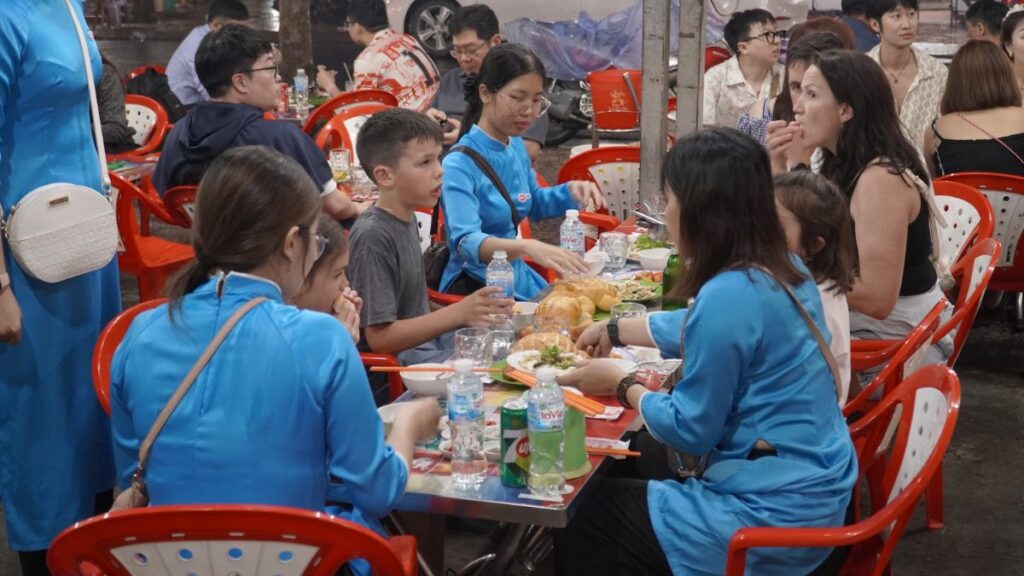
Prefer to skip the guesswork? Our Da Nang Food Tour ($49 USD) puts mi quang alongside the other central-Vietnamese dishes at the exact stalls our women guides eat at, so your first bowl is a local’s bowl, not a review-ranked one.
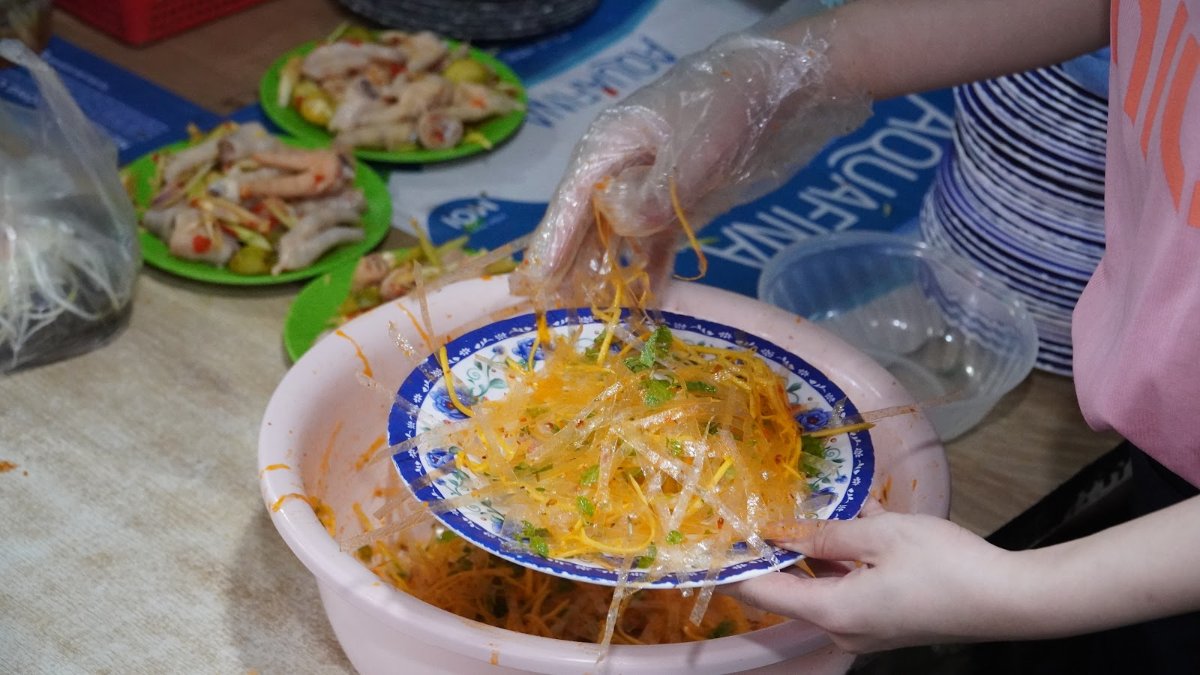
What mi quang is, exactly
Mi quang is a barely-brothy noodle dish, not a soup: wide rice noodles stained yellow with turmeric, dressed in only a shallow ladle of concentrated stock that coats the noodles rather than submerging them. That restraint is the entire point. Where pho drowns its noodles in clear broth, mi quang gives you maybe two or three spoonfuls of an intense, savoury, turmeric-and-shrimp liquid, and expects you to toss everything together so every strand is coated.
It comes from Quang Nam province just south of Da Nang, with Phu Chiem village in Dien Ban most often cited as the home of the classic restrained pork-and-shrimp style. This is not a marketing story: in 2024 Vietnam’s Ministry of Culture, Sports and Tourism formally listed the craft of making mi quang as national intangible cultural heritage, alongside pho. When you eat it in Da Nang, you are eating a protected regional tradition a short drive from where it was invented.
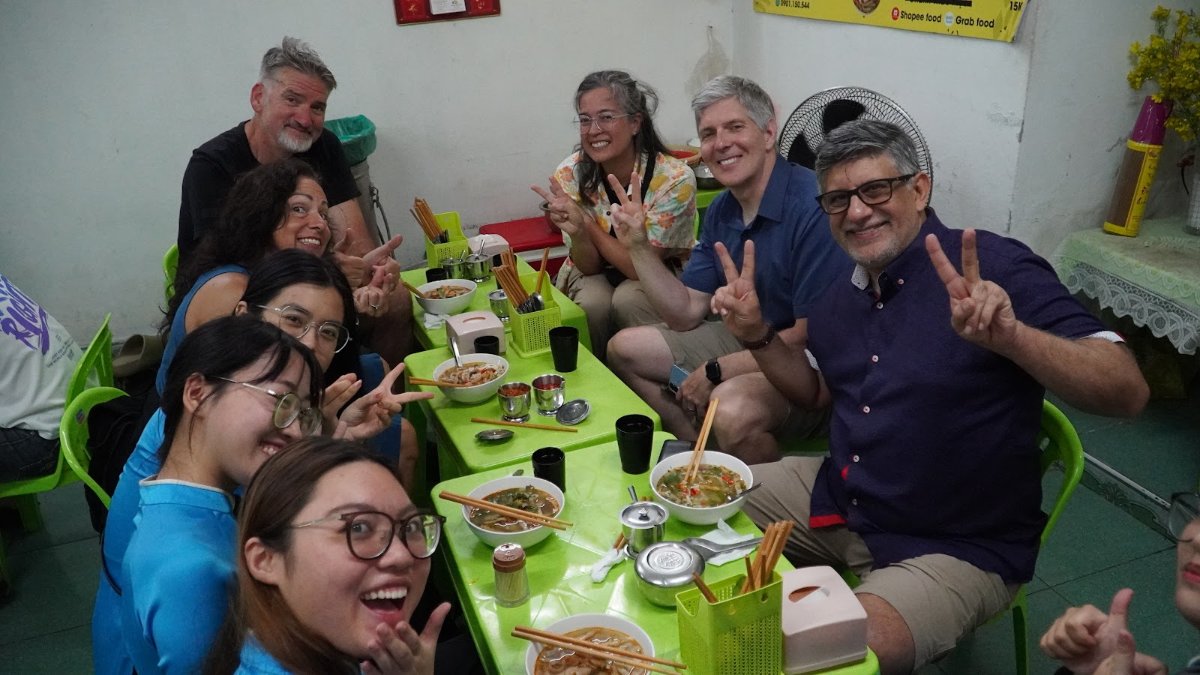
How to order at the counter
Ordering is simple once you know the tiers – most shops name bowls by their protein, and you just say the tier plus how many.
- Mi Quang – the basic bowl, the lowest-cost tier.
- Mi Quang Tom Thit – shrimp and pork, the everyday classic and the one to order first.
- Mi Quang Ga – chicken, common in the Dai Loc inland style.
- Mi Quang Dac Biet – the “special”: everything, usually with a quail or chicken egg, at the top of the price range.
Say the tier and the number – “Tom Thit, hai bat” is two shrimp-and-pork bowls. The herbs, banana blossom, lime, chilli and sesame cracker come free on the side; take as much as you want.
What locals do differently: A Da Nang regular does three things a first-timer skips. First, they snap the toasted sesame rice cracker (banh trang) into the bowl and eat within a minute, before it softens – the contrast of shattering cracker against soft noodle is half the dish. Second, they tumble everything together hard so the shallow broth coats every strand; mi quang left un-tossed tastes dry and flat. Third, they chase it with a strong Vietnamese coffee, not tea – the bitterness cuts the turmeric richness perfectly.
Where we send people for mi quang: The name locals trust is Mi Quang 1A at 5 Hai Phong Street – a long-running specialty shop that even earned a Michelin mention, always busy with people eating in and queuing for takeaway. Order the mi quang ga (chicken) or tom thit (shrimp and pork), make sure the toasted rice cracker and herbs come with it, and squeeze the lime yourself. A proper bowl is barely soupy; if it is swimming in broth, it is not the real thing. Mi Quang Ba Mua (several branches) is the reliable back-up.
The 145+ variations worth hunting
There is no single “correct” mi quang – Quang Nam alone has more than 145 documented local versions, and half the fun of a few days here is tasting how far it stretches. The classic Da Nang bowl is pork and shrimp, but you will also find:
- Ga (chicken) – the Dai Loc district style, lighter and often the most fragrant.
- Ca loc (snakehead fish) – the fishing-village version, common toward the coast and river mouths.
- Ech (frog) – an inland, countryside variant for the adventurous.
- Sua (jellyfish) – cool and crunchy, the signature of Mi Quang Sua Hong Van.
- Tam Ky / Ky Ly style – the southern Quang Nam take, with its own broth balance.
If you are heading south for the day, the dish is even more at home in its birthplace. Our Hoi An day trip ($40 USD) runs through the same Quang Nam countryside where mi quang was born, and roadside shops there serve versions rarely seen in the city.
Mi quang vs pho vs bun bo Hue
If you already know Vietnam’s famous noodle soups, the fastest way to place mi quang is side by side – it sits apart from both on almost every axis.
| Feature | Mi Quang | Pho | Bun Bo Hue |
|---|---|---|---|
| Broth amount | Shallow – coats, not covers | Generous, fully submerged | Generous, fully submerged |
| Noodle | Wide turmeric rice noodle | Flat white rice noodle | Round white rice noodle |
| Colour & flavour | Yellow, earthy, turmeric & peanut | Clear, clean, star anise & beef | Red-orange, spicy, lemongrass & chilli |
| You mix it? | Yes – toss before eating | No – eat as served | Lightly |
| Extras | Peanuts + snapped sesame cracker | Herbs, lime, chilli | Herbs, lime, banana blossom |
| Home region | Quang Nam / Da Nang | Northern Vietnam | Hue (central) |
| Best eaten | Breakfast & lunch | Any time | Breakfast & lunch |
Trying all three in a couple of days is the quickest way to taste how much Vietnamese cooking changes from region to region. Our Da Nang food guide maps where to find each one.
When mi quang is NOT worth it
Honestly, there are a few times to skip it. Mi quang is a daytime dish – specialist shops open around 6:00 and sell until the day’s broth runs out, often by early afternoon. If it is 8:00 pm and a place still has a full pot, that is usually reheated stock or a tourist kitchen, and the bowl will disappoint; order something built for the evening instead, or join our Da Nang by night tour ($35 USD) for dishes that are actually at their best after dark.
Two more honest caveats. Turmeric and the shrimp-heavy broth are polarising – if you dislike earthy, slightly bitter flavours or have a shellfish allergy, the classic bowl may not win you over (ask for the chicken tier instead). And if you only have one meal in Da Nang and are travelling with fussy eaters, a mixed food tour spreads the risk better than betting the whole meal on one regional specialty.
FAQ: Mi Quang in Da Nang
What is mi quang made of?
Wide turmeric-yellow rice noodles, a small amount of rich pork-and-shrimp broth, protein (usually pork and shrimp, sometimes chicken, fish or frog), roasted peanuts, fresh herbs and banana blossom, and a toasted sesame rice cracker snapped in on top.
How much does a bowl of mi quang cost in Da Nang?
About 20,000-30,000 VND ($0.77-1.15 USD) at a street cart and 30,000-65,000 VND ($1.15-2.50 USD) at a sit-down specialist. Loaded “special” bowls at places like Co Sau can reach 90,000 VND ($3.46). Checked August 2026.
Is mi quang a soup?
No. Unlike pho, mi quang uses only a shallow pool of intense broth that coats the noodles rather than covering them, and you toss everything together before eating. It is best described as a dressed noodle dish.
Where is the best mi quang in Da Nang?
For a reliable first bowl, Mi Quang 1A (1A Hai Phong St) and Mi Quang Co Sau (near the Dragon Bridge) are both in the Michelin Guide. Mi Quang Ba Mua (95A Nguyen Tri Phuong), running since 1965, is the expertise pick. A packed no-sign neighbourhood cart is often the best value of all.
What is the difference between mi quang and pho?
Pho is a clear, generous soup with white noodles you eat as served. Mi quang has wide yellow turmeric noodles, barely any broth, peanuts and a sesame cracker, and you mix it yourself. Mi quang is much earthier; pho is cleaner and lighter.
Where does mi quang come from?
Quang Nam province, just south of Da Nang, with Phu Chiem village in Dien Ban cited as the source of the classic pork-and-shrimp style. The province has 145+ local variations.
When do they serve mi quang?
Mainly breakfast and lunch. Specialist shops open around 6:00 am and serve until the day’s broth runs out, often by early afternoon. It is rarely a genuine evening dish.
Is mi quang Michelin recommended?
Yes. Mi Quang 1A and Mi Quang Co Sau are both listed in the Michelin Guide for Da Nang, and mi quang itself was added to Vietnam’s national intangible cultural heritage list in 2024.
How do you eat mi quang?
Snap the sesame rice cracker into the bowl, toss everything together so the shallow broth coats every strand, add herbs, lime and chilli to taste, and eat quickly while the cracker is still crunchy. Chase it with strong Vietnamese coffee.