
Da Nang or Hoi An for food? Base your trip in Da Nang and day-trip to Hoi An. Da Nang gives you the widest everyday eating, a real late-night scene, coastal seafood landed that morning, and it is the only one of the two cities the MICHELIN Guide actually inspects. Hoi An, 30 km away, owns three dishes you cannot get right anywhere else — cao lau, white rose dumplings, and banh mi Phuong — plus the best cooking classes. Sleep where you eat every night (Da Nang); visit Hoi An for the dishes and the lantern light.
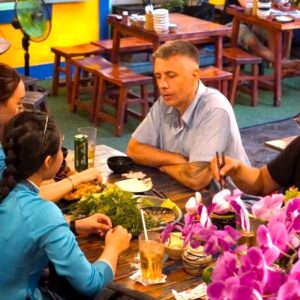
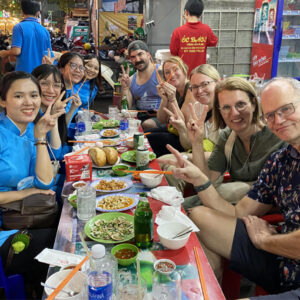
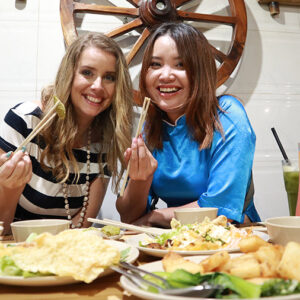
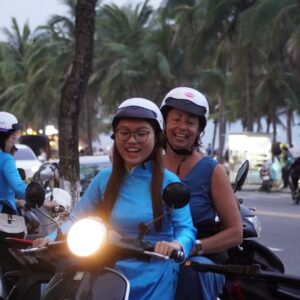
We run women-led ao dai motorbike food tours in both towns, so our riders get this question roughly once a week, usually from someone who has read five blogs that all say something different. Here is the version we actually give guests over a bowl of mi quang — including where two popular articles get the facts wrong. Awards and prices below were checked in August 2026 and may change; convert VND at about 26,000 to the US dollar.

Myth vs reality: who really won “world’s best food”?
Hoi An is world-famous for food, but it did not win Tripadvisor’s “world’s best food destination” — Hanoi did. Several comparison articles claim Hoi An was named the No. 1 food destination on the planet in Tripadvisor’s 2024 Travellers’ Choice. That is a mix-up worth correcting: in the 2024 food ranking, Hanoi took the global No. 1 spot, ahead of Rome, Paris and New Delhi. Hoi An’s real 2024 honour was placing in the top 10 of Tripadvisor’s overall Best of the Best destinations (and No. 2 for honeymoons) — a huge accolade, but not a food title.
Why does this matter for your stomach? Because the honest picture is more useful than the postcard one. Hoi An’s food fame rests on atmosphere and a handful of perfected specialties. Da Nang’s rests on breadth and formal recognition: the MICHELIN Guide named Da Nang one of the world’s 10 most exciting culinary destinations for 2025, alongside Osaka, Bangkok and Mexico City. If you want a badge to trust, Da Nang has the stronger, more current one.
What Da Nang does best
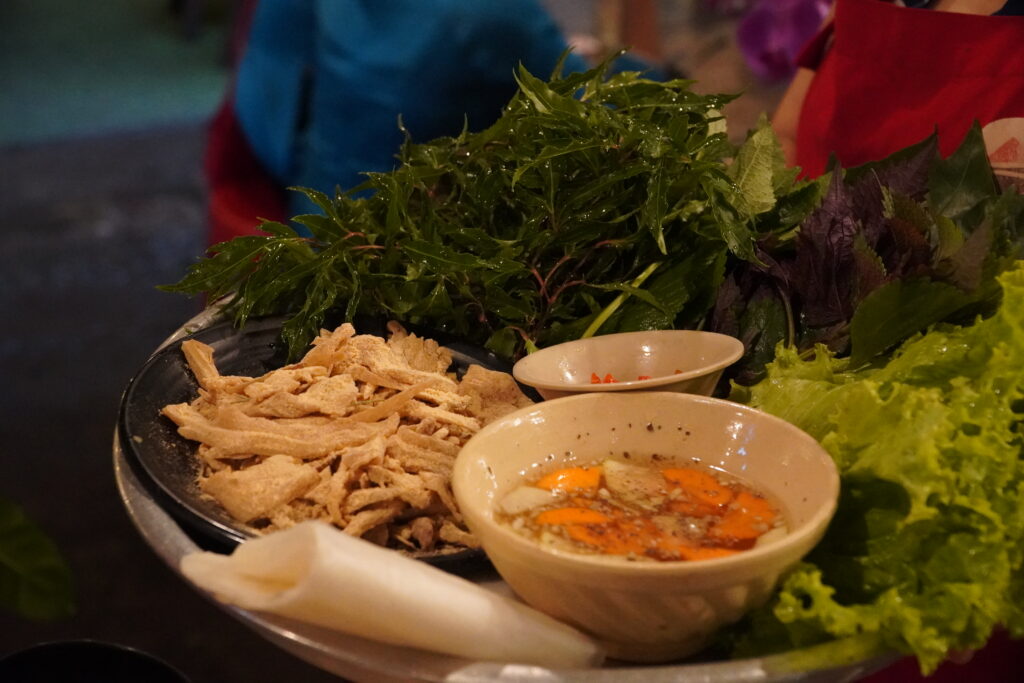
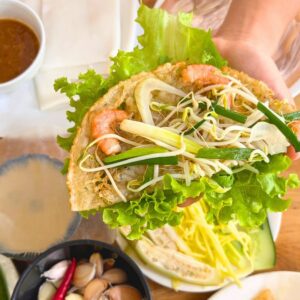
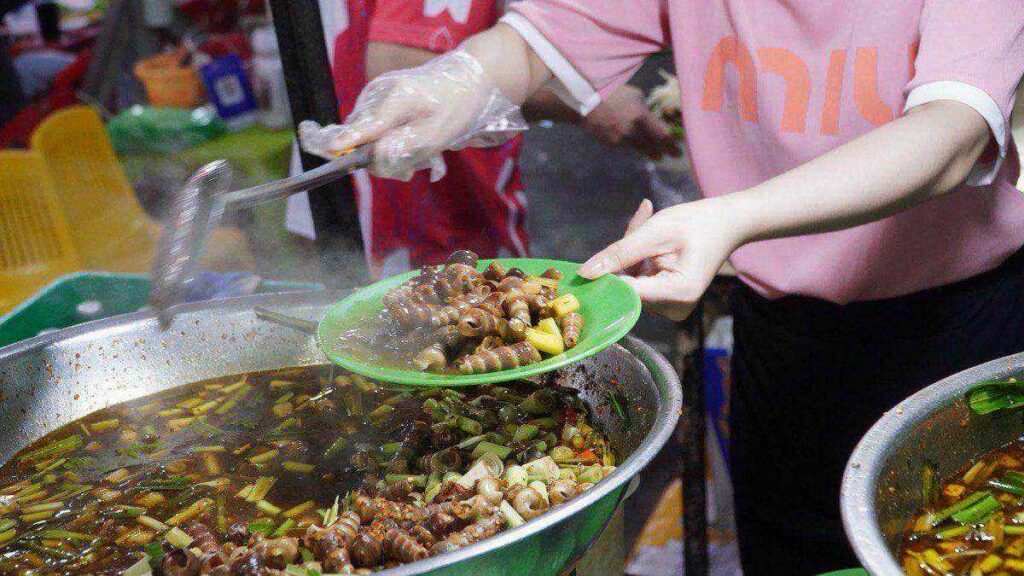
Da Nang is the better base because it eats broadly — noodles, pancakes, duck, and daily seafood — across the whole city and late into the night. Its regional signature is mi quang: turmeric-yellow flat noodles with pork and shrimp, herbs, peanuts and a shard of grilled rice cracker, served with just a slick of intense broth rather than a full soup. Two more Da Nang staples the guidebooks often skip: banh xeo, crackling rice-flour pancakes you wrap in herbs and rice paper, and bun cha ca — fish-cake noodle soup in a light, sweet-sour broth built from fish bones, pumpkin and pineapple. The MICHELIN Guide singles out mi quang and bun cha ca as the dishes to eat here.
Everyday spots our riders send guests to: Bé Ni 2 for beachfront seafood sold by weight (open around the clock, so it saves you on a late-flight night); Bánh Xèo Tôm Nhảy Cô Ba for the “jumping shrimp” pancakes; and Quán Nhân for Da Nang-style duck. For a structured first day, our small-group Da Nang food tour (from $49 per person) front-loads mi quang, banh xeo and seafood in the order a local would order them, and our Da Nang food guide maps the neighbourhoods.
What Hoi An does best
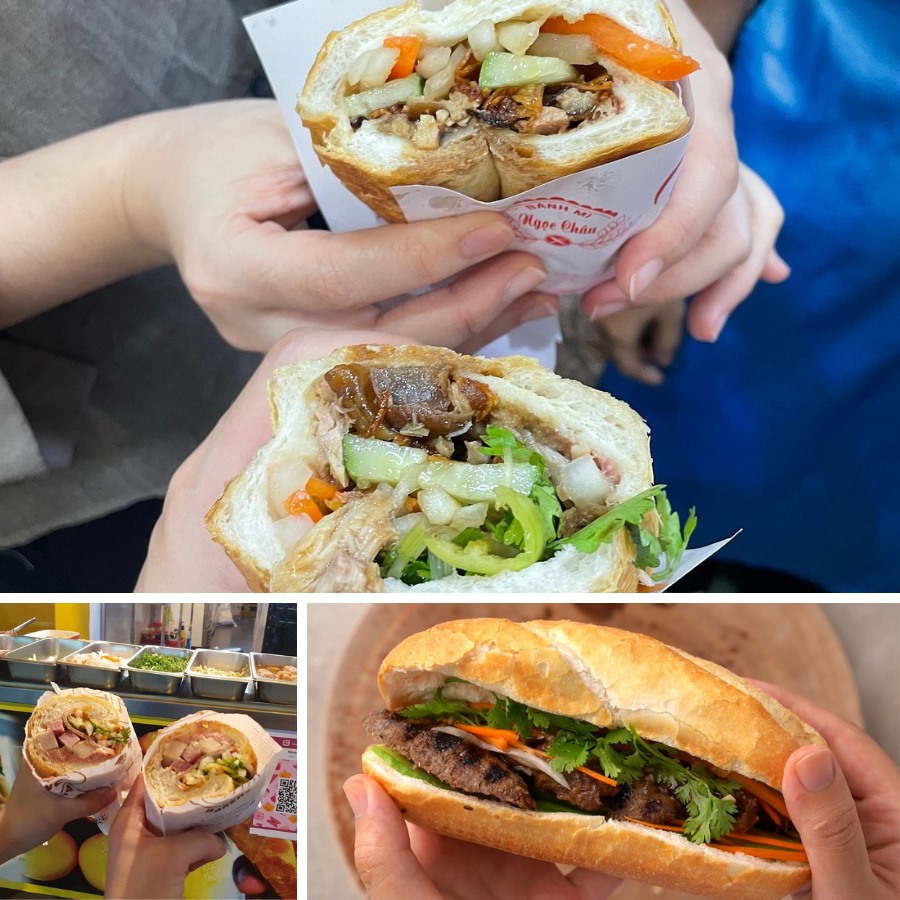
Hoi An owns three dishes that genuinely do not travel, plus the region’s best cooking classes. Eat cao lau (chewy noodles traditionally made with water from specific old town wells and lye from local ash — impossible to copy exactly elsewhere), white rose dumplings (translucent shrimp parcels long made by a single family in town), and banh mi Phuong, the sandwich Anthony Bourdain famously praised. For an honest everyday bowl of mi quang in Hoi An, locals point to Mì Quảng Ông Hai at about 40,000 VND (roughly $1.54).
Hoi An is also the place to cook, not just eat: riverside market-to-table cooking classes and lantern-lit food walks are a Hoi An specialty that Da Nang does not match. If you want the pretty half-day version that still fills your stomach, our Hoi An & coconut forest tour (from $40 per person) pairs the basket-boat water-coconut forest with old-town time.
| Dish | City | Where to try it | Typical price |
|---|---|---|---|
| Mi quang | Da Nang | Mì Quảng Ông Hai (also in Hoi An); many Bib Gourmand spots | 30,000–50,000 VND ($1.15–1.92) |
| Bun cha ca | Da Nang | Market stalls citywide; a MICHELIN-recommended local dish | 30,000–45,000 VND ($1.15–1.73) |
| Banh xeo | Da Nang | Bánh Xèo Tôm Nhảy Cô Ba | 40,000–70,000 VND ($1.54–2.69) |
| Fresh seafood | Da Nang | Bé Ni 2 (by weight, 24/7), My Khe beach strip | Market weight; ~150,000+ VND for two |
| Cao lau | Hoi An | Old town wells only; central Hoi An eateries | 30,000–50,000 VND ($1.15–1.92) |
| White rose dumplings | Hoi An | Old town family kitchens | 50,000–70,000 VND ($1.92–2.69) |
| Banh mi Phuong | Hoi An | Banh Mi Phuong, near the old town | 25,000–40,000 VND ($0.96–1.54) |
The MICHELIN angle: only Da Nang is on the map
Da Nang is inspected by the MICHELIN Guide; Hoi An is not. The 2026 MICHELIN Guide Vietnam covers just three cities — Hanoi, Ho Chi Minh City and Da Nang — with 11 MICHELIN Stars awarded nationwide. Da Nang alone holds 47 recognised establishments: 1 One-Star, 1 Green Star, 23 Bib Gourmand (“great food, honest prices”) and 23 MICHELIN Selected. The 2026 update added three new Bib Gourmand names — Bà Vui (traditional chicken), Bánh Bèo – Bánh Đập, and Lê Gia Khang — plus Dì Hoa as a new Selected entry.
Hoi An being absent does not mean its food is worse; it simply sits outside the areas inspectors visit, so no Bib Gourmand “good value” badges exist there. If ticking off recognised addresses is part of your trip, that list only exists on the Da Nang side — one more reason to base there.
Is Hoi An lower-cost than Da Nang? (And the one money-saver locals use)
Everyday prices are almost identical in both cities — the difference is the tourist premium inside Hoi An’s old town, and you can dodge most of it. A bowl of noodles or a banh mi runs about 30,000–50,000 VND ($1.15–1.92) in either place, and a local sit-down meal for two lands around 150,000–300,000 VND ($5.77–11.54). Where Hoi An gets pricier is the postcard blocks: the same dish costs more with a river view than two streets back.
What locals do differently in Hoi An: eat your main meal at lunch, not dinner — set-lunch menus are often about half the dinner price for near-identical food. And walk away from the lantern zone: the Cho Hoi An morning market, the streets around Nguyen Phuc Chu, and anything north of the train tracks charge local prices, not old-town prices.
| What you order | Da Nang | Hoi An (tourist zone) | Hoi An (local streets / lunch) |
|---|---|---|---|
| Signature noodle bowl | 30,000–50,000 VND ($1.15–1.92) | 50,000–80,000 VND ($1.92–3.08) | 30,000–45,000 VND ($1.15–1.73) |
| Local meal for two | 150,000–300,000 VND ($5.77–11.54) | 250,000–400,000 VND ($9.62–15.38) | 150,000–250,000 VND ($5.77–9.62) |
| Sit-down set menu | Widely available, all day | Dinner premium | Set lunch ≈ half of dinner |
Where should you base: Da Nang or Hoi An?
Base in Da Nang and day-trip to Hoi An — it works far better than the reverse. The two are about 30 km apart, a 40–60 minute drive, so Hoi An is an easy half or full day out while your bed, your beach and your late dinners stay in Da Nang. Use this quick decision guide:
- Base in Da Nang if you want variety, seafood, a beach, nightlife, MICHELIN-recognised addresses, or you are travelling with mixed appetites and want options every night. Our Da Nang by night tour and street-food night-market guide exist because there is a real after-dark scene here.
- Base in Hoi An if your trip is short, slow and built around atmosphere: one or two nights, lantern light over range, a cooking class, and you mainly want cao lau, white rose and banh mi within walking distance. Honeymooners and photographers often choose this and are right to.
A 3-day eat-your-way plan (Da Nang base)
Here is the itinerary we actually recommend to food-first guests.
- Day 1 — Da Nang breadth. Mi quang for breakfast, banh xeo mid-afternoon, then seafood by weight on the beach strip after dark. This is the day to take a guided Da Nang food tour so you learn how to order before you go solo.
- Day 2 — Hoi An day trip, lunch-loaded. Arrive late morning, eat your big meal at lunch (cao lau, white rose, a Phuong banh mi), wander the old town as the lanterns come on, and drive back to Da Nang for a light late supper. You save money and skip the dinner crowds.
- Day 3 — Da Nang deep cuts. Bun cha ca in the morning, a Bib Gourmand lunch from the MICHELIN list, and duck or a night market to finish. If you want the countryside too, swap in the Hoi An & coconut forest tour.
When a Da Nang base is NOT the right call
Skip the Da Nang-first plan if your trip is one or two slow nights built entirely around Hoi An’s old town. If you only care about cao lau, white rose and lantern-lit streets, want a cooking class, and would rather walk to dinner than take a daily transfer, sleep inside Hoi An and let Da Nang go. Likewise, if you are a light eater with no interest in seafood or nightlife, Da Nang’s main advantages — range and late hours — are wasted on you. Honesty is the whole point: the “base in Da Nang” logic wins for eaters who want variety, not for travellers chasing a single quiet postcard.
The honest answer we give: both are worth it, so if your trip allows, sleep in both. Base in Da Nang and you wake up to a proper beach; base in Hoi An and you are steps from the Ancient Town in the quiet early and late hours when the day-trippers have gone. Splitting your nights between the two beats forcing a choice.
FAQ: Da Nang vs Hoi An for food
Is Da Nang or Hoi An better for food?
Da Nang is the better base for a food-first trip because it has more range, a bigger night scene, daily coastal seafood, and MICHELIN Guide recognition, while Hoi An is not inspected by the guide. Hoi An still wins on three specialties — cao lau, white rose dumplings and banh mi Phuong — so most travellers base in Da Nang and day-trip to Hoi An for those.
Does Hoi An have any Michelin restaurants?
No. The 2026 MICHELIN Guide Vietnam covers only Hanoi, Ho Chi Minh City and Da Nang, so Hoi An has no stars, Bib Gourmand or Selected listings. Da Nang, by contrast, holds 47 recognised establishments, including 1 One-Star and 23 Bib Gourmand spots.
How far is Hoi An from Da Nang?
Hoi An is about 30 km from Da Nang, roughly a 40 to 60 minute drive depending on route and traffic. That short distance is exactly why basing in Da Nang and day-tripping to Hoi An is the practical choice for food travellers.
Is Hoi An lower-cost than Da Nang?
Everyday food costs about the same in both cities — a noodle bowl or banh mi is roughly 30,000–50,000 VND ($1.15–1.92) and a local meal for two about 150,000–300,000 VND ($5.77–11.54). Hoi An only feels pricier in its old town tourist zone; eat lunch instead of dinner and walk to the local streets and you pay Da Nang prices.
What food is Da Nang known for?
Da Nang is known for mi quang (turmeric noodles), banh xeo (crispy pancakes), bun cha ca (fish-cake noodle soup) and fresh central-coast seafood. As a working coastal city it lands seafood daily and spreads its eating across neighbourhoods and late into the night.
What are the must-try dishes in Hoi An?
Eat cao lau, white rose dumplings and banh mi Phuong in Hoi An, because all three are tied to the town and hard to get right elsewhere. Cao lau uses water traditionally drawn from specific local wells, and white rose dumplings were long made by a single Hoi An family.
Can you do Hoi An as a day trip from Da Nang?
Yes, and it is the recommended approach. With only 30 km between them, you can arrive in Hoi An late morning, eat your main meal at lunch, enjoy the old town at dusk, and be back in Da Nang for the night — all without changing hotels.
Is Da Nang worth visiting for food?
Yes. The MICHELIN Guide named Da Nang one of the world’s 10 most exciting culinary destinations for 2025, and its 2026 selection lists 47 recognised establishments. Between Bib Gourmand value spots, daily seafood and a genuine late-night scene, Da Nang rewards food travellers as much as Hoi An does.