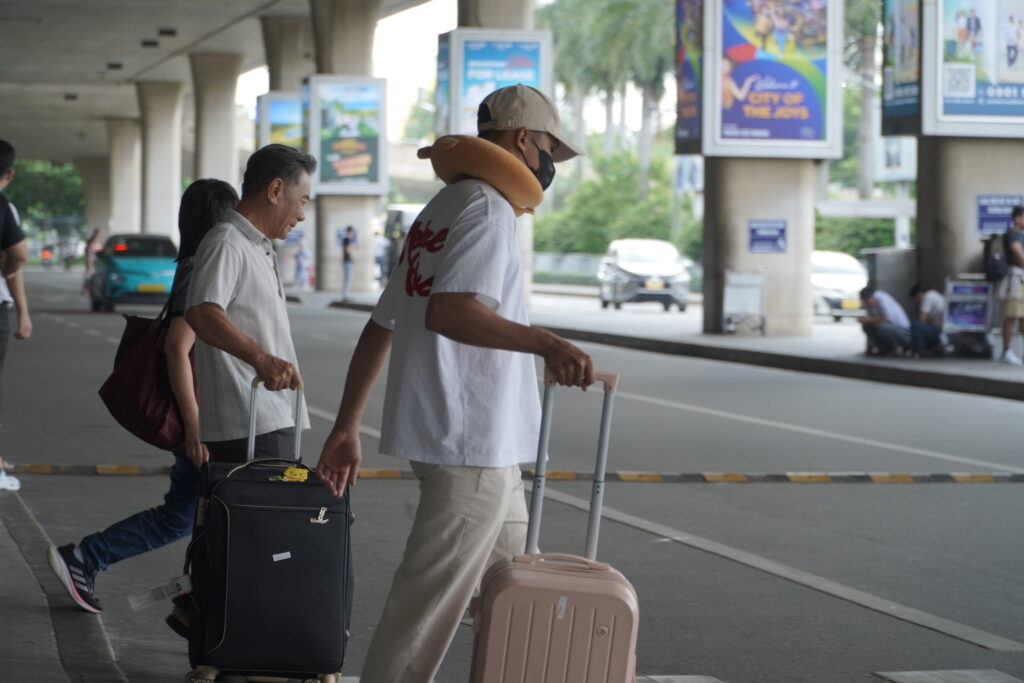

Short answer: After you land at Noi Bai (HAN), the order is simple: walk to immigration, get your passport stamped at a manual counter, collect your checked bags, walk through the green customs channel, then step into the arrivals hall. Have your passport (valid 6+ months) and e-visa printout in hand before you reach immigration. To reach the Old Quarter, use a ride-hailing app or the official taxi rank, not the people asking “taxi?” inside the terminal.
Landing in a new country for the first time is when small uncertainties feel large. The good news: arriving at Noi Bai is a linear process with no hidden steps. If you know the sequence and have two documents ready, you can move from your seat to a car in the Old Quarter without a wrong turn. This guide walks through exactly what happens, in order, and the few places where first-timers get tripped up.
The arrival sequence at a glance
International flights use Terminal 2. From the moment the door opens, the path is one direction with clear signage in English and Vietnamese:
- Leave the aircraft and follow signs to immigration (passport control).
- Clear passport control at a manual counter.
- Collect your checked bags at baggage claim.
- Pass through customs (the green channel if you have nothing to declare).
- Enter the public arrivals hall.
That is the whole journey. Everything below is detail on each step and how to avoid the small mistakes.
Step 1: Immigration
Follow the crowd from your gate toward “Arrivals” and “Immigration.” Foreign tourists clear entry at a staffed manual counter; the automatic e-gates are not available to visitors on entry, so plan on queuing rather than tapping through. Hand the officer your passport and, if you entered on an e-visa, your printout. The officer may ask where you are staying, so have your hotel name or address ready to say or show.
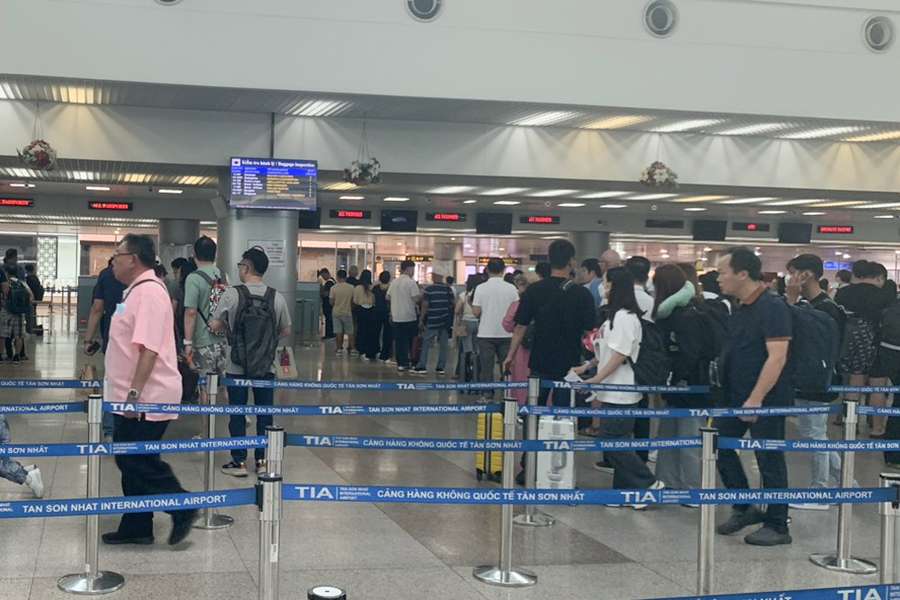
Peak-time reality: Noi Bai is calmer than Ho Chi Minh City’s Tan Son Nhat, but several long-haul flights often land together in the late evening. When that happens, the immigration queue can be slow. It moves; it just takes patience. Nothing has gone wrong.
Step 2: Baggage claim
After your passport is stamped, follow signs to baggage claim and find your flight number on the screens above the belts. If you only have carry-on, you skip the wait and walk straight toward customs. If a checked bag does not appear, look for your airline’s service desk in this area before you exit, since it is much harder to resolve once you have left the secure zone.
Step 3: Customs
Vietnam uses a two-channel customs system. If you are a typical tourist carrying personal belongings and nothing restricted, walk through the green “Nothing to Declare” channel. You usually will not be stopped. Use the red channel only if you are carrying goods that must be declared, large amounts of cash, or commercial items. Once you pass customs, you enter the public arrivals hall, and there is no going back inside.
What to have ready, and the common mistakes
Almost every arrival problem comes down to a document that was packed away. Before you join the immigration queue, have these in hand:
- Your passport, valid for at least six months from your arrival date.
- Your e-visa printout or visa. A paper copy is the safest option; do not rely only on a phone that might be dead or offline.
- Your hotel name and address, in case the officer asks where you are staying.
The mistakes first-timers make are small and avoidable:
- Digging for the e-visa at the counter while a line forms behind them. Have it out before you reach the front.
- Assuming they can use the fast e-gates. On entry, tourists cannot.
- Changing all their money at the airport counter at a poor rate (more on that below).
- Accepting a ride from someone who approaches them inside the terminal.
SIM card, cash, and the arrivals hall
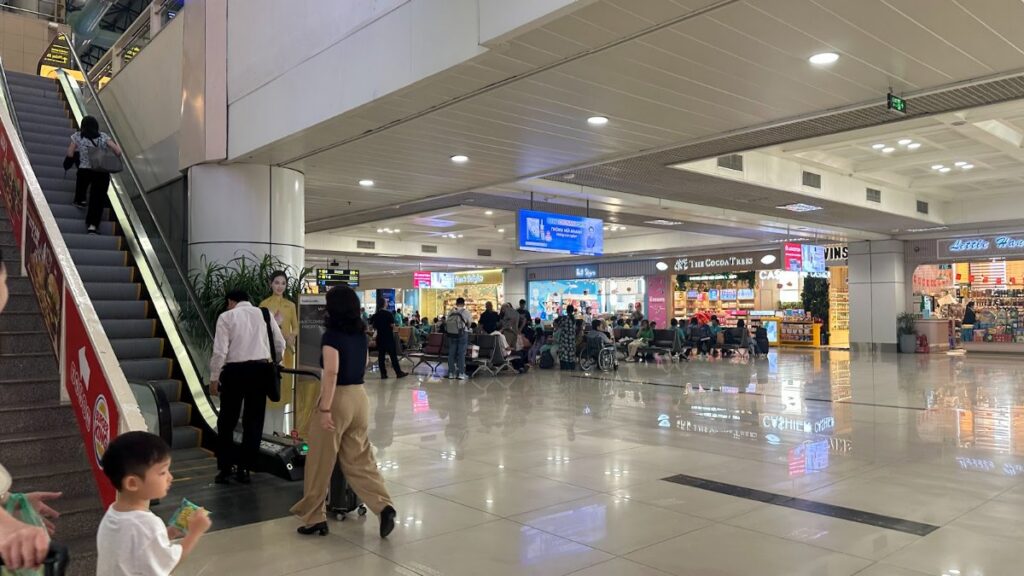
The arrivals hall has SIM-card counters, ATMs, currency exchange, and the exits to transport. A few honest notes:
- SIM cards: Airport kiosks are convenient but priced for convenience. Buying a SIM or eSIM from a phone shop in the city is often better value. If you want connectivity the moment you land, buy a small package at the airport and top up later, or arrange an eSIM before you fly.
- Cash: Airport exchange rates are usually poor. Withdraw a modest amount from an ATM or change just enough to get into the city, then handle the rest at a bank or reputable exchange downtown. You will want some cash for the bus, small shops, and tips.
- Take a breath: Step to the side, get your bearings, and decide how you are getting to the city before you walk toward the exit doors, where the touts wait.
Getting to the Old Quarter
Noi Bai sits farther from the center than many city airports, roughly 27 to 35 km, so budget 30 to 45 minutes by car. Here are the main options, with approximate 2026 fares to confirm on the day:
| Option | Approx. fare | Notes |
|---|---|---|
| Bus 86 (to Old Quarter / Hanoi Station) | ~45,000 VND (about $2 USD) | Runs roughly 06:30 to 22:00; slower but simple and easy on the wallet |
| Metered taxi or private transfer | ~350,000 to 450,000 VND ($15 to $20 USD) | Includes tolls; about 30 to 45 minutes; door to door |
| Ride-hailing app | Varies by demand | Price shown before you book; meet the car at the designated pickup point |
The tout warning: Inside the terminal, people may approach you asking “Taxi? Taxi?” Politely say no and keep walking. A legitimate driver does not fish for passengers in the hall. Use a ride-hailing app, or go to the official taxi rank outside and choose a reputable, clearly marked company with a working meter. If a driver quotes a flat fare that sounds high or refuses the meter, walk to the next car.
When priority arrival assistance is worth it, and when it is not
An airport fast-track or “greeter” service means a staff member meets you after the plane, helps you through the immigration queue via the priority lane, and guides you to your transport. It is a genuine convenience in specific situations, and unnecessary in others.
It is worth considering when:
- You are landing late at night during a busy arrival bank and want to shorten the immigration wait.
- You are traveling with young children, elderly parents, or a lot of luggage.
- You have a tight onward connection or an important meeting soon after landing.
- It is your first time and the reassurance of a familiar face holding your name sign is worth the cost to you.
You can comfortably skip it when:
- You are a confident, light-packing traveler arriving at a quiet hour.
- Your documents are in order and you are happy to queue.
- You simply want to walk out and open a ride-hailing app yourself.
Noi Bai is manageable on your own. Assistance buys you time and calm on a hard day; it does not buy you anything on an easy one. Choose based on your flight time, your group, and how you feel about arriving somewhere new.
FAQ: Arriving at Noi Bai Airport in Hanoi
Can I use the automatic e-gates at immigration?
No. Foreign tourists cannot use the automatic e-gates on entry to Vietnam. You clear passport control at a staffed manual counter, so expect a queue at peak times.
Do I need a printed copy of my e-visa?
It is strongly recommended. A paper printout means you are covered even if your phone is dead or offline, and it is quick to hand over at the counter. Keep a digital copy as backup too.
How long does it take to get through the airport?
On a quiet arrival it can be quick. During busy late-evening banks when several flights land together, immigration and baggage can take longer. Allow extra time and do not panic if the line is long.
How far is the Old Quarter from Noi Bai?
Roughly 27 to 35 km, farther than many city airports. By car it is usually about 30 to 45 minutes depending on traffic and the exact address.
What is the honest way to get to the city without being overcharged?
Use a ride-hailing app for a price shown before you book, or the official taxi rank with a reputable metered company. A private transfer at roughly 350,000 to 450,000 VND ($15 to $20 USD) is also fair. Ignore anyone inside the terminal asking “taxi?”
Should I buy a SIM card at the airport?
You can for instant connectivity, but airport kiosks are priced for convenience. Buying a SIM or eSIM in the city is often better value. A middle path is a small package at the airport, topped up later.
Should I exchange money at the airport?
Only a small amount. Airport exchange rates are usually poor. Change just enough to reach the city and cover the bus or a snack, then use an ATM or a reputable exchange downtown for the rest.
Is priority arrival assistance necessary?
Not necessary, but useful in specific cases: late-night arrivals, tight connections, traveling with children or elderly family, or heavy luggage. If you are a confident traveler arriving at a quiet hour with documents in order, you can skip it.
Land in Hanoi stress-free — ask about airport meet-and-greet on WhatsApp – +84 901 006 844