

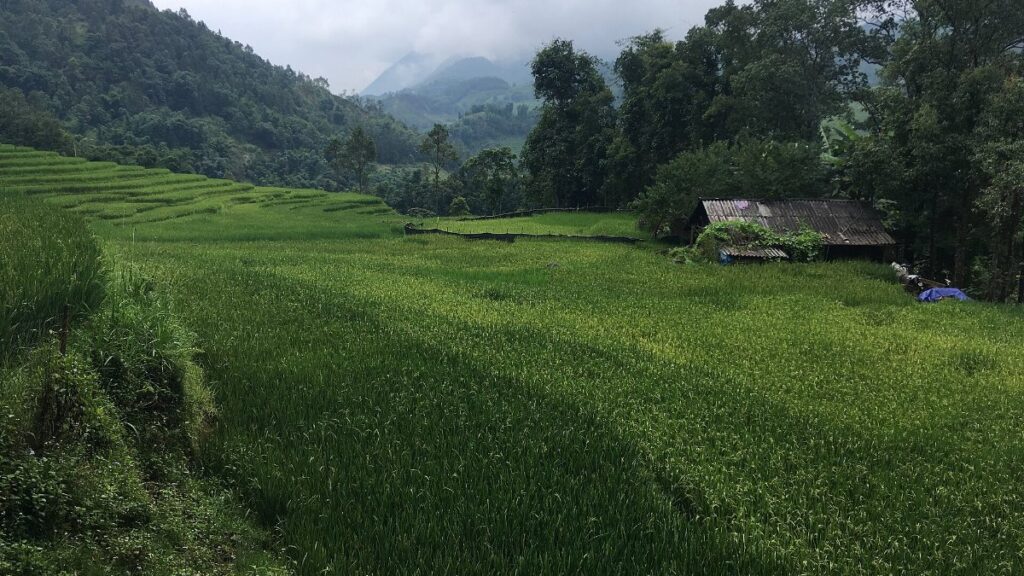
Short answer: Sapa trekking is best done as a one-day walk from Sapa town down the Muong Hoa Valley to Lao Chai and Ta Van, about 12 km in five to six hours. Go between September and November, budget 75,000 VND for the valley fee, and allow two nights, not one.
Sapa trekking is the reason most people make the trip north of Hanoi: rice terraces stacked up the valley walls, H’Mong, Dao and Giay villages linked by footpaths, and Fansipan above it all. This guide covers which route to walk, what it really costs in 2026, how to get there, and the months when it is worth the effort.
What Is Sapa Trekking Actually Like?
Sapa trekking means walking village-to-village on farm paths, not climbing a mountain. Most routes start in Sapa town at around 1,600 m and drop into the valleys below, so the hard part is often the mud, not the gradient. You pass terraces, bamboo, streams and homes where people are working, not performing.
Three things surprise first-timers. The paths are shared with buffalo and motorbikes. Local women, mostly Black H’Mong, will often walk alongside you for an hour and then ask you to buy something. A polite “no, thank you” early is kinder than a yes you do not mean. And the scenery changes completely by month: green in summer, gold in September, bare and brown after the harvest.
Which Sapa Trekking Route Should You Choose?
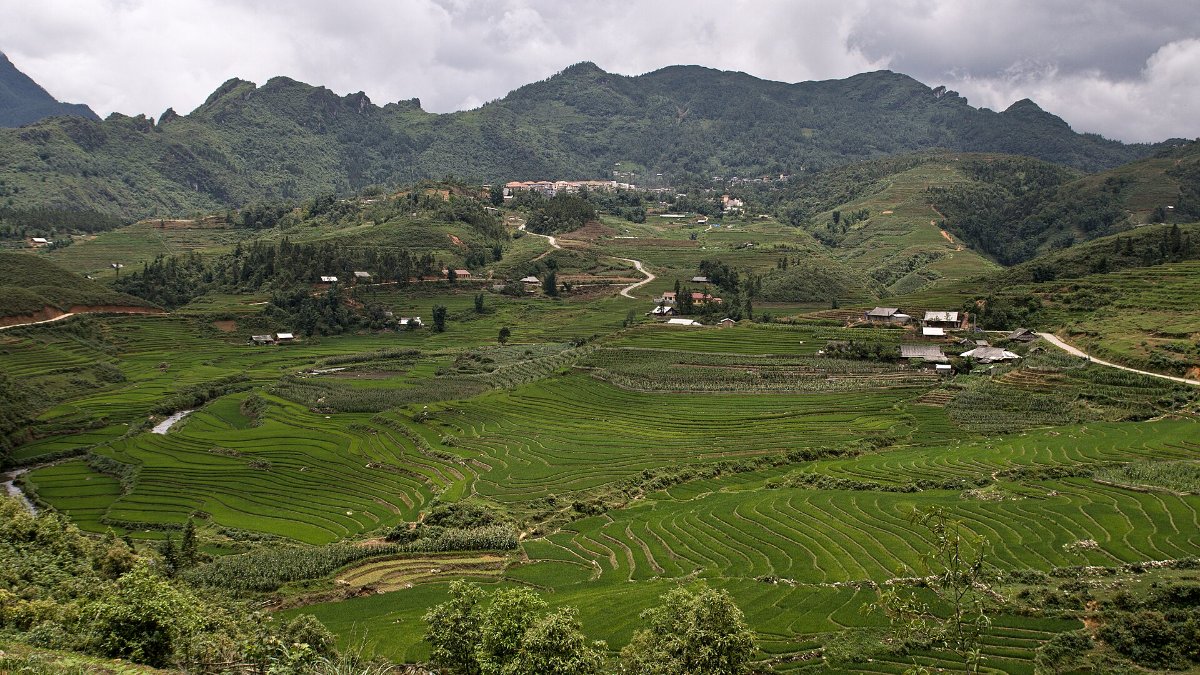
The best Sapa trekking route for most people is Lao Chai to Ta Van: about 12 km, five to six hours, mostly downhill, with the widest terrace views in the valley. Everything else is either shorter and busier, or longer and needs a guide.
| Route | Distance / time | Level | Best for |
|---|---|---|---|
| Cat Cat village | About 3 km loop, 2 hours | Easy, paved steps | Arrival afternoon, families |
| Lao Chai – Ta Van | About 12 km, 5–6 hours | Moderate, muddy after rain | First full trekking day |
| Y Linh Ho – Lao Chai – Ta Van | 14–16 km, 6–7 hours | Harder, steep narrow trail | Fit walkers wanting fewer people |
| Two-day valley trek with homestay | 20–25 km over 2 days | Moderate | Anyone with two nights |
| Fansipan summit on foot | 1–2 days | Hard, guide required | Experienced hikers only |
Cat Cat is a H’Mong village about 3 km from town, now heavily built for visitors, with waterfalls, craft stalls and photo spots. Treat it as a warm-up, not the main event.
Lao Chai and Ta Van are the classic. You walk down the Muong Hoa Valley past Black H’Mong homes in Lao Chai and finish in Ta Van, a Giay village with homestays and a road back to town. Most people take a taxi or motorbike back up; walking back doubles the day.
Y Linh Ho is the steeper, wilder start to the same valley, down through bamboo on narrow trails. Worth it if you are fit and it has been dry for a couple of days. Skip it after heavy rain.
How Much Does Sapa Trekking Cost in 2026?
Sapa trekking costs very little in tickets — the main expense is a guide, if you take one. Prices below were checked in September 2026 and converted at roughly 26,000 VND to $1 USD.
| Item | Price |
|---|---|
| Muong Hoa Valley fee (Lao Chai – Ta Van) | 75,000 VND (~$2.90 USD) |
| Cat Cat village, adult | 150,000 VND (~$5.80 USD) |
| Cat Cat village, child 1–1.3 m | 70,000 VND (~$2.70 USD) |
| Guided day trek, shared group | Around 420,000–730,000 VND (~$16–28 USD) per person |
| Two-day trek from Hanoi, all-in | From about $84 USD per person |
| Fansipan cable car, adult (Mon–Fri, Sun) | 850,000 VND (~$33 USD) |
| Fansipan cable car, adult (Sat, holidays) | 900,000 VND (~$35 USD) |
Guided day-trek prices drop as the group grows: the lower end of the range is for four to six people, the top for a solo walker. Guide prices are market ranges from booking platforms, not fixed rates. Children under 1 m go free at Cat Cat and on the cable car.
Do You Need a Guide for Sapa Trekking?
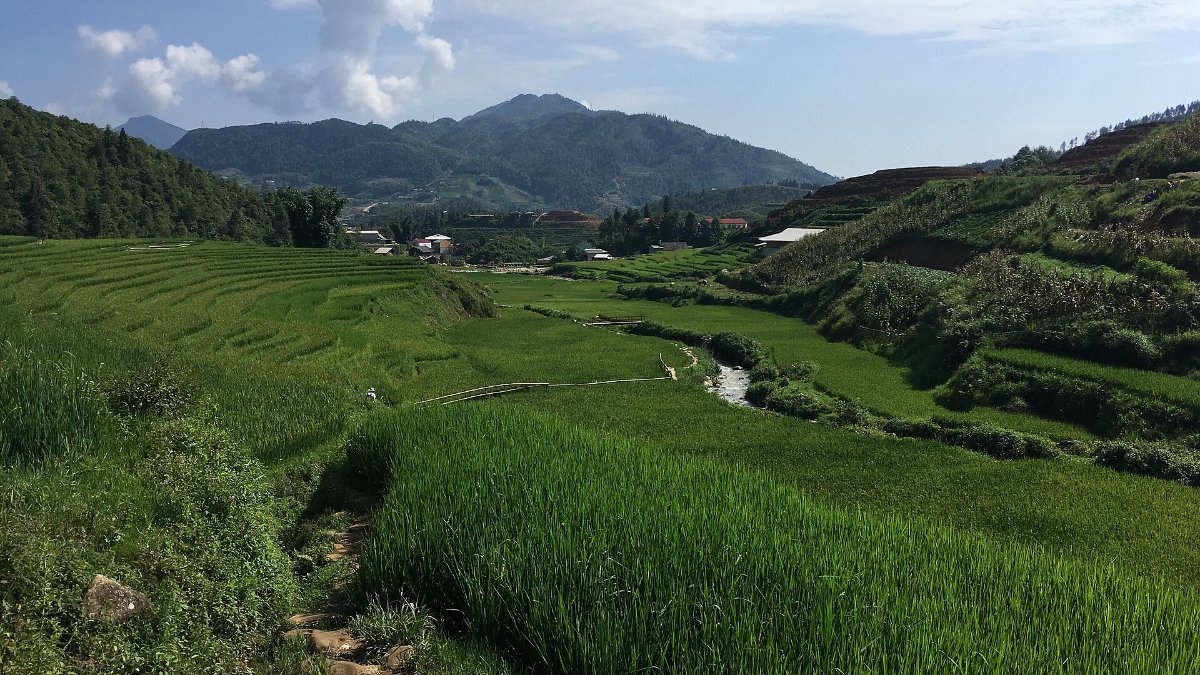
You do not need a guide for Cat Cat or the main Lao Chai – Ta Van path in dry weather. You do need one for Y Linh Ho after rain, any overnight trek, and Fansipan on foot. The valley paths fork constantly and are not signed, and offline maps show footpaths that have washed out.
The better argument for a guide is not navigation. A local guide is often a H’Mong woman from the village you are walking through. She explains what you are looking at, which field belongs to whom and why the terraces are planted in a certain order — and gets you invited into a home for tea. Walking alone, you see the view. With a guide, you understand it.
If you hire one, ask three things: how many people in the group, whether the valley fee is included, and whether transport back to Sapa is included. Those three answers explain most of the price differences you will see.
How Do You Get From Hanoi to Sapa?
The fastest way from Hanoi to Sapa is a limousine van on the Noi Bai – Lao Cai Expressway, about 5.5 to 6 hours for roughly 320,000–630,000 VND (~$12–24 USD) depending on the seat. The last 90 minutes climb about 1,500 m on switchbacks, so take the front seats if you get carsick.
| Option | Time | Price | Worth it if |
|---|---|---|---|
| Limousine van (9 seats) | 5.5–6 hours | 320,000–630,000 VND | You want daylight and comfort |
| Night train to Lao Cai + bus | 7.5–8.5 hours + 45 minutes | From 476,000 VND + about 30,000 VND | You want to save a hotel night |
| Sleeper bus | 6–7 hours | About $10–15 USD | Budget is the priority |
The night train leaves Hanoi around 22:00 and reaches Lao Cai between 05:55 and 06:25. Lao Cai is still about 30 km from Sapa, a 45-minute bus ride. It is atmospheric, but you arrive tired, and most homestays will not let you check in at 07:00.
Flying into Hanoi first? Our guide to arriving at Noi Bai Airport covers the airport-to-Old Quarter leg. A Noi Bai fast track from $30 USD per person (Standard) gets you through immigration first, which matters if a van is waiting.
When Is the Best Time for Sapa Trekking?
The best time for Sapa trekking is September to November: dry paths, clear views and, in September to early October, golden rice ready for harvest. March to May is the second window, green and mild, with fewer people.
| Months | Conditions | Trekking verdict |
|---|---|---|
| September – early October | Rain tapering off, terraces gold | Best views of the year, busiest |
| Late October – November | Cool, dry, clear; harvest finished | Best walking conditions |
| December – February | 3–10 °C, fog, occasionally 0 °C and snow | Cold, often no view — pack real layers |
| March – May | Mild, water in the terraces, planting | Very good, quieter |
| June – August | Hot days, heavy afternoon rain | Green but muddy, landslide risk |
Winter surprises people who pack for Hanoi. Sapa sits about 1,500 m higher than the capital, and late January to February can touch freezing, with snow in some years. Our Vietnam packing list and Vietnam weather guide cover the layers and the month-by-month view.
Is Fansipan Worth It on a Sapa Trekking Trip?
Fansipan is worth it only on a clear day. At 3,143 m it is the highest peak in Indochina. The cable car from Sapa gets you near the top in minutes for 850,000 VND (~$33 USD) on weekdays and Sundays, 900,000 VND on Saturdays and holidays. A one-way ticket costs the same as a return.
The honest problem is cloud. The summit spends a large part of the year inside it, and you pay the same price for a white wall. Check the webcam or ask your homestay in the morning, and keep the cable car for a day when the valley below is clear.
Climbing Fansipan on foot is a different trip: a hard one- or two-day ascent that needs a licensed guide and proper boots. It does not fit a standard two-night Sapa trekking visit.
How Many Days Do You Need in Sapa?
Two nights is the minimum for Sapa trekking: one afternoon for Cat Cat and the town, one full day in the valley, and a morning to spare for weather. One night means you spend more time in a van than on a trail.
If you have three nights, spend one of them in a Ta Van homestay. You walk down on day two, sleep in the valley, and walk a second route on day three without the drive back up in between. That overnight is where the trip usually stops feeling like sightseeing.
Planning the rest of the country around it? Our guide to how many days you need in Vietnam and the 10-day Vietnam itinerary show where two Sapa nights fit and what they cost you elsewhere.
What Should You Wear for Sapa Trekking?
Wear shoes with real grip — trail runners or light hiking boots — because Sapa mud is clay and flat-soled trainers slide on it. Add a rain jacket in any month, a warm layer from October to March, and a spare pair of socks in a plastic bag.
Leave your best white trainers in Hanoi. Bring cash in small notes for fees, water and the handicrafts you do decide to buy, and a small gift for a homestay family is always welcome. Please do not hand sweets or money to children on the trail — responsible local guides ask visitors not to, because it keeps kids selling instead of in class.
Can KissTour Help You Plan Sapa Trekking?
We are opening in northern Vietnam now. KissTour has run tours in Ho Chi Minh City and Da Nang for years with an all-women team of riders and more than 5,000 five-star reviews. We work book now, pay later — you pay cash after the tour, not before. Our northern routes are being built the same way, and prices for the north are not published yet.
Message us on WhatsApp with your dates and we will tell you honestly whether Sapa fits your trip, or whether Ninh Binh or a bay night would serve you better. Deciding between the north and the south first? Our Hanoi versus Ho Chi Minh City comparison is the place to start.
FAQ: Sapa Trekking
Is Sapa trekking hard?
No, for most routes. The Lao Chai – Ta Van walk is about 12 km, mostly downhill, and suits anyone who walks regularly. Mud after rain is the real difficulty, and Fansipan on foot is the only genuinely hard option.
How much is the Sapa trekking fee?
The Muong Hoa Valley fee for Lao Chai and Ta Van is 75,000 VND (~$2.90 USD) per adult. Cat Cat village charges 150,000 VND per adult and 70,000 VND for children 1–1.3 m tall.
Can I do Sapa trekking without a guide?
Yes, on Cat Cat and the main Lao Chai – Ta Van path in dry weather. Take a guide for Y Linh Ho, any overnight trek, rainy days and Fansipan on foot, because paths are unsigned and wash out.
What is the best month for Sapa trekking?
September for golden rice terraces, late October to November for the driest paths and clearest views. March to May is a quieter second window.
Is Sapa worth it on a short trip?
Only with at least two nights. The drive from Hanoi is 5.5 to 6 hours each way, so a one-night visit leaves you roughly half a day on the trails.
Is it cold in Sapa?
From December to February, yes: 3–10 °C is normal, and late January to February can reach 0 °C with occasional snow. Pack a proper warm layer even if Hanoi feels mild.
Message us on WhatsApp — tell us your dates for the north
Written by the KissTour team. Entrance fees, cable car and transport prices checked September 2026 and change without notice; guide prices are market ranges.
Photos of Sa Pa: Christophe95 and Ekrem Canli (CC BY-SA), via Wikimedia Commons.