
Short answer: The best time to visit Hanoi is October and November, when days sit at 22–30 °C, rainfall drops to 60–155 mm a month and the sky finally clears. Mid-March to mid-April is the second-best window. August is the wettest month at 275 mm.
What Is the Best Time to Visit Hanoi?
The best time to visit Hanoi is autumn — late October through the end of November. Daytime highs ease to 26–30 °C, nights drop into the high teens, rain falls on only 8–11 days a month, and the grey lid that sits over the city for much of the year lifts. Locals will tell you the same thing, usually while pointing at a plate of green rice.
Hanoi has a subtropical climate rather than a tropical one, which is the single fact that changes how you plan. There is a real winter here, unlike Ho Chi Minh City — the differences between Hanoi and Ho Chi Minh City start with the thermometer and run all the way to the food. A January evening in the Old Quarter can be 14 °C and damp. Pack for that and the rest is easy.
There is no month here that is warm, dry and sunny all at once. So the best time to visit Hanoi is really a question of which trade-off you prefer: the clear, cool autumn, the mild but grey winter, or the hot green summer with heavy afternoon rain.
Hanoi Weather Month by Month
These are 30-year averages for the city, from Climates to Travel (1991–2020 normals). Hanoi gets about 1,610 mm of rain and 1,585 hours of sunshine a year, spread very unevenly.
| Month | Low / High (°C) | Rain (mm / days) | Sun (hrs/day) | Verdict |
|---|---|---|---|---|
| January | 14 / 20 | 20 mm / 10 | 2.5 | Cold, grey, drizzly but dry |
| February | 16 / 22 | 20 mm / 12 | 1.5 | Dullest month; Tet falls here |
| March | 18 / 24 | 35 mm / 16 | 1.5 | Warming up; second half is lovely |
| April | 22 / 28 | 105 mm / 14 | 3 | Good until mid-month, then humid |
| May | 24 / 32 | 165 mm / 14 | 6 | Hot, sunny, first real storms |
| June | 26 / 34 | 265 mm / 15 | 5.5 | Hottest month; 38 °C days happen |
| July | 26 / 34 | 255 mm / 16 | 6.5 | Hot and wet, peak typhoon risk |
| August | 26 / 33 | 275 mm / 17 | 5.5 | Wettest month of the year |
| September | 25 / 32 | 245 mm / 14 | 6 | Still wet, but improving fast |
| October | 22 / 30 | 155 mm / 11 | 5.5 | Excellent from mid-month |
| November | 19 / 26 | 60 mm / 8 | 4.5 | The best month, full stop |
| December | 15 / 22 | 20 mm / 5 | 4 | Dry and cool; sunnier than January |
Read the rain column rather than the temperature column. That is where the best time to visit Hanoi is actually decided. The gap between 275 mm in August and 20 mm in December is the gap between two completely different holidays.
Why Is Autumn the Best Time to Visit Hanoi?
Autumn is a short, specific season here and the city organises itself around it. Rainfall halves from September to October and halves again into November. Humidity drops to the lowest readings of the year, and highs sit in a range where you can walk all day without changing your shirt.
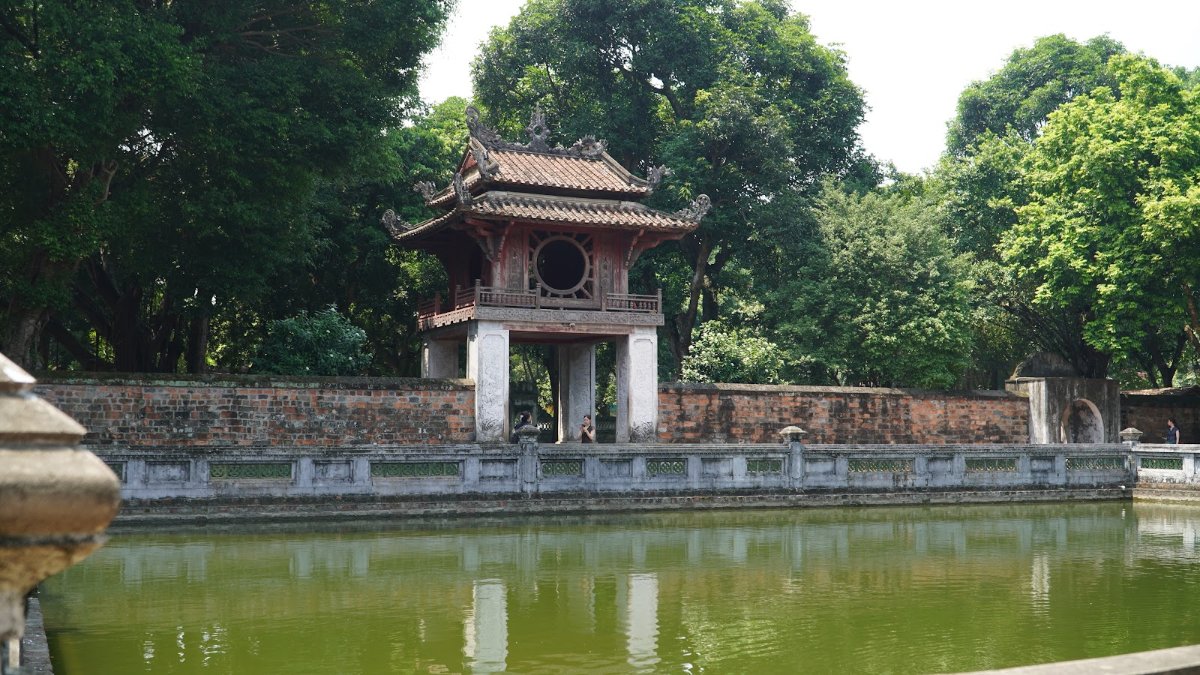
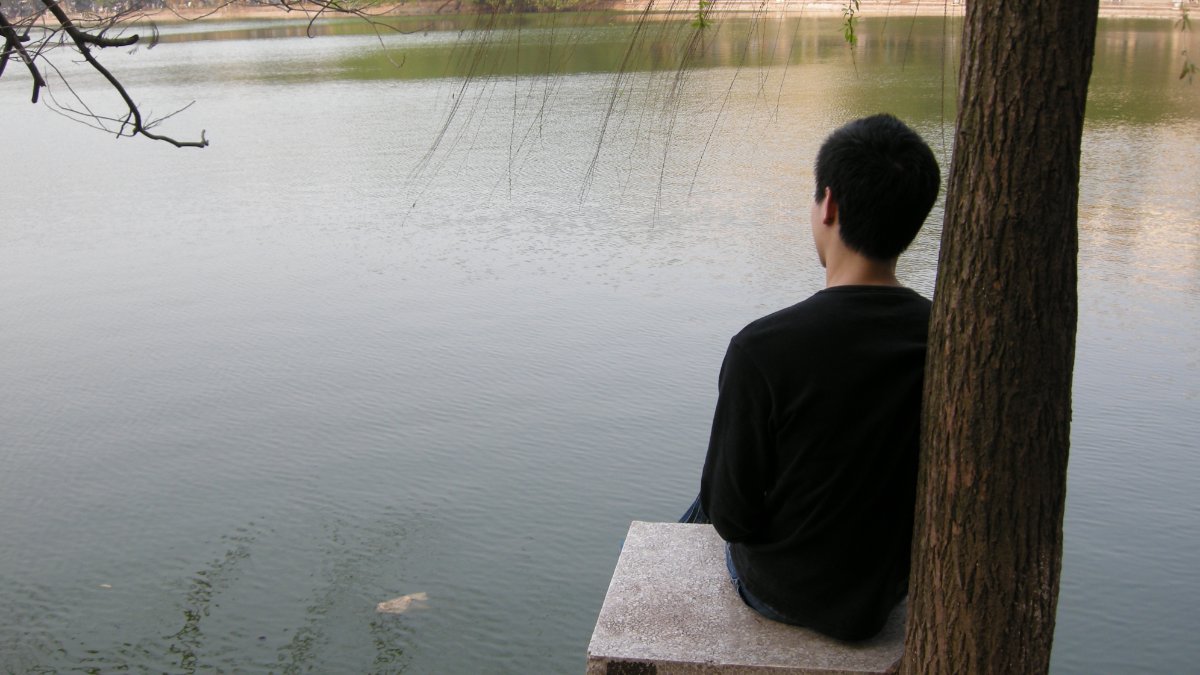
Practically, that means the things worth doing outdoors are actually pleasant. The weekend walking street around Hoan Kiem Lake — vehicles banned from 19:00 Friday until midnight Sunday — is at its best in November. You can sit on a plastic stool at 21:00 in a light jacket. The Temple of Literature (70,000 VND, open 08:00–17:00, with longer summer hours from 15 April to 15 October) is a courtyard site, so weather makes or ruins it.
Autumn is also when the north as a whole peaks, which matters if Hanoi is your base rather than your destination. More on that below.
What Is Winter Like in Hanoi?
Hanoi winter runs December to February and is mild by European standards and genuinely cold by Vietnamese ones. Average highs are 20–22 °C, lows 14–16 °C, and cold snaps push nights down to around 8 °C. It is also the driest stretch of the year: December records just 20 mm of rain over 5 days.
Two catches. First, the sun barely appears — January to March average 1.5 to 2.5 hours of sunshine a day, and the sky is a flat white for weeks. Second, the fine drizzle locals call mua phun soaks everything without ever looking like rain, and air quality is at its worst in these months because cool, still air traps pollution over the delta.
If your priority is dry streets and no crowds, winter is a defensible answer to the best time to visit Hanoi. Bring a proper jacket: most restaurants are open to the street and almost nothing is heated.
Is Summer Ever the Best Time to Visit Hanoi?
Not necessarily — but go in knowing what June to September is. Those four months deliver roughly 1,040 mm of the annual 1,610 mm, highs reach 33–34 °C with 38 °C spikes, and the humidity is relentless. Typhoons pass through this part of Vietnam from late May to early November, with the peak from July to October.
The saving grace is that Hanoi rain is usually a heavy burst rather than an all-day grey, and mornings are often fine. Plan indoor things for early afternoon, eat outdoors in the evening, and build a spare day into any Ha Long Bay or Ninh Binh trip in case a storm closes the water. Our guide to what to do in a Vietnamese city when it rains travels north perfectly well.
Summer is also the lowest-cost season, the greenest and the least crowded. Travellers who care more about price than sunshine sometimes decide this is the best time to visit Hanoi for them, and they are not wrong. Our country-wide Vietnam weather guide shows how the north’s calendar differs from the centre and the south.
When Should You Visit the Rest of Northern Vietnam?
Hanoi is the gateway, so the best time to visit Hanoi usually needs to line up with wherever you are going next. The mountains and the bay run on their own calendars.
| Where | Best window | Why |
|---|---|---|
| Ha Long Bay / Lan Ha Bay | Oct–Dec, Mar–Apr | Calm water, clear air; storms cancel cruises Jun–Sep |
| Ninh Binh / Trang An | Mid-May to mid-June, Oct–Nov | Ripe rice at Tam Coc in late spring; dry, cool autumn |
| Sapa | Mar–May, Sep–Nov | Stable trekking weather; harvest gold in autumn |
| Ha Giang | Mid-Sep to Nov | Rice harvest mid-Sep to mid-Oct, then buckwheat flowers; 15–25 °C |
Two notes on those. Ha Long cruises are cancelled by the port authority when a storm warning is in force, not by the operator, so no amount of paying extra changes it — leave slack in a summer itinerary. And the golden terraces of Hoang Su Phi in Ha Giang are a two-to-four-week event, roughly mid-September to mid-October, with exact timing set by that year’s planting. Those dates come from tour operators rather than a weather service, so treat them as a window and not a date.
If the mountains are the reason for your trip, let them set the calendar and let Hanoi fit around it. The best time to visit Hanoi and the best fortnight in Ha Giang overlap, but they are not identical.
Trang An in Ninh Binh (250,000 VND, boats 07:00–17:00) is doable year-round, and the boats run in light rain.
Which Dates Should You Avoid in Hanoi?
One block matters more than the weather: Tet, the Lunar New Year. In 2027 the first day of the new year falls on Saturday 6 February, opening the Year of the Goat, and the national holiday usually stretches seven to nine days around it. Vietnam’s official days-off schedule is normally announced late in the preceding year, so treat early February 2027 as blocked until the government confirms it.
During Tet, family-run restaurants and small shops close for several days, domestic transport sells out weeks ahead, and prices rise. Hanoi is beautiful then — flower markets, kumquat trees on motorbikes, empty streets on the first morning — but it is not an eating-and-shopping holiday. If food is your reason for coming, avoid the week itself and arrive a few days after the first morning.
The other pressure points are the 30 April to 1 May public holidays and the first week of September, when domestic travel spikes. Neither is a reason to change your trip, just a reason to book earlier. Outside those blocks, the best time to visit Hanoi is whichever of the two dry windows suits your route.
What Should You Pack for Each Season?
Hanoi punishes people who pack for “Vietnam” as a single climate. Our full Vietnam packing list and our guide to what to wear in Vietnam cover the detail. The northern short version is:
- Oct–Nov: light layers, one warm top for evenings, comfortable walking shoes.
- Dec–Feb: a real jacket, socks, and something waterproof — not for downpours but for constant drizzle.
- Mar–Apr: layers again, plus a light rain shell from mid-April.
- May–Sep: thin cotton and linen, sandals that survive puddles, a poncho rather than an umbrella on a motorbike.
One thing to leave behind: the assumption that a northern winter needs a parka. It does not. Two thin layers and a windproof shell handle everything Hanoi delivers, whichever month you decide is the best time to visit Hanoi for you.
Does the Best Time to Visit Hanoi Change How You Arrive?
Slightly, yes. Noi Bai Airport sits 27–32 km from the Old Quarter, a 35–60 minute drive, with Grab typically 200,000–300,000 VND (~$7.70–11.50 USD at about 26,000 VND to $1 USD, checked 24 September 2026). In the wet months add 20 minutes and expect a queue at the taxi rank.
Arrivals also bunch in the good months. From October through Tet, Noi Bai immigration halls are at their busiest, and four widebodies landing together turns a 20-minute queue into an hour. That is when fast track at Noi Bai stops being a luxury. It starts at $30 USD per passenger for arrival, with a greeter meeting you at the aircraft exit and walking you through a priority counter. Our Noi Bai arrival guide walks through the whole process, and our Vietnam entry requirements page covers the paperwork side.
When Can You Ride With KissTour in the North?
KissTour is opening in northern Vietnam now. We have run motorbike tours in Ho Chi Minh City and Da Nang for years with an all-women team of riders and more than 5,000 five-star reviews. We also work book-now-pay-later: you pay cash after the tour, not before it. Northern routes are being built on the same model — small groups, real neighbourhood food, no coach buses.
We ride rain or shine with ponchos supplied, and we cancel and refund in full if a storm makes it unsafe. Prices for the north are not published yet, so message us and we will tell you honestly what is running on your dates. Heading south afterwards? Our Hanoi to Ho Chi Minh City transport guide covers trains, buses and flights.
FAQ: Best Time to Visit Hanoi
What is the single best month to visit Hanoi?
November. Highs of 26 °C, lows of 19 °C, only 60 mm of rain over 8 days, and the clearest skies of the year. October is a close second once the middle of the month passes, which is why the best time to visit Hanoi is usually given as that pair.
What is the rainiest month in Hanoi?
August, with about 275 mm of rain falling over 17 days. June to September together deliver roughly two-thirds of the annual rainfall of 1,610 mm, which is why nobody calls August the best time to visit Hanoi.
Is it cold in Hanoi in winter?
Mild but genuinely chilly. December to February average 14–22 °C, with cold snaps down to about 8 °C at night. There is no heating in most buildings, so it feels colder than the numbers suggest — which is why winter is rarely called the best time to visit Hanoi.
When is typhoon season in northern Vietnam?
Storms pass through from late May to early November, peaking July to October. They mostly affect the coast and Ha Long Bay cruises rather than the city itself, but they can close the bay for a day or two at a time.
Should I avoid Hanoi during Tet 2027?
Tet falls on 6 February 2027 and the holiday usually runs seven to nine days. Small restaurants and shops close, transport sells out and prices rise — beautiful to witness, difficult to eat your way through.
Is the best time to visit Hanoi the same as for Sapa and Ha Giang?
Almost. Autumn works for all three, but the mountain harvest window is narrower — roughly mid-September to mid-October for golden rice terraces in Ha Giang, when Hanoi itself is still warm and wet.
Message us on WhatsApp — ask what’s running in the north on your dates
Written by the KissTour team. Climate figures are 1991–2020 averages; prices and opening hours checked September 2026 and change without notice.