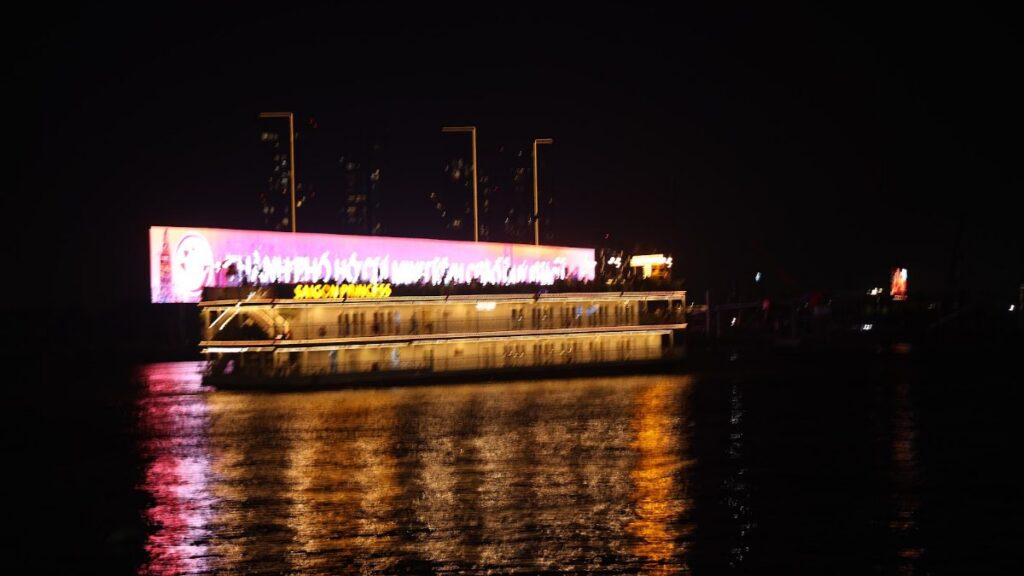


Short answer: Lan Ha Bay and Ha Long Bay are the same limestone seascape with different traffic. Ha Long has the famous caves and the crowds; Lan Ha Bay, off Cat Ba Island, has quieter water, beaches and lower fees. First visit with one night: Lan Ha Bay.
Are Ha Long Bay and Lan Ha Bay the Same Place?

Almost. They are two ends of one karst seascape, split by a provincial border rather than by geology — Ha Long sits in Quang Ninh, and Lan Ha Bay sits off Cat Ba Island in Hai Phong. UNESCO settled the argument in 2023 by extending the World Heritage listing across both, creating a single property called Ha Long Bay – Cat Ba Archipelago: 65,650 hectares and 1,133 islands, and Vietnam’s first inter-provincial World Heritage site.
So the choice is not about scenery. Both bays give you the same drowned limestone towers rising out of green water. The choice is about how many other boats are in the photograph, what you do between meals, and how you get there.
What Is the Real Difference Between Ha Long Bay and Lan Ha Bay?
Ha Long is the headline act and behaves like one: big caves, big boats, a fixed route past the famous islets, and a departure port that handles thousands of people a day. Lan Ha Bay is the quieter neighbour — more individual islets, small sand beaches you can swim off, kayaking as a normal part of the day rather than a photo stop, and noticeably fewer boats once you leave the channel.
| Ha Long Bay | Lan Ha Bay | |
|---|---|---|
| Base / departure | Ha Long City, Tuan Chau | Cat Ba Island (Ben Beo) |
| Travel from Hanoi | 2.5–3 hours | 2.5–3.5 hours |
| Crowds | Heaviest in Vietnam | Noticeably lighter |
| Signature sights | Sung Sot cave, Ti Top island, Thien Cung cave | Beaches, floating villages, kayaking routes |
| Swimming | Limited, mostly at Ti Top | Common, small beaches throughout |
| Official fees | 200,000–600,000 VND depending on route | Around 120,000 VND day sightseeing |
| Best for | The famous caves, one big day out | A quieter overnight, kayaking, swimming |
Put simply: if you want to tick off the picture you have seen since childhood, take Ha Long. If you want a night on the water where the loudest thing is your own paddle, take Lan Ha Bay.
What Does It Actually Cost in 2026?
Two separate costs, and operators often blur them: the government sightseeing fee, and the cruise itself. Ha Long’s fees are set by the Quang Ninh provincial council and published by the bay’s management board, so these are exact rather than estimates.
| Fee | 2026 price | What it covers |
|---|---|---|
| Ha Long route VHL1 / VHL2 / VHL5 | 250,000 VND (~$9.60 USD) | Day sightseeing, the main cave routes |
| Ha Long route VHL3 / VHL4 | 200,000 VND (~$7.70 USD) | Quieter day routes, fishing villages |
| Ha Long route VHL7 | 600,000 VND (~$23 USD) | Combined routes, explorer cruises only |
| Ha Long route 2 + one night | 550,000 VND (~$21 USD) | Overnight cruise, 24 hours from departure |
| Ha Long route 3 or 4 + one night | 500,000 VND (~$19 USD) | Overnight cruise, quieter anchorages |
| Lan Ha Bay day sightseeing | Around 120,000 VND (~$4.60 USD) | Paid at Ben Beo harbour on Cat Ba |
| Cat Ba National Park | About 60,000 VND (~$2.30 USD) | Land-side hiking, separate from the bay |
Converted at roughly 26,000 VND to $1 USD, checked 17 September 2026. Nearly every cruise includes the fee in its headline price — ask, because a small number of budget operators add it at the pier.
The cruise itself is where the real money goes. Two-day, one-night trips in Lan Ha Bay generally run $100–145 USD budget, $145–195 USD mid-range and $210 USD upwards for luxury boats. The same tiers on Ha Long tend to sit $20–50 USD higher per person — partly the higher entrance fees, partly heavier demand. Those are market ranges from cruise listings rather than fixed prices, so treat them as a sanity check on quotes.
How Do You Get to Each Bay From Hanoi?

Ha Long is the simpler journey. The expressway makes it 2.5 to 3 hours from central Hanoi, and shared limousine vans publish fares of roughly 260,000–330,000 VND (~$10–13 USD) one way with Old Quarter pickup. Note that the seaplane transfer people still read about online stopped operating on 1 April 2026, so road transport is now the only sensible option.
Cat Ba, and therefore Lan Ha Bay, takes a little more choreography: about 150 km, and 2.5 to 3.5 hours depending on the crossing. Most visitors take a through-ticket bus, roughly $15 USD, which includes the sea crossing and the shuttle at the other end. The crossing itself is either the public car ferry from Dinh Vu, about 45 minutes, or the cable car from Cat Hai to Phu Long. The cable car takes ten minutes and costs around 50,000 VND, but it runs daytime hours only — confirm the last departure before committing to a late start.
Whichever bay you choose, book the early-morning departure. Boats leave the piers in the late morning and a missed connection costs you the whole first day on the water. Flying into Hanoi the night before? Our Noi Bai arrival guide covers the transfer into the Old Quarter. Fast track at Noi Bai, from $30 USD per person, is worth considering when your cruise leaves the next morning and a long immigration queue would cost you sleep.
Day Trip or Overnight Cruise?
An overnight is the honest answer for both bays, and especially for Lan Ha Bay. The bay changes character after about 16:00, when the day boats go home and the water goes quiet, and that hour is most of what you came for. A day trip means roughly six hours of driving for four hours afloat, arriving in the busiest part of the day.
Choose a day trip only if you are short on nights and treating the bay as a box to tick. In that case Ha Long makes more sense than Lan Ha Bay, because the caves are the point and they photograph well at any hour.
Two nights is the version most people wish they had booked. It buys you a second morning, a proper kayaking session and an anchorage away from the main routes. On Ha Long the official overnight fee only rises from 550,000 to 750,000 VND for the second night — the smallest upgrade on the whole trip.
When Is the Best Time to Visit?
October and November. Northern Vietnam runs 18–28 °C then with the lowest humidity of the year, the sea is calm, and the haze that flattens karst photographs in spring has usually cleared. December to February is cool and dry at 16–23 °C — fine for cruising, cold for swimming, and frequently grey.
July and August bring the heaviest rain and the typhoon season. This is the one weather risk worth planning around: boats do not sail when the port authority closes the bay, and a cancellation in a storm is a safety decision, not an operator whim. Build a spare day into the itinerary if you are travelling then. Our Vietnam weather guide has the month-by-month view for the whole country.
Pack layers whatever the month — mornings on the water are colder than the forecast suggests. Our packing list covers it, and what to wear matters if you are adding temples on the way back.
Which Bay Fits Your Trip?
Answer three questions and it decides itself.
How many nights do you have in the north? Two or fewer, and Ha Long’s shorter, simpler logistics win. Three or more, and Lan Ha Bay plus a day on Cat Ba is the better use of them.
Do you want to swim and kayak, or sightsee? Lan Ha Bay is built for the first — small beaches, sheltered water, kayaks as standard. Ha Long is built for the second, with the big caves and the famous islets on a fixed route.
Who is with you? Grandparents and small children generally do better on Ha Long: shorter transfers, bigger boats, less climbing in and out of kayaks. Cat Ba suits travellers happy to ride a scooter to a beach and walk into a national park.
If you are still shaping the wider route, our 10-day Vietnam itinerary shows where a bay night fits, and the Hanoi to Ho Chi Minh City transport guide covers the long hop south afterwards.
Can You Visit the Bays With KissTour?
We are opening in northern Vietnam now. KissTour has run tours in Ho Chi Minh City and Da Nang for years with an all-women team of riders, more than 5,000 five-star reviews and a book-now-pay-later policy. The northern routes are being built on the same principles: small groups, real food, no coach buses. Prices for the north are not published yet.
Message us on WhatsApp and we will tell you honestly what is running on your dates — including when we think a bay night is not the right use of your week. If you are comparing cities as well as bays, our Hanoi versus Ho Chi Minh City guide is the place to start.
FAQ: Ha Long Bay vs Lan Ha Bay
Is Lan Ha Bay part of Ha Long Bay?
They are separate bays in separate provinces, but since 2023 both sit inside one UNESCO World Heritage property, Ha Long Bay – Cat Ba Archipelago, covering 65,650 hectares and 1,133 islands.
Is Lan Ha Bay less crowded than Ha Long Bay?
Yes, noticeably. Fewer boats are licensed out of Cat Ba than out of Ha Long City, and the routes spread across more islets, so anchorages stay quieter — particularly after the day boats leave in the late afternoon.
How much is the Ha Long Bay entrance fee in 2026?
250,000 VND per person for the main day routes, 200,000 VND for the quieter ones, and 550,000 VND for a route 2 overnight. The fee is usually included in your cruise price.
Do I need to stay overnight on the bay?
Not required, but recommended. A day trip is about six hours of road travel for four hours on the water, all of it during the busiest part of the day.
How do I get to Lan Ha Bay from Hanoi?
Via Cat Ba Island — roughly 150 km and 2.5 to 3.5 hours, usually on a through-ticket bus around $15 USD including the ferry or cable car crossing. Boats leave from Ben Beo harbour.
Which bay is better for families with young children?
Ha Long, generally. Transfers are shorter and simpler, the boats are larger and steadier, and the itinerary involves less climbing in and out of kayaks.
Message us on WhatsApp — ask what’s running in the north
Written by the KissTour team. Official sightseeing fees from the Ha Long Bay Management Board; cruise prices are market ranges checked September 2026 and change without notice.