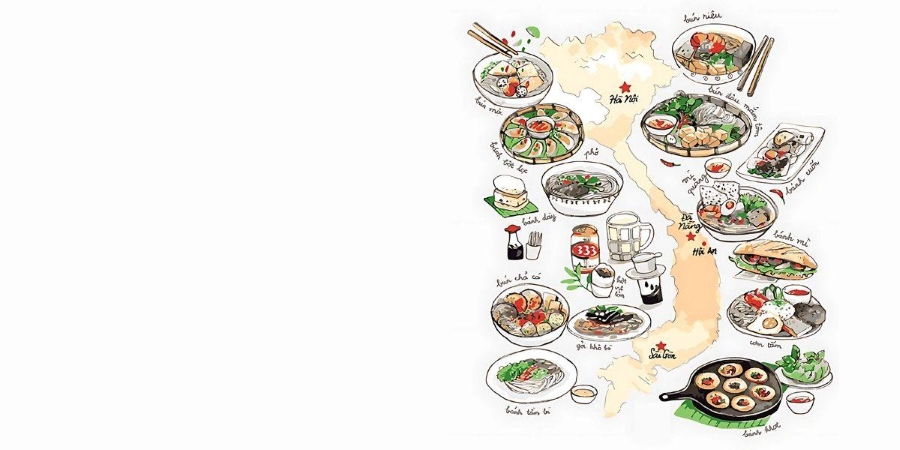

Short answer: Hanoi food is built around a handful of dishes eaten at fixed times of day — pho and banh cuon in the morning, bun cha at lunch, egg coffee in the afternoon. A bowl costs 40,000–70,000 VND (~$1.50–2.70 USD), and the best versions are sold by stalls that make one thing only.
What Makes Hanoi Food Different From the Rest of Vietnam?
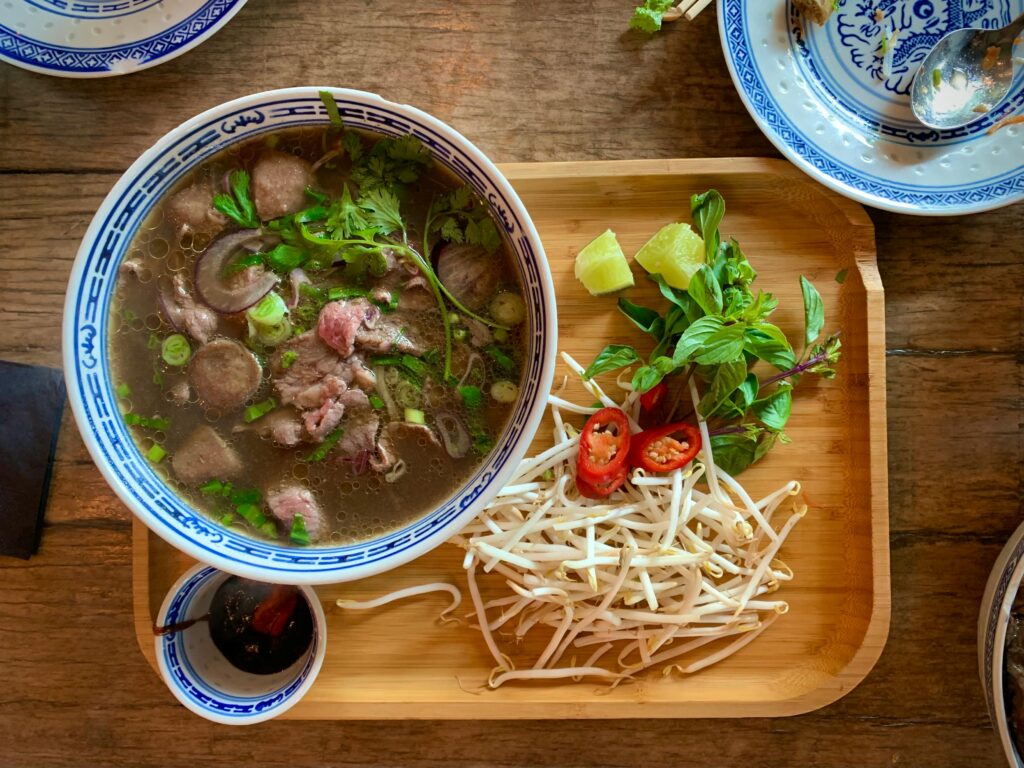
Hanoi food is the restrained end of Vietnamese cooking: less sugar, less chilli, more herbs, and broths that taste of bone rather than seasoning. Southern cooking sweetens almost everything; the north does not. A Hanoi bowl of pho arrives clear, with flat noodles, spring onion and nothing else on top, and the chilli and lime sit on the table for you to decide.
That restraint catches people out. Visitors who started their trip in Saigon often find their first Hanoi food plain for a day, then spend the rest of the week understanding it. The city also eats to a clock — dishes appear and disappear at set hours — which is the single most useful thing to know before you start.
If you want the long version of the north–south split, our pho comparison walks through it bowl by bowl, and the Hanoi versus Ho Chi Minh City guide covers everything beyond the table.
What Should You Eat First in Hanoi?
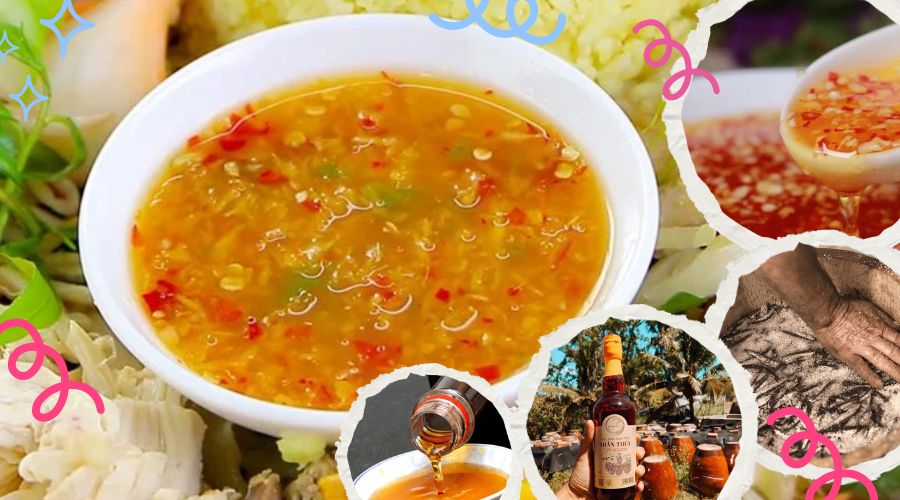
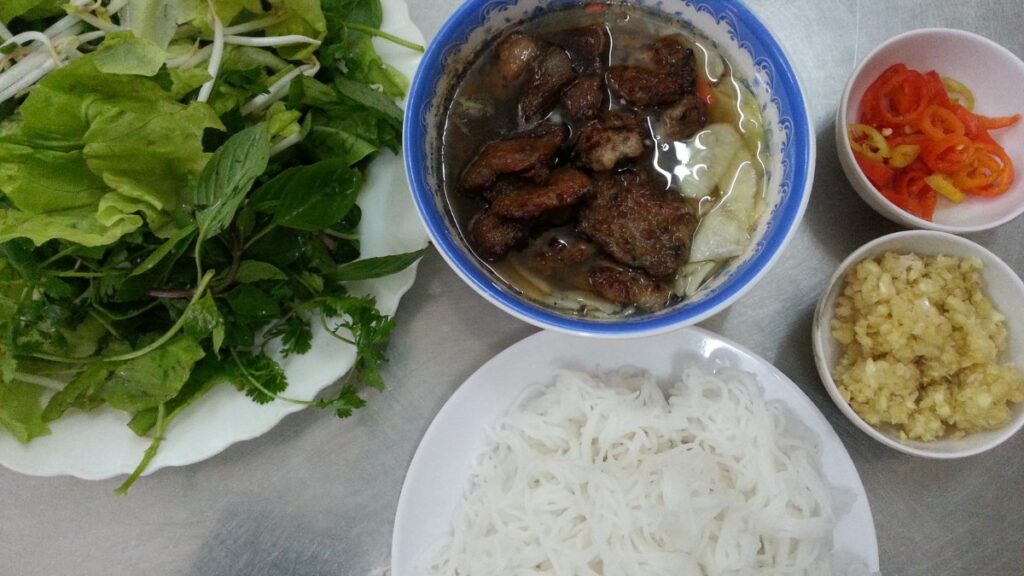
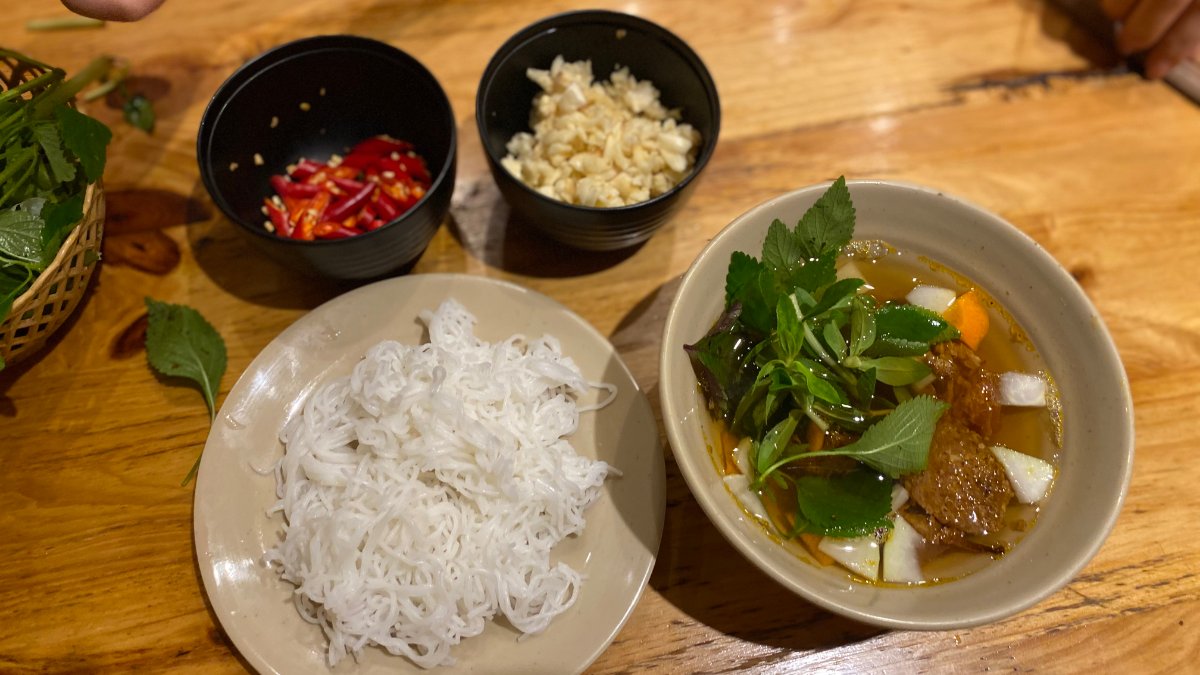
Bun cha, at lunch, on a plastic stool. It is grilled pork patties and belly sitting in a bowl of warm, sweet-sour fish sauce broth, served with cold rice noodles and a basket of herbs you add yourself. It is the dish Hanoi invented and the one the city still eats most, and charcoal smoke from bun cha grills is the smell of the Old Quarter from about 11:00.
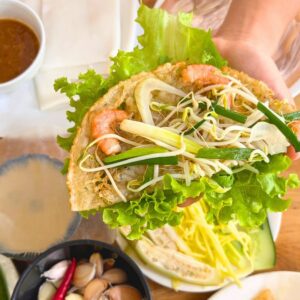
After that, work down this list in order. Pho bo for breakfast. Banh cuon, steamed rice rolls, also a morning dish. Cha ca, turmeric fish fried at your table with dill. Bun rieu, a crab and tomato noodle soup. And banh tom Ho Tay, shrimp fritters eaten in the late afternoon by West Lake.
One rule beats every list: order the thing the stall has a sign for. A counter that sells only bun cha has been making bun cha for thirty years. A menu with sixty items has a microwave.
How Much Does Hanoi Food Cost in 2026?
Less than almost anywhere else you will eat this year. These are street-stall and neighbourhood prices checked in September 2026; sit-down restaurants in the Old Quarter run 20–30% higher for the same dish.
| Dish | 2026 price | When it is sold | Notes |
|---|---|---|---|
| Pho bo (beef) | 40,000–50,000 VND (~$1.50–1.90 USD) | Dawn to late morning | 25,000–50,000 outside the Old Quarter |
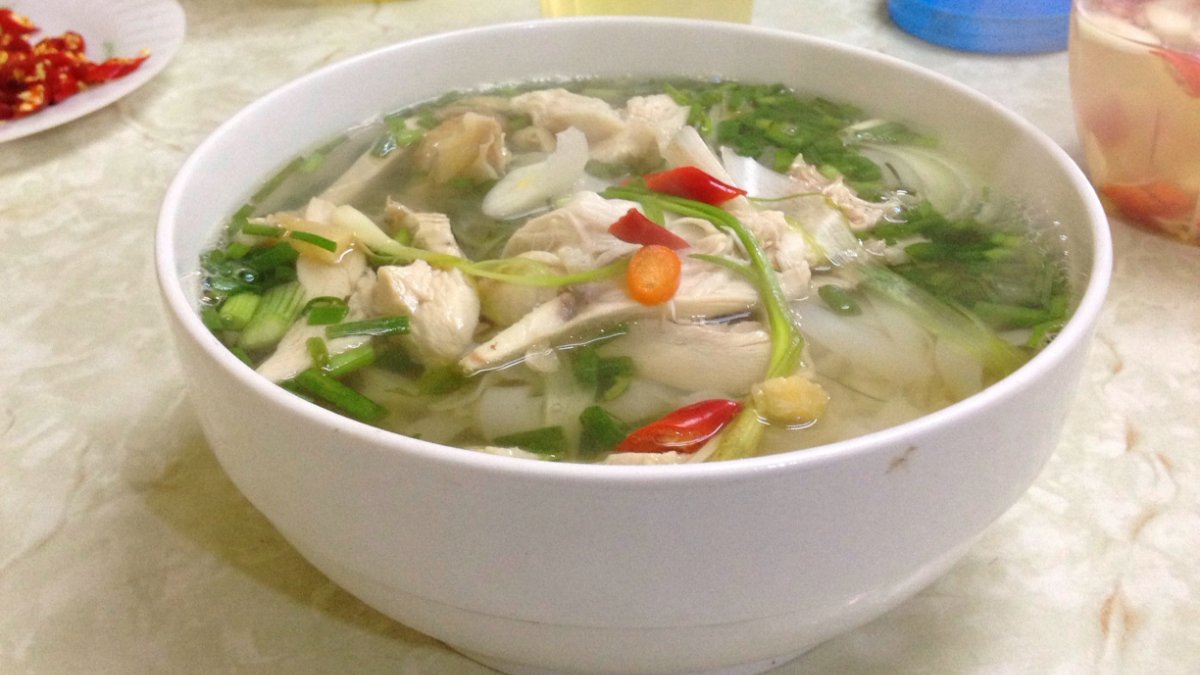
| Pho ga (chicken) | 50,000–80,000 VND (~$1.90–3.10 USD) | Dawn to late morning | Clearest broth at opening time |
| Bun cha | 40,000–70,000 VND (~$1.50–2.70 USD) | 11:00 until sold out | Some counters quote up to 90,000 |
| Banh mi | 20,000–40,000 VND (~$0.77–1.55 USD) | All day | The lowest-cost full meal in the city |
| Banh cuon | 30,000–50,000 VND (~$1.15–1.90 USD) | Morning | Made to order, one tray at a time |
| Egg coffee | 30,000–45,000 VND (~$1.15–1.75 USD) | All day | 50,000–70,000 in modern cafes |
| Bia hoi | From about 5,000 VND (~$0.20 USD) | Late afternoon onwards | Brewed daily, drunk the same day |
Converted at roughly 26,000 VND to $1 USD, checked 17 September 2026. Budget 30,000–60,000 VND per meal and you will eat very well; a whole day of Hanoi food including coffee and a beer rarely passes 250,000 VND (~$9.60 USD). For comparison, a day of eating in Ho Chi Minh City costs slightly more.
Carry small notes. Stalls do not take cards and rarely have change for a 500,000 note at 07:00 — our ATM guide explains which machines give useful denominations.
What Time Do Locals Eat Each Dish?
Hanoi food runs on a timetable, and eating the right thing at the wrong hour is the most common visitor mistake. Nothing is open around the clock; a bun cha stall at 19:00 is either closed or selling you lunch reheated.
| Time | What Hanoi is eating | Why then |
|---|---|---|
| 05:30–09:00 | Pho, banh cuon, xoi, bun rieu | Broth is clearest at dawn, before it is topped up |
| 11:00–13:30 | Bun cha, bun dau mam tom | The grills are lit for lunch and go out after |
| 15:00–17:00 | Egg coffee, banh tom by West Lake | The city’s designated sitting-still hours |
| 17:00–20:00 | Bia hoi, nem nuong, grilled skewers | Fresh beer arrives daily and is drunk the same day |
| 19:00 onwards | Cha ca, lau (hotpot), pho again | The sit-down half of Hanoi food |
Two hard rules follow from this. Eat pho before 09:00 if you can — a famous Michelin-listed beef pho counter opens at 5:30 and closes when the day’s broth runs out, not at a set hour. And treat “sold out” as a compliment to the stall, not a failure of your planning.
Are the MICHELIN Street Food Stalls Worth the Queue?
Sometimes, and the list is a genuinely useful shortlist rather than a marketing exercise. The 2026 MICHELIN Guide Vietnam awarded 11 stars nationally and grew its Bib Gourmand selection to 72 addresses, 23 of them in Hanoi. The Bib is the one that matters here: it flags good cooking at a fair price, which is exactly what Hanoi food is.
Among the 2026 additions is a bánh cuốn house on Hang Ga street that has been steaming rice rolls since 1973, still made from scratch, one tray at a time. MICHELIN’s own street food shortlist for Hanoi is a better starting point than any blog ranking, including this one.
The honest caveat: a listed stall at 12:30 can mean a 25-minute wait behind a tour group, and the unlisted stall two doors down is often making the same dish to the same standard for the same money. Use the list when you have one shot at a dish. Ignore it when the queue is longer than your patience.
Is Hanoi Street Food Safe to Eat?
Yes, for most visitors, and the odds improve when you pick by turnover rather than appearance. A stall selling one dish to a constant stream of locals cooks food that has not been sitting; a quiet stall with a wide menu has stock waiting somewhere. Hot food straight off the grill or out of the broth pot is the safest thing you will eat all day.
Three practical habits. Skip ice only if the venue looks improvised — commercial cylinder ice with a hole through the middle is fine. Rinse herbs in your own tea if raw greens worry you. And eat at the hours locals do, because that is when the food is freshest. Our full street food safety guide goes deeper.
Allergies need more care in the north than people expect — fish sauce and shrimp paste are in almost everything, and peanuts appear crushed on top rather than listed. Our peanut allergy guide has the Vietnamese phrases that actually work at a stall.
What About Egg Coffee and Bia Hoi?
Egg coffee is a Hanoi invention, not a tourist gimmick: whipped egg yolk and condensed milk poured over strong coffee, created in the 1940s when fresh milk was scarce. The original Old Quarter cafe still sells it for 30,000–45,000 VND (~$1.15–1.75 USD); modern cafes charge 50,000–70,000 for a nicer chair. Drink it warm, slowly, in the afternoon — it is a dessert pretending to be a drink.
Bia hoi is the other side of Hanoi food culture. It is unpasteurised draught beer delivered fresh each morning and sold the same day, which is why it costs about 5,000 VND a glass and why it does not exist outside Vietnam. You sit on a plastic stool at a street corner, order the grilled things everyone else is ordering, and stop when the beer runs out.
If coffee is the reason you came, our guide to Vietnamese coffee covers what to drink and what to take home.
Can You Eat Well in Hanoi as a Vegetarian?
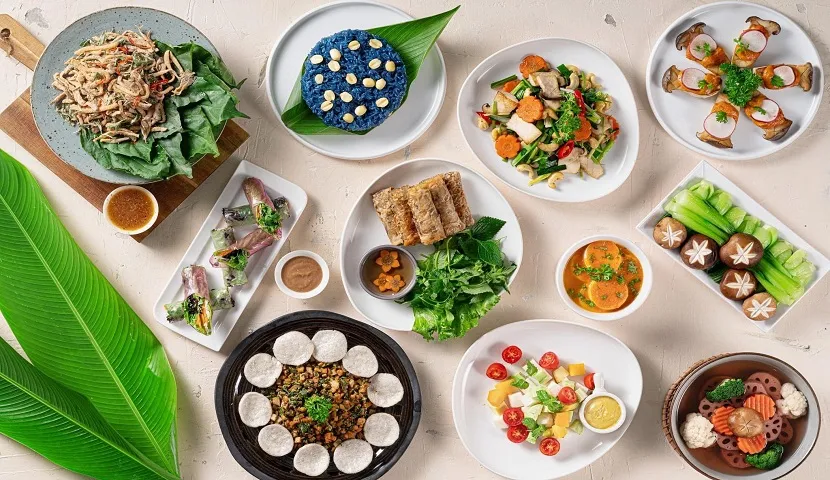
Yes, but it takes intent. Hanoi food leans on fish sauce, pork broth and shrimp paste as background seasoning rather than headline ingredients, so “no meat” does not get you a vegetarian bowl. What works is looking for the word chay — Buddhist vegetarian kitchens exist in every district and cook to a full menu, and they multiply around the full moon and new moon days of the lunar month.
Beyond that, banh cuon can be ordered without pork, xoi (sticky rice) is straightforwardly vegetarian with mung bean and fried shallot, and fresh spring rolls are easy to find. Vegans should ask about broth every time. We run a vegan food tour in Ho Chi Minh City and the same rules of thumb travel north.
How Do You Plan a Hanoi Food Day?
Eat four small things rather than two big ones, and let the clock choose. A workable first day: pho at 07:00 near your hotel, banh cuon at 09:00, bun cha at 11:30 before the lunch rush, egg coffee at 15:00, bia hoi and skewers at 18:00. That is five stops, roughly 250,000 VND, and a better map of the city than any walking tour.
Stay in or near the Old Quarter for your first couple of nights so the stalls are on your doorstep, then walk fifteen minutes out of it for the same dishes at local prices. Arriving on an evening flight and want to start eating rather than queueing? Our Noi Bai arrival guide covers the transfer. Fast track at Noi Bai starts at $30 USD per person if immigration queues worry you.
Can You Do a Hanoi Food Tour With KissTour?
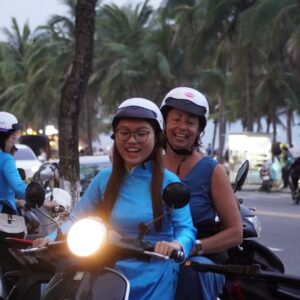
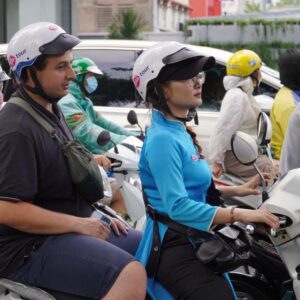
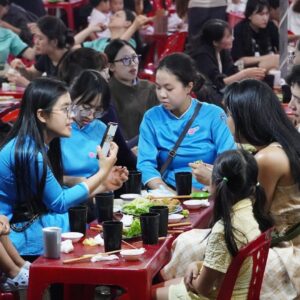
We are opening in northern Vietnam now. KissTour has run food and city tours in Ho Chi Minh City and Da Nang for years, with an all-women team of áo dài riders and more than 5,000 five-star reviews. We also let you book now and pay later — cash after the tour, not before. The northern routes are being built the same way: small groups, stalls we actually eat at, no coach buses. Prices for the north are not published yet.
Message us on WhatsApp and we will tell you honestly what is running on your dates. If you want to see how our food tours work first, here is exactly what a KissTour food tour looks like in the south, and the Da Nang food guide covers the central stop most people add in between.
FAQ: Hanoi Food
What is the one dish to eat in Hanoi?
Bun cha — grilled pork in warm sweet-sour broth with cold noodles and herbs, eaten at lunch for 40,000–70,000 VND (~$1.50–2.70 USD). It is the dish Hanoi invented.
How much should I budget for food in Hanoi per day?
About 250,000 VND (~$9.60 USD) covers four street meals, an egg coffee and a beer. Sit-down restaurants in the Old Quarter roughly double that.
Is Hanoi food spicy?
No. Northern cooking is mild and herb-forward, with chilli, garlic vinegar and lime left on the table so you season your own bowl.
What time should I eat pho in Hanoi?
Before 09:00. The broth is clearest early, and the well-known counters close when the day’s pot runs out rather than at a set hour.
Is Hanoi street food safe for tourists?
Generally yes. Choose stalls with high turnover and one specialty, eat food served hot, and eat at the hours locals do. Declare allergies clearly — fish sauce and shrimp paste are everywhere.
Is Hanoi food better than Saigon food?
Different, not better. Hanoi is subtler and more seasonal; Saigon is sweeter, richer and more varied because of its southern and Chinese influences. Most people who eat in both end up preferring the city they spent longer in.
Message us on WhatsApp — ask what’s running in the north
Written by the KissTour team. Prices checked September 2026 — street stalls set their own prices and these change without notice.